The Best STEM Activities to Do With Kids at Home
In a world driven by innovation and technology, nurturing curiosity in children has never been more important. STEM—Science, Technology, Engineering, and Mathematics—offers a powerful way to spark that curiosity and turn everyday moments into meaningful learning experiences. The beauty of STEM activities is that they don’t require expensive kits or complex setups; some of the best learning happens right at home with simple materials and a little creativity. Whether it’s building a mini volcano, experimenting with magnets, or coding a basic game, these activities help children develop critical thinking, problem-solving skills, and a love for discovery. In this guide, we’ll explore the best STEM activities to do with kids at home, designed to be fun, educational, and inspiring for young minds.
- Why STEM Activities Matter for Kids
- Creating a STEM-Friendly Environment at Home
- Fun Science Experiments Using Household Items
- Introducing Basic Coding and Technology
- Building and Engineering Challenges
- Math Games That Make Learning Fun
- Exploring Nature as a STEM Classroom
- Encouraging Creativity Through STEAM
- Problem-Solving Activities and Challenges
- Using Everyday Objects for Learning
- Making STEM a Daily Habit
- Involving Parents in the Learning Process
- Conclusion
- More Related Topics
Why STEM Activities Matter for Kids
STEM activities go beyond traditional learning by encouraging children to explore, question, and experiment. Instead of memorizing facts, kids learn by doing—making mistakes, trying again, and discovering solutions. This hands-on approach builds confidence and resilience while fostering a deeper understanding of concepts. It also prepares children for future careers in a rapidly evolving world.
Creating a STEM-Friendly Environment at Home
Before diving into activities, it’s important to create an environment that encourages exploration. A dedicated space with basic materials like paper, markers, building blocks, and simple tools can make a big difference. The goal is to make learning feel natural and accessible, where children feel free to experiment without fear of failure.
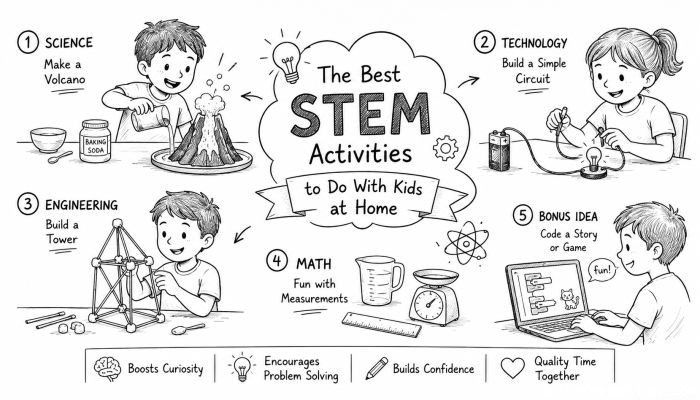
Fun Science Experiments Using Household Items
Science doesn’t have to be complicated to be exciting. Simple experiments like baking soda and vinegar reactions, growing crystals, or making a homemade lava lamp can captivate children’s interest. These activities demonstrate scientific principles in a visual and engaging way, making learning both fun and memorable.
Introducing Basic Coding and Technology
Technology is a key component of STEM, and introducing kids to coding can be both fun and rewarding. There are many beginner-friendly platforms and apps that teach coding through games and interactive lessons. Even simple activities like creating a digital story or solving puzzles can help children understand the basics of programming.
Building and Engineering Challenges
Engineering activities encourage kids to think creatively and solve problems. Building structures using materials like cardboard, LEGO bricks, or popsicle sticks can teach concepts like balance, stability, and design. Challenges such as building the tallest tower or strongest bridge add an element of excitement and competition.
Math Games That Make Learning Fun
Math doesn’t have to be boring. Incorporating games into learning can make numbers more enjoyable. Activities like counting games, puzzles, and board games help children develop mathematical skills in a playful way. These games also improve logical thinking and problem-solving abilities.
Exploring Nature as a STEM Classroom
Nature provides endless opportunities for STEM learning. Activities like observing plants, collecting rocks, or studying insects can teach children about biology and environmental science. Outdoor exploration not only enhances learning but also encourages curiosity and appreciation for the natural world.
Encouraging Creativity Through STEAM
Adding Art to STEM—turning it into STEAM—allows children to express creativity while learning. Activities like designing a model, creating patterns, or drawing scientific concepts help kids connect imagination with logic. This combination fosters innovation and a deeper understanding of ideas.
Problem-Solving Activities and Challenges
STEM activities often involve solving problems, which is a valuable life skill. Giving children challenges that require critical thinking—such as figuring out how to move an object without touching it—encourages them to think outside the box. These activities build confidence and persistence.
Using Everyday Objects for Learning
One of the best aspects of STEM activities is that they can be done with everyday objects. Kitchen items, toys, and household materials can be transformed into learning tools. This approach makes STEM accessible and shows children that learning can happen anywhere.
Making STEM a Daily Habit
Consistency is key when it comes to learning. Incorporating STEM activities into daily routines helps reinforce concepts and build a habit of curiosity. Even small activities, like asking questions or experimenting with simple ideas, can have a lasting impact on a child’s development.
Involving Parents in the Learning Process
Parents play a crucial role in making STEM activities effective. By participating and showing interest, parents can motivate children and make learning more enjoyable. It’s not about having all the answers—it’s about exploring together and encouraging curiosity.
Conclusion
STEM activities at home offer a wonderful opportunity to combine learning with fun, creating experiences that inspire curiosity and creativity. By using simple materials and encouraging exploration, parents can help children develop essential skills that will benefit them throughout their lives. From science experiments and coding to nature exploration and problem-solving challenges, the possibilities are endless. Ultimately, the goal is to nurture a love for learning and discovery, empowering children to think critically and embrace the world around them with curiosity and confidence.
 How to Make the Most of Your Holiday Break
 The Best Winter Destinations for a Cozy Getaway
 How to Organize Your Holiday Travel Plans with Ease
 The Ultimate Guide to Cooking for a Crowd
 How to Make Healthy Comfort Food Without the Guilt
 5 Delicious Vegan Breakfast Ideas You Can Make in Minutes