How to Use AI for Financial Planning
Artificial Intelligence (AI) is changing the way people and businesses manage their finances. From predictive analytics and automated budgeting to personalized investment recommendations, AI-powered tools offer deeper insights and more accurate forecasts than ever before. Financial planning, once a time-consuming and error-prone process, is becoming faster, more precise, and accessible to all with the help of AI. By processing large datasets in real-time, AI can identify trends, predict risks, and provide actionable strategies tailored to personal or organizational goals. However, knowing how to harness the power of AI for financial planning requires understanding the available tools, data security considerations, and actionable insights into practical decision-making. In this article, we’ll explore how to use AI for financial planning, covering everything from applications and strategies to risk management and tips for maximizing the benefits of AI to achieve smarter, data-driven financial outcomes.
- Understand the Benefits of AI in Financial Planning
- Assess Your Financial Goals and Needs
- Choose the Right AI Tools and Platforms
- Automate Budgeting and Expense Tracking
- Leverage AI for Investment Planning
- Utilize Predictive Analytics for Financial Forecasting
- Manage Debt Strategically with AI
- Monitor Financial Health in Real-Time
- Integrate AI with Tax Planning
- Ensure Data Security and Privacy
- Learn from AI Insights, Don’t Rely Blindly
- Review and Adjust Regularly
- Conclusion
- More Related Topics
Understand the Benefits of AI in Financial Planning
AI offers numerous benefits in financial planning, including efficiency, accuracy, and personalization. Automated tools can process and analyze large datasets quickly, identify patterns, and generate actionable insights, saving time and effort compared to manual analysis. AI can also provide personalized recommendations tailored to individual spending habits, income, investment goals, and risk tolerance. Furthermore, AI can continuously learn and adapt to market trends and changes, helping investors and financial planners stay ahead of the curve by making proactive rather than reactive decisions.

Assess Your Financial Goals and Needs
Before diving into AI tools, it’s essential to understand your financial goals and needs. Are you looking to create a budget, plan for retirement, pay off debts, or optimize your investments? Identifying your priorities will help you use AI applications effectively. For example, an automated investment recommendation tool may not be as useful if your primary focus is on debt management. Understanding your financial situation will provide context for selecting and customizing AI solutions.
Choose the Right AI Tools and Platforms
There are various AI-powered financial tools and platforms available, including robo-advisors, expense tracking apps, portfolio optimization platforms, and predictive analytics software. Evaluate different platforms based on their features, ease of use, integration capabilities with existing financial accounts, and security measures. Some tools are designed for personal finance, while others are more suitable for businesses or investors. Choosing the right tool will ensure that AI adds value to your financial planning rather than complicating it.
Automate Budgeting and Expense Tracking
AI-powered budgeting tools can automatically categorize expenses, track cash flow, and generate real-time financial reports. They can detect unusual spending patterns, provide insights into where you can cut costs, and send alerts when your spending exceeds your budget. Automation reduces manual effort, minimizes errors, and ensures that your budget aligns with your financial goals. Over time, these tools learn your spending habits and provide more accurate guidance and alerts to optimize your expenses.
Leverage AI for Investment Planning
Robo-advisors and AI-driven investment platforms analyze market data, risk factors, and historical performance to generate investment recommendations. AI can help you diversify your portfolio, suggest rebalancing strategies, and predict potential returns based on current market conditions. For novice investors, AI-driven robo-advisors can provide easy-to-follow, data-driven investment advice. Experienced investors can use AI for portfolio optimization and performance analysis. Overall, AI can help investors make informed decisions and reduce emotional biases that may lead to poor investment performance.
Utilize Predictive Analytics for Financial Forecasting
AI can also be used for predictive financial forecasting. Predictive analytics algorithms analyze historical trends and real-time data to project future income, expenses, investment growth, or retirement savings under different scenarios. Financial forecasting allows you to anticipate potential financial challenges, plan for contingencies, and make informed decisions before problems arise. This can improve your financial resilience and help you stay on track to meet your financial goals.
Manage Debt Strategically with AI
AI can help you prioritize debt repayments based on interest rates, payment schedules, and your financial capacity. AI-powered debt management tools can recommend optimal repayment strategies such as focusing on high-interest debt first or distributing payments to minimize total interest paid. By providing a data-driven roadmap, AI can ensure that you are managing your debt efficiently and in line with your broader financial goals.
Monitor Financial Health in Real-Time
AI platforms offer dashboards that track financial health metrics continuously, including net worth, investment performance, cash flow, and spending patterns. Real-time monitoring enables you to make quick adjustments and take proactive steps when necessary. AI tools can send alerts and notifications to signal unusual activity, upcoming bills, or investment opportunities, ensuring you stay in control of your financial health at all times.
Integrate AI with Tax Planning
AI-powered tax planning tools can help you optimize your taxes by analyzing your income, deductions, and investment activity. Predictive algorithms can suggest tax-saving strategies, identify tax-efficient investment options, or flag potential errors before you file your taxes. Integrating AI into your tax planning process can help ensure compliance while maximizing your after-tax wealth and minimizing tax liabilities.
Ensure Data Security and Privacy
Using AI tools for financial planning requires sharing sensitive financial data with digital platforms. Prioritize AI tools that use encryption, multi-factor authentication, and secure data storage. Regularly update your passwords, monitor your accounts for unusual activity, and read privacy policies to ensure your data is secure. Data security and privacy are paramount when using AI for financial planning.
Learn from AI Insights, Don’t Rely Blindly
AI can provide valuable guidance and recommendations, but human judgment is still essential. Use AI insights as a starting point to inform your financial decisions, but consider other factors such as your values, financial situation, and market conditions. Don’t blindly follow AI recommendations. Cross-check them against traditional financial knowledge, and consult professionals if needed. AI should be used as a tool to enhance your financial planning, not replace human expertise.
Review and Adjust Regularly
AI-driven financial planning is most effective when combined with regular reviews and adjustments. Assess the performance of your AI-generated financial plans, and adjust parameters based on life changes or updated financial goals. Regularly reviewing and fine-tuning your financial plans ensure that the AI tools you use remain aligned with your evolving priorities, market conditions, and financial objectives.
Conclusion
AI is transforming the financial planning process into a faster, more accurate, and more personalized experience. From automated budgeting and debt management to investment recommendations and predictive analytics, AI tools provide actionable financial insights that can help individuals and businesses make smarter financial decisions. However, to effectively use AI for financial planning, you need to understand your financial goals, choose the right AI platforms, maintain data security, and combine AI recommendations with human judgment. By integrating AI into their financial routines, investors and financial planners can optimize their resources, anticipate financial challenges, and achieve long-term financial stability. As AI technology continues to evolve, embracing and adapting to it for financial planning will position you to take advantage of innovation for smarter, data-driven wealth management, simplifying complex financial decisions while making them faster and more strategic than ever.
 Big O Notation Explained for Beginners
 AI in Gaming: Smarter NPCs and Environments
 Understanding Bias in AI Algorithms
 Introduction to Chatbots and Conversational AI
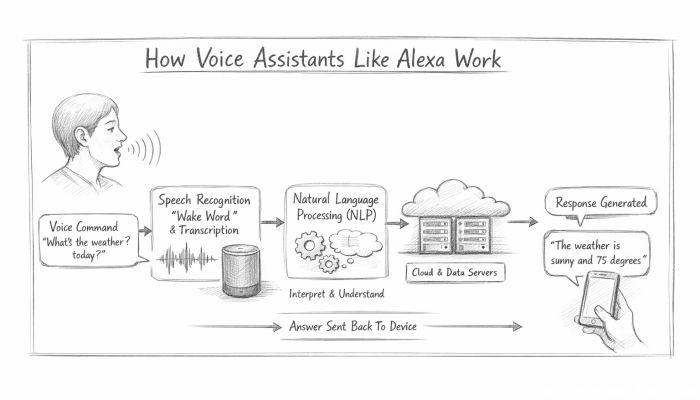 How Voice Assistants Like Alexa Work
 Federated Learning: AI Without Sharing Data