How to Cook a Week’s Worth of Meals in One Afternoon
The idea of cooking an entire week’s meals in a single afternoon can sound overwhelming — especially if you’re already busy, tired, or short on kitchen space. But once you experience the calm that comes from opening your fridge on a weekday evening and finding dinner already done, it changes everything. Weekly meal prep isn’t about rigid routines or eating the same bland food every day. It’s about reclaiming time, reducing stress, saving money, and making healthier choices feel effortless. When meals are planned and prepared ahead, you free up mental energy for work, family, rest, and the things you actually enjoy. This guide will show you how to cook a week’s worth of meals in one afternoon in a realistic, flexible, and human way — no perfection required, just smart systems that work in real life.
- Why Cooking Once a Week Is a Life-Changing Habit
- Shift Your Mindset: Meal Prep Is About Flexibility, Not Control
- Choose the Right Day and Time for Your Prep Session
- Plan Before You Cook — This Is Where Success Begins
- Build Meals Around Simple, Repeatable Components
- Shop Smart to Save Time and Energy
- Set Up Your Kitchen Like a Production Line
- Cook in Batches, Not One Dish at a Time
- Don’t Skip Sauces — They Create Variety
- Portion Meals in a Way That Fits Your Lifestyle
- Store Food Properly to Keep It Fresh All Week
- How Long a Prep Session Actually Takes (Realistically)
- Turning Meal Prep Into a Sustainable Weekly Ritual
- Conclusion
- More Related Topics
Why Cooking Once a Week Is a Life-Changing Habit
Meal prepping isn’t just about food — it’s about peace of mind. When meals are already cooked, decision fatigue disappears. You stop wondering what to eat, stop ordering last-minute takeout, and stop wasting ingredients. Cooking once a week also helps you eat more balanced meals because choices are made calmly, not in hunger or stress. Over time, this habit builds consistency, saves money, and creates a rhythm that supports healthier living without constant effort.
Shift Your Mindset: Meal Prep Is About Flexibility, Not Control
One common mistake is treating meal prep like a strict system you must follow perfectly. In reality, successful meal prep is flexible. You’re not locking yourself into seven identical meals — you’re creating building blocks that can be mixed and matched. Think components, not rigid menus. When your mindset shifts from “I have to eat this” to “I have options,” meal prep becomes empowering instead of restrictive.
Choose the Right Day and Time for Your Prep Session
Pick an afternoon when your energy is relatively steady and distractions are minimal. Many people choose Sunday afternoons, but any consistent time works. Block out 2.5 to 4 hours depending on how many meals you want to prep. Treat this time like an appointment with your future self. Playing music, a podcast, or a show in the background turns prep time into a calm, productive ritual rather than a chore.
Plan Before You Cook — This Is Where Success Begins
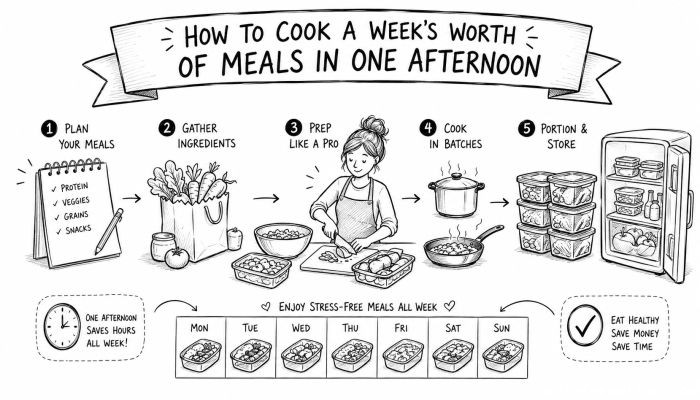
Planning is the difference between smooth meal prep and kitchen chaos. Start by deciding how many meals you need — lunches, dinners, or both. Choose 3–4 main dishes that share ingredients to reduce prep time. Write everything down: meals, ingredients, and quantities. A clear plan prevents overbuying, reduces waste, and keeps your cooking session focused and efficient.
Build Meals Around Simple, Repeatable Components
Instead of cooking seven unique recipes, prep core components that can be combined in different ways. Think roasted vegetables, cooked grains, proteins, and sauces. For example, roasted vegetables can go into grain bowls, wraps, salads, or pasta. This approach gives you variety without doubling your workload and keeps meals interesting throughout the week.
Shop Smart to Save Time and Energy
A well-organized grocery trip makes your prep afternoon smoother. Shop with a list grouped by category — produce, pantry, protein, dairy or alternatives. Consider shortcuts like pre-washed greens, frozen vegetables, or canned beans. These aren’t “cheating”; they’re efficiency tools. The goal is to save time where it doesn’t affect quality so you can focus energy where it matters.
Set Up Your Kitchen Like a Production Line
Before you start cooking, prepare your space. Clear counters, wash produce, preheat the oven, and pull out all the tools you’ll need. Start with tasks that take the longest — roasting vegetables, cooking grains, or baking proteins — so they work while you prep other items. Cooking in parallel rather than one dish at a time dramatically reduces total prep time.
Cook in Batches, Not One Dish at a Time
Batch cooking is the heart of meal prep. Roast multiple trays of vegetables at once. Cook a large pot of grains instead of small portions. Prepare proteins in bulk using simple seasonings. Cooking larger quantities doesn’t take much longer, but it multiplies your results. The key is to keep flavors versatile so meals don’t feel repetitive.
Don’t Skip Sauces — They Create Variety
Sauces are what make prepped meals exciting. A simple dressing, pesto, yogurt sauce, or stir-fry sauce can transform the same base ingredients into entirely different meals. Make 2–3 sauces during your prep session and store them separately. This small effort delivers big flavor and keeps you from getting bored midweek.
Portion Meals in a Way That Fits Your Lifestyle
Not everyone needs fully portioned meals in containers. Some people prefer grab-and-go lunches; others like assembling meals fresh. Choose what works for you. Portion full meals for busy days and keep components separate for flexible dinners. The goal is to support your real routine, not an idealized version of it.
Store Food Properly to Keep It Fresh All Week
Use airtight containers and label them if needed. Store grains and proteins on the middle shelves, vegetables where they won’t get crushed, and sauces in small containers. Most cooked meals last 4–5 days in the fridge; freeze anything you won’t eat by then. Proper storage protects flavor, texture, and food safety.
How Long a Prep Session Actually Takes (Realistically)
For most people, a solid weekly prep session takes about 3 hours. That includes chopping, cooking, portioning, and cleaning. In return, you save hours throughout the week — time you would’ve spent cooking, cleaning, or deciding what to eat. When you look at the trade-off, it’s one of the highest-return habits you can build.
Turning Meal Prep Into a Sustainable Weekly Ritual
The secret to sticking with meal prep is making it enjoyable. Rotate recipes, keep it simple, and don’t aim for perfection. Some weeks you’ll prep five meals, other weeks three — both are wins. Over time, the process becomes faster and more intuitive. Meal prep stops being something you “do” and becomes something that supports your life quietly in the background.
Conclusion
Cooking a week’s worth of meals in one afternoon isn’t about discipline — it’s about kindness toward your future self. With thoughtful planning, simple components, and a flexible mindset, meal prep becomes a powerful tool for reducing stress, saving time, and eating well consistently. You don’t need complicated recipes or flawless execution. You need a system that fits your life, respects your energy, and gives you back your evenings. Once you experience the ease of a prepared fridge and calm mealtimes, you’ll realize that one afternoon of cooking can change the entire rhythm of your week.
 How to Make the Most of Your Holiday Break
 The Best Winter Destinations for a Cozy Getaway
 How to Organize Your Holiday Travel Plans with Ease
 The Ultimate Guide to Cooking for a Crowd
 How to Make Healthy Comfort Food Without the Guilt
 5 Delicious Vegan Breakfast Ideas You Can Make in Minutes