How to Make Quick and Healthy Snacks for Work or School
Busy mornings, long workdays, packed school schedules—snacking often becomes an afterthought. When hunger hits between meals, it’s tempting to grab whatever is fastest, cheapest, or most convenient. Unfortunately, those quick fixes are often high in sugar, low in nutrients, and leave you feeling tired or hungry again within an hour. Over time, poor snacking habits affect focus, energy, and even mood.
Learning how to make quick and healthy snacks for work or school is one of the simplest yet most powerful ways to support daily well-being. Healthy snacks don’t need to be complicated, expensive, or time-consuming. With a little planning and the right ingredients, you can create snacks that fuel your body, sharpen your concentration, and actually taste good. This guide breaks down practical, realistic strategies to help you snack smarter—without adding stress to already busy days.
- Why Healthy Snacking Matters More Than You Think
- What Makes a Snack Truly Healthy?
- Keep It Simple: Snacks Should Save Time, Not Take It
- No-Cook Snack Ideas for Busy Days
- Make-Ahead Snacks for the Entire Week
- Healthy Snacks That Actually Keep You Full
- Portable Snacks That Travel Well
- Smart Sweet Snacks Without the Sugar Crash
- Savory Snacks That Beat Vending Machines
- Snacks for Focus and Brain Power
- How to Build a Snack Routine That Sticks
- Get Kids and Teens Involved in Snack Prep
- Conclusion: Healthy Snacking Is a Daily Advantage
- More Related Topics
Why Healthy Snacking Matters More Than You Think
Snacks aren’t just fillers between meals—they’re opportunities to stabilize energy levels and prevent overeating later. When you go too long without food, blood sugar drops, focus fades, and cravings intensify.
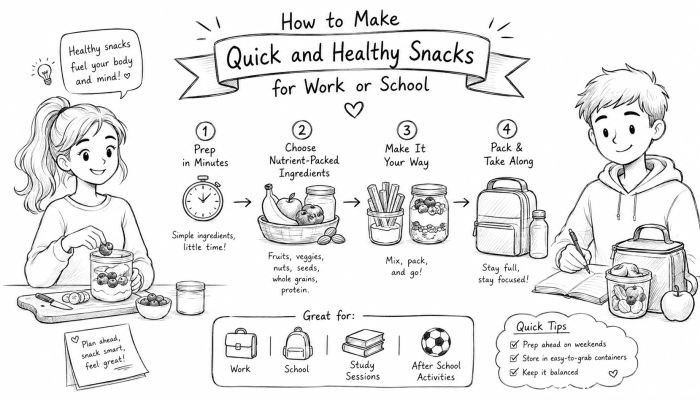
Healthy snacks provide steady fuel for the brain and body. For students, this means better concentration and memory. For professionals, it means sustained productivity and fewer energy crashes. The right snack at the right time can completely change how the day feels.
What Makes a Snack Truly Healthy?
A healthy snack isn’t defined by calories alone—it’s about balance. The most effective snacks include a combination of protein, fiber, and healthy fats.
Protein keeps you full, fiber supports digestion, and healthy fats slow energy release. Together, they prevent sugar spikes and crashes. Snacks that rely only on refined carbs or sugar may feel satisfying briefly, but they don’t last.
Keep It Simple: Snacks Should Save Time, Not Take It
One of the biggest barriers to healthy snacking is the belief that it takes too much effort. In reality, the best snacks are often the simplest.
Think minimal ingredients, minimal prep, and minimal cleanup. If a snack takes longer than five minutes to assemble, it probably won’t survive a busy schedule. Simplicity is the secret to consistency.
No-Cook Snack Ideas for Busy Days
No-cook snacks are lifesavers for rushed mornings. Options like fruit with yogurt, cheese with whole-grain crackers, or hummus with veggies require almost no effort.
Pre-washed produce, portioned yogurt cups, and ready-to-eat proteins make healthy choices effortless. When healthy snacks are easy, they become automatic.
Make-Ahead Snacks for the Entire Week
Batch-prepping snacks once or twice a week saves enormous time and mental energy. Items like hard-boiled eggs, energy bites, chopped fruits, or roasted chickpeas store well and stay fresh.
When snacks are already prepared, decision fatigue disappears. You’re far more likely to reach for something nourishing when it’s already waiting for you.
Healthy Snacks That Actually Keep You Full
Many people snack constantly because their snacks aren’t satisfying. To avoid this, focus on protein-rich options.
Greek yogurt, cottage cheese, nut-free seed butters, boiled eggs, or bean-based snacks provide staying power. When snacks are filling, you snack less often—and feel better doing it.
Portable Snacks That Travel Well
Work and school snacks need to survive backpacks, commutes, and long hours. Choose items that don’t require refrigeration or are easy to keep cool.
Trail mix alternatives (using seeds and dried fruit), granola bars with clean ingredients, whole fruits, and roasted snacks are ideal. Portability ensures healthy choices are always within reach.
Smart Sweet Snacks Without the Sugar Crash
Sweet cravings are normal—especially during long days. The goal isn’t to eliminate sweetness, but to choose smarter sources.
Fruit paired with protein, yogurt with honey, or homemade oat-based snacks satisfy cravings while avoiding sharp sugar spikes. Balanced sweetness keeps energy stable instead of sabotaging it.
Savory Snacks That Beat Vending Machines
Savory snacks often come loaded with sodium and refined oils. Homemade alternatives are just as satisfying—and far better for you.
Popcorn with herbs, roasted vegetables, or whole-grain wraps with fillings like beans or cheese provide crunch and flavor without guilt. Savory doesn’t have to mean unhealthy.
Snacks for Focus and Brain Power
Certain foods support mental clarity and focus—perfect for school or demanding workdays. Snacks rich in protein, omega fats, and complex carbs help the brain perform better.
Think yogurt with seeds, whole grains with protein, or fruit with healthy fats. These combinations improve concentration and reduce mental fatigue.
How to Build a Snack Routine That Sticks
Healthy snacking works best when it’s part of a routine, not a reaction to hunger. Identify times when energy dips—mid-morning or mid-afternoon—and plan snacks accordingly.
When snacks are intentional rather than impulsive, they become supportive instead of distracting. Routine removes guesswork and builds consistency.
Get Kids and Teens Involved in Snack Prep
For school snacks especially, involvement increases success. When kids help prepare snacks, they’re more likely to eat them—and understand healthy choices.
Simple tasks like washing fruit, assembling containers, or choosing options for the week empower independence. Healthy habits grow best when they’re shared.
 How to Make the Most of Your Holiday Break
 The Best Winter Destinations for a Cozy Getaway
 How to Organize Your Holiday Travel Plans with Ease
 The Ultimate Guide to Cooking for a Crowd
 How to Make Healthy Comfort Food Without the Guilt
 5 Delicious Vegan Breakfast Ideas You Can Make in Minutes