The Role of Genetics in Your Health and Well-being
Genetics is an area of science that was developed and has now started to take off as one of the most exciting, surprising, and relevant branches of science. A person’s health and well-being are determined by a whole host of different factors; from the state of the environment to the choice of clothing and diet. However, no matter how much influence external factors have on well-being, it is human genes that largely decide what a person is going to be, what he will be able to do and, unfortunately, what will not be given to a person in health and general well-being. This is how important genetics is in the life of any person, despite the fact that today it is so difficult to talk about what science is and what it will be able to do in a few years to identify and predict the state of a person’s health and well-being. This topic is especially relevant today because it is genetics that is currently attracting the most attention and funding for research as one of the most innovative scientific directions that have every chance of showing amazing and unexpected results. However, in this work, we will also try to turn our attention to the less, but still often and importantly, genetics decides what will be the overall state of health, what will be diagnosed and what will not, what lifestyle and personal qualities people are born with and what a person, through genetics, can influence and control. This work is a small, albeit significant part of the field of genetics and will try to cover this important issue in more detail and as broadly as possible to bring up this, now especially relevant, topic of conversation for the most capacious and able to present it in the most meaningful way.
- Introduction
- Genetics basics: Understanding the language of life
- DNA structure and replication
- Genes and inheritance
- Genetic code: How does nature “write” information in genes?
- What is human DNA?
- Gene mutations and their impact on health
- Genetics in medicine and research directions
- Gene therapy: a new, or even the most important, medicine?
- Genetic screening and testing: How useful are these methods?
- The future of genetics and new research areas
- Conclusion
- More Related Topics
Introduction
Genetics is one of the branches of science that study the structure, function, and inheritance of genes. Many scientists argue that a person’s lifestyle, environment, and other factors also have a direct effect on a person’s health. However, in the absence of a change in living conditions and lifestyle, it is heredity and DNA that largely influence a person. In addition, no matter how harmful and unhealthy the way of life and conditions are, there are people who do not get sick. All this can be explained by a person’s DNA. For example, no matter how much harmfulness parents’ smoking is for a child, and no matter how he smokes, this baby may have a mutation that makes him resistant to all the harmful components of cigarettes. This is an interesting and highly relevant topic of discussion that, despite the fact that for now it is impossible to predict exactly what the near future and new discoveries and research in genetics will bring in the field of people’s health. However, now we can already confidently talk about the role of genetics in a person’s life. This topic is especially relevant now, especially in the last two years, because genetics is, no doubt, the most innovative and promising science today. Therefore, we hope that this small part of the relevant field will try to talk and convey as widely and broadly as possible and, of course, in the most expressive way about this hot topic of conversation today.

Genetics basics: Understanding the language of life
Genetics is the branch of science that studies heredity, that is, the transmission of properties of plants, animals, and humans from generation to generation. Genes are the structural and functional units of heredity that are located in the chromosomes of the cell nucleus and control all vital functions. All living organisms inherit their genetic code from their parents. Human DNA is contained in 46 chromosomes, and they are responsible for heredity and all other life processes. Most people do not know that every cell of their body has a complete copy of the genetic information necessary for life, or in other words, that the entire “library” of all books necessary for life is in each cell. In addition, no more than 25% of all human genes are responsible for the formation of external, or “visible,” characteristics and properties. What do they control, what role does genetics play in our lives? To understand this, we will first take a closer look at the structure of DNA and try to figure out how to use the correct information, even though we were not born able to read it in the first place.
DNA structure and replication
The complete set of genetic instructions that describe all hereditary information of a living organism is called DNA. Chromosomes are DNA; we just use the word “chromosome” when we want to emphasize the complete set of genetic information, and the word “DNA” when we want to refer to the chemical material. The sequence of base pairs (G, C, A, T) in the DNA molecule contains all the genetic information of an organism and forms genes. One of the fundamental aspects of the DNA structure is the double helix symmetry, that is, identical two mirror images. The sequence of base pairs in one half of the molecule determines the sequence of the other. It was this fact that made it possible to use base pair symmetry and artificial replication of the information contained in the DNA.
Genes and inheritance
In the entire cell, there are 23 pairs of chromosomes, and each pair of chromosomes contains thousands of genes. The carrier of hereditary information is DNA, which in turn is found in the chromosomes. The cell nucleus usually contains 23 pairs of chromosomes, including the sexual pair XX or XY. However, the number of chromosomes in the cells of an organism is usually independent of its species. Genes are made up of millions of nucleotide pairs that make up our DNA and determine all our features and properties. The number of chromosomes, or more precisely, the number of genes they contain, is different in each species. Human DNA is different from that of a cat, an oak tree, and a tomato. However, only 25% of all genes are involved in the formation of external properties, and the rest of the genes control all other life processes.
Genetic code: How does nature “write” information in genes?
Science has learned how to read the information encoded in the genes and how to change it, or more precisely, add and remove information by understanding the language in which nature “writes” in the genes. The genome contains all the information required for the life of a cell. This information is encoded using four different letters, each of which is a chemical compound: adenine (A), guanine (G), cytosine (C), and thymine (T). A specific sequence of these bases carries the genetic information necessary for life, or more precisely, the code in which nature “writes” in the genes. Every three bases are information about one amino acid, of which there are 20. A group of three such letters is called a codon. The genetic code, a set of specific rules by which the sequence of nucleotides is converted into a sequence of amino acids in proteins, is universal for almost all living organisms.
What is human DNA?
A human chromosome is an ordinary biological molecule that, like many other molecules, is composed of atoms: carbon, hydrogen, oxygen, nitrogen, and a little phosphorus. A molecule of DNA contains about 2 meters of thread in each cell of the body. The code in which nature “writes” in the genes. For example, no matter how much harmfulness parents’ smoking is for a child, and no matter how he smokes, this baby may have a mutation that makes him resistant to all the harmful components of cigarettes. This is an interesting and highly relevant topic of discussion that, despite the fact that for now it is impossible to predict exactly what the near future and new discoveries and research in genetics will bring in the field of people’s health. However, now we can already confidently talk about the role of genetics in a person’s life. This topic is especially relevant now, especially in the last two years, because genetics is, no doubt, the most innovative and promising science today. Therefore, we hope that this small part of the relevant field will try to talk and convey as widely and broadly as possible and, of course, in the most expressive way about this hot topic of conversation today.
Gene mutations and their impact on health
In general, about a hundred mutations in all of human DNA are important for human health and well-being. Mutations of some genes that are essential for human life can be detected immediately after conception or even earlier. This is usually how diseases of genetic or congenital origin manifest themselves, such as Down syndrome or Tay-Sachs disease. If parents are carriers of mutations in the same genes, they may be passed on to their children even without clinical evidence in the parents themselves. A mutation is the only situation in which an individual with a high probability can become a carrier of harmful genes without having any evidence in life. The mutation itself also determines the exact life expectancy of the baby in the womb of the mother. Mutations of some other genes can lead to cancer and can be detected at birth. Another group of mutations affect people after birth and, depending on the particular case, can last a lifetime.
Genetics in medicine and research directions
A working group led by Wilkins began work on the DNA structure on January 1, 1953. They did not even have a detailed model, only a set of facts and ideas. However, they worked quickly and by March were convinced that DNA is a helix. A working group led by Wilkins began work on the DNA structure on January 1, 1953. They did not even have a detailed model, only a set of facts and ideas. However, they worked quickly and by March were convinced that DNA is a helix. The result of the three experts’ work was the construction of the model of the DNA molecule, which many consider one of the most significant discoveries of the twentieth century. Scientists in the field of genetics are confident that this field of science is the most important and promising at the present time. Therefore, we hope that this small part of the relevant field will try to talk and convey as widely and broadly as possible and, of course, in the most expressive way about this hot topic of conversation today.
Gene therapy: a new, or even the most important, medicine?
Gene therapy is a molecular genetic procedure that involves the administration of DNA directly into cells with the aim of treating or preventing disease. Gene therapy can be performed by two methods: in vivo and ex vivo. For example, in vivo involves the direct administration of nucleic acids (DNA or RNA) into cells with the aim of treating or preventing disease. It is called in vivo because the administration is carried out directly into the cells. If the DNA is inserted into the extracted cells that are then reintroduced into the body, this is called an ex vivo method.
Genetic screening and testing: How useful are these methods?
Genetic testing is a new direction in human genetics, the purpose of which is to determine a person’s genetic makeup and compare it with the norm. Genetic screening is an examination in which, when testing a group of individuals (large or small), one or more are found to be at increased risk of disease or injury. Genetic screening is usually used for the general population, and genetic testing is used for individuals who may be at risk.
The future of genetics and new research areas
The field of genetics is now developing rapidly, new methods, algorithms, devices and equipment for research are created every day. Genetic information contains nucleotide symbols A, T, C and G, which can be called values, not physical quantities, if we mean specifically DNA. The genetic code is a set of rules by which the nucleotide sequence of nucleic acid is converted into the amino acid sequence of a protein. An amino acid can be written with three nucleotides, for example, ATT. This suggests that all biological information can be represented in a binary system in the form of symbols (bits). At the moment, biologists have determined the amino acid sequence of thousands of proteins, and each code in the structure of a protein is unique and is like a biological language.
Conclusion
Genetics undoubtedly plays a central role in our life and determines health and well-being, since it, a person’s genetic code, decides what a person is going to be, what he will be able to do and, unfortunately, what will not be given to a person in health and general well-being. This is how important genetics is in the life of any person, despite the fact that today it is so difficult to talk about what science is and what it will be able to do in a few years to identify and predict the state of a person’s health and well-being. This topic is especially relevant today because it is genetics that is currently attracting the most attention and funding for research as one of the most innovative scientific directions that have every chance of showing amazing and unexpected results. However, in this work, we will also try to turn our attention to the less, but still often and importantly, genetics decides what will be the overall state of health, what will be diagnosed and what will not, what lifestyle and personal qualities people are born with and what a person, through genetics, can influence and control. This is how important genetics is in the life of any person, despite the fact that today it is so difficult to talk about what science is and what it will be able to do in a few years to identify and predict the state of a person’s health and well-being. This topic is especially relevant today because it is genetics that is currently attracting the most attention and funding for research as one of the most innovative scientific directions that have every chance of showing amazing and unexpected results. However, in this work, we will also try to turn our attention to the less, but still often and importantly, genetics decides what will be the overall state of health, what will be diagnosed and what will not, what lifestyle and personal qualities people are born with and what a person, through genetics, can influence and control.
 Big O Notation Explained for Beginners
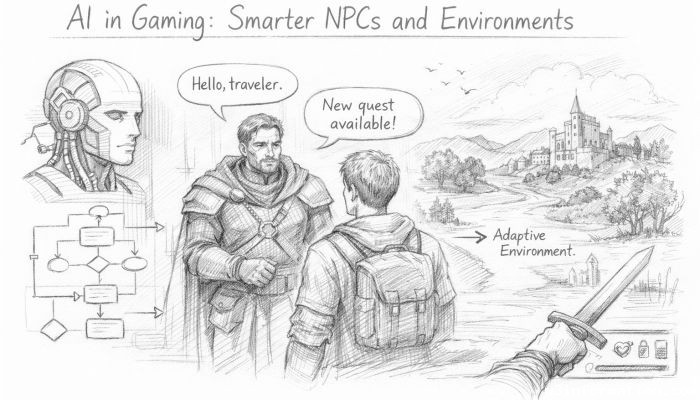 AI in Gaming: Smarter NPCs and Environments
 Understanding Bias in AI Algorithms
 Introduction to Chatbots and Conversational AI
 How Voice Assistants Like Alexa Work
 Federated Learning: AI Without Sharing Data