How to Create a Balanced Wellness Routine
Do you ever feel like there’s not enough time in the day to do everything you need to do? Between work, family, and personal obligations, it can be hard to find time for yourself. You may feel stressed out, tired, or just disconnected from yourself. But creating a balanced wellness routine is important, not just for physical health, but for mental and spiritual well-being too.
A well-rounded routine helps you manage stress, stay energized, and feel more connected to yourself. In this guide, we’ll walk you through some simple steps to design a wellness routine that works for you. We’ll cover everything from mindful practices to nutrition, movement, sleep, and more. With the right habits in place, you can create a daily routine that not only makes you healthier but also happier and more fulfilled.
- Defining True Wellness
- Assessing Your Current Lifestyle
- Setting Wellness Goals
- Physical Activity for Health
- Nutrition and Hydration Habits
- Sleep and Rest for Recovery
- Managing Stress Mindfully
- Emotional and Social Wellness
- Designing a Daily Wellness Routine
- Movement Opportunities Outside the Gym
- Tracking Your Progress
- Balance Over Perfection
- Conclusion
- More Related Topics
Defining True Wellness
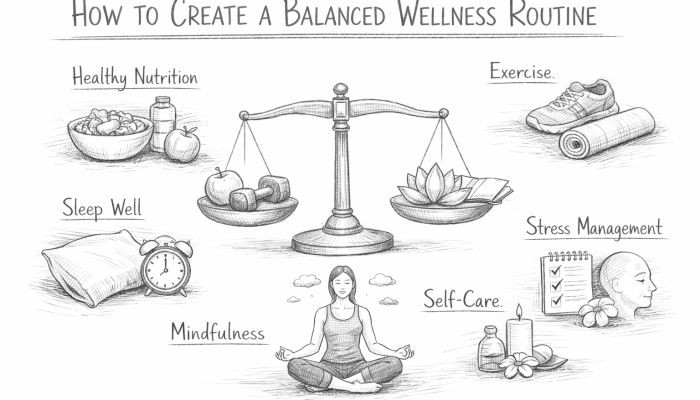
When most people hear the word “wellness,” they may immediately think of working out or eating right. But true wellness goes beyond just exercise or nutrition; it’s about taking care of your mind, body, and soul on a daily basis. A well-rounded routine balances all aspects of your life so they work together in harmony. Having a wellness routine that promotes resilience, energy, and a deeper sense of well-being.
Assessing Your Current Lifestyle
Before you can create a wellness routine, you need to know where you currently stand. Spend a few days paying attention to your sleep habits, activity level, stress triggers, nutrition, and daily habits. Journaling or using wellness apps can help you track patterns and identify areas for improvement. Be honest with yourself as you evaluate your current routine so you can make intentional changes instead of following fads or trends. Your honest assessment will also help you set achievable goals so your routine is sustainable long-term.
Setting Wellness Goals
Goals are an important part of any wellness routine. But it’s important to be realistic and intentional with the goals you set for yourself. Instead of generic objectives like “exercise more” or “eat healthier,” try setting specific, achievable goals. You may aim to take a 30-minute walk every day, meditate three times a week, or cook healthy meals at home most nights of the week. By connecting your goals to deeper intentions such as stress reduction, increased energy, or improved mood, you create an intrinsic sense of motivation.
Physical Activity for Health
Regular exercise is one of the key pillars of wellness. Exercise strengthens your heart, muscles, and bones; boosts your mood; and supports longevity. A well-rounded routine incorporates cardiovascular exercise, strength training, and flexibility work. It is good to know that movement doesn’t have to be intense or time-consuming either. Daily walks, yoga sessions, or short bodyweight workouts can all be highly effective as well. Choose activities you enjoy so you’re more likely to stick with your exercise routine consistently over time.
Nutrition and Hydration Habits
Healthy eating is another crucial component of a balanced wellness routine. Good nutrition fuels your body, supports mental clarity, and stabilizes energy levels. A healthy diet should include lean proteins, whole grains, healthy fats, fruits, and vegetables. Instead of extreme diets or overly restrictive plans, focus on moderation and mindful eating. Equally important is staying hydrated; water supports digestion, detoxification, and cognitive function. Your daily wellness nutrition routine will improve your physical and emotional performance by making better nutrition choices.
Sleep and Rest for Recovery
Sleep is often one of the most overlooked elements of wellness, but it’s just as important as diet and exercise. Quality sleep allows your body to repair, consolidate memory, and regulate hormones. Most adults require 7–9 hours of sleep per night for optimal functioning. For a good night’s sleep, keep a consistent schedule, establish a relaxing bedtime routine, and avoid screens before bed. When you prioritize rest, you can perform at your best during the day and reinforce the other elements of your wellness routine.
Managing Stress Mindfully
Stress can wreak havoc on even the best wellness routine. But you can easily counteract its effects with some stress management techniques. Meditation, deep breathing exercises, journaling, and mindful walks can all help restore your equilibrium. Mindfulness practices help you cultivate present-moment awareness, reduce anxiety, and build emotional resilience. Allotting time for relaxation and stress relief is key to ensuring that your wellness routine is sustainable rather than another source of stress.
Emotional and Social Wellness
Humans are social animals, so connecting with others is essential for our emotional well-being. Family, friends, or community groups can provide love, support, joy, and perspective. Emotional wellness also involves self-compassion, setting healthy boundaries, and being aware of your feelings without judgment or shame. By tending to your emotional needs, you create a more holistic and balanced routine that helps you cope better with life’s ups and downs.
Designing a Daily Wellness Routine
The key to a successful wellness routine is consistency. Structure your day around intentional habits, morning rituals, mealtimes, exercise blocks, and evening wind-downs. For beginners, it is good to try to make small changes at once. Trying to overhaul your entire routine all at once is a recipe for burnout. By starting small, you build momentum over time so your routine becomes sustainable. A well-structured day ensures that wellness practices become second nature rather than an afterthought.
Movement Opportunities Outside the Gym
Wellness isn’t limited to formal exercise or meditation sessions; it’s also about finding ways to move naturally throughout the day. Taking the stairs instead of the elevator, stretching at your desk, or going for a walk while taking phone calls are all great ways to add movement. Active commuting, recreational sports, or family activities can also boost your physical health while building social connections. By finding small movement opportunities throughout the day, you complement formal exercise and create a more holistic approach to movement and wellness.
Tracking Your Progress
Tracking your wellness journey is a great way to stay motivated and ensure you’re on the right path. Consider using journals, apps, or simply taking time to reflect on your progress regularly. Notice improvements in energy levels, mood, sleep quality, and stress management. Remember that it’s perfectly normal for your routine to change as your life circumstances evolve. Evaluating your routine regularly will allow you to fine-tune your habits for continued growth.
Balance Over Perfection
It is very important to realize that a wellness routine doesn’t have to be perfect to be effective. Missing a workout, indulging in a treat, or skipping meditation doesn’t mean you’re “cheating” on your routine. Approach your wellness journey with self-compassion and curiosity. Celebrate the small victories and embrace the fact that balance is dynamic, not static. By focusing on overall well-being rather than perfection, your routine will become a sustainable and enjoyable way of life.
Conclusion
Creating a balanced wellness routine is a journey that nurtures all aspects of your being: mind, body, and soul. By understanding wellness, assessing your current lifestyle, and setting achievable goals, you can design a routine that fits into your daily life. Prioritizing nutrition, physical activity, sleep, stress management, and emotional well-being ensures that all areas of your health are taken care of. The key is to be consistent, mindful, and flexible so your routine is sustainable rather than burdensome. Balance is not about perfection, but about cultivating habits that support your growth, energy, and fulfillment. With the right intention and care, a balanced wellness routine can transform your daily life and empower you to thrive physically, emotionally, and mentally.
 How to Make the Most of Your Holiday Break
 The Best Winter Destinations for a Cozy Getaway
 How to Organize Your Holiday Travel Plans with Ease
 The Ultimate Guide to Cooking for a Crowd
 How to Make Healthy Comfort Food Without the Guilt
 5 Delicious Vegan Breakfast Ideas You Can Make in Minutes