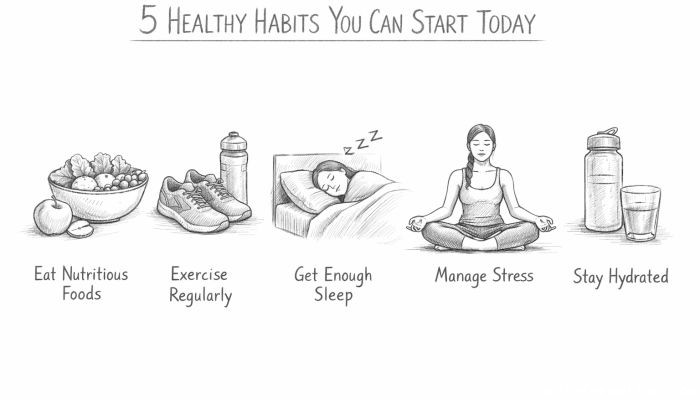
5 Healthy Habits You Can Start Today
A healthy lifestyle does not require complete overhaul or unsustainable practices. In fact, many of the simplest changes can lead to the most significant improvements in physical and mental well-being. Healthy habits are the daily choices that influence how your body functions, responds to stress, and builds energy and vitality over time.
The best part is that you do not have to wait to start building healthy habits. In this post, we will look at five easy and sustainable habits you can start incorporating into your life from today. These habits are not fads or quick fixes, but rather small, practical changes that make a big difference over time. They lay the foundation for long-term health, balance, and energy.
Sleep Well, Deeply and Regularly
Why sleep is important
Sleep is one of the most powerful but often neglected aspects of health. During sleep, the body repairs tissues, balances hormones, boosts immunity, and recharges energy. Chronic lack of sleep or poor sleep quality can affect athletic performance, mental sharpness, mood, and overall health.
Adults typically need seven to nine hours of sleep per night to feel rested and function optimally. However, it is not just about the number of hours but also the quality of sleep. Interrupted or irregular sleep cycles can decrease the body’s ability to recover and regulate.
How to develop this habit
Start by establishing a consistent sleep schedule. Try going to bed and waking up at the same time every day. This regularity helps to regulate the body’s internal clock. Create a relaxing bedtime routine that signals your body that it is time to wind down. This can include reading, stretching, or deep breathing.
Eliminate or limit screen time before bed, keep your bedroom cool and dark, and avoid caffeine late in the day. These simple changes can help you improve your sleep quality. Even if you start by making small changes to your sleep, you will notice big differences in your energy levels, focus, and mood.
Drink Enough Water Throughout the Day
Importance of hydration
Water is essential for the optimal function of every cell and system in your body. It helps with digestion, circulation, temperature regulation, joint lubrication, and nutrient absorption. Dehydration, even mild levels, can cause fatigue, headaches, poor concentration, and decreased physical performance.
Many people underestimate the amount of water their body needs, especially if they are busy or distracted during the day. One of the best health habits you can adopt is to replace sugary or caffeinated drinks with water.
How to develop this habit
Begin by drinking a glass of water as soon as you wake up to rehydrate your body. Keep a reusable water bottle with you at all times to make it easy to drink water throughout the day.
You can also increase your water intake through foods like fruits and vegetables (e.g. cucumbers, oranges, berries, leafy greens). You can set reminders or pair the habit of drinking water with other daily activities, like drinking a glass of water before each meal. This can help you make the habit more automatic.
Move and Exercise Every Day
Why daily movement is important
Physical activity is key to maintaining strength, flexibility, cardiovascular health, and overall well-being. Regular movement enhances circulation, boosts metabolism, supports joint health, and reduces the risk of chronic disease.
Exercise does not have to be intense or time-consuming to be effective. Consistent daily movement in any form is what matters for long-term health and mobility.
How to develop this habit
Start by integrating movement into your daily routine rather than seeing exercise as a separate chore. Walking, stretching, cycling, or doing light bodyweight exercises are all great ways to begin.
Try to move your body for at least 20-30 minutes a day. This can be a brisk walk, a home workout session, yoga, or even active household chores. Consistency is key, not perfection. Find physical activities you enjoy and are more likely to stick with them.
Eat Mindfully and Consciously
Mindful Eating and Health
Mindful eating is about paying attention to what, how, and why you eat. It can help you digest better, regulate appetite and hunger, and create a healthier relationship with food. Eating meals quickly or while distracted can make it difficult to tune in to your body’s hunger and fullness signals.
Mindful eating also promotes balanced nutrition and helps avoid overeating, emotional eating, and digestive issues.
How to develop this habit
Start by slowing down when you eat. Put away distractions like phones or television and focus on the experience of eating. Pay attention to the taste, texture, and how your food makes you feel. Chew your food thoroughly and take pauses between bites to help your body recognise fullness signals.
Eat mostly whole and nutrient-dense foods whenever possible. You do not have to eliminate all your favourite foods. Aim for moderation, variety, and awareness in your eating choices.
Manage Stress with Simple Daily Habits
Stress and Health
Stress is inevitable, but chronic stress can have adverse effects on both physical and mental health. Long-term stress can cause inflammation, reduce immunity, disrupt sleep, and lead to emotional burnout.
Learning to manage stress effectively can help to protect the body and mind. Healthy stress management does not mean avoiding stress altogether but rather learning how to respond to it calmly and constructively.
How to develop this habit
Start with simple practices that fit easily into your daily routine. Deep breathing, a short walk, journaling, or spending time in nature can all help to reduce stress. Even five to ten minutes of intentional relaxation can make a difference.
Mindfulness practices like meditation or gratitude exercises can also help shift the focus away from constant worry and rumination and towards present-moment awareness. Practicing these small techniques over time can help you become more emotionally resilient and clear-headed.
Building Sustainable Habits
Starting new habits is often the easy part; sticking with them is where the real challenge lies. The key to long-term success is consistency, patience and setting realistic expectations. Instead of trying to change everything at once, focus on building one habit at a time.
Connect new habits with existing routines to make them easier to stick with. For example, stretching right after waking up or drinking a glass of water before each meal are natural ways to connect habits. Track your progress, celebrate small victories, and allow yourself flexibility. Remember that progress is not linear and that setbacks are normal.
Continuing to show up for yourself on the good days and the bad ones is what matters most.
The Long-Term Benefits of Daily Habits
Healthy habits compound over time. Small daily actions repeated consistently create significant improvements in physical health, mental clarity, energy levels, and emotional balance. These daily habits can help reduce the risk of chronic disease and improve overall quality of life.
By focusing on sleep, hydration, movement, mindful eating, and stress management, you can create a strong foundation for long-term health and well-being. They also support one another creating a balanced and resilient lifestyle.
Conclusion
You do not have to wait for a better time or make drastic changes to build a healthier lifestyle. The most effective changes begin with simple, intentional habits you can start today. Prioritise sleep, hydration, movement, mindful eating, and stress management are practical steps everyone can take, no matter your age or lifestyle.
Health is a journey that is shaped by daily choices. By committing to small positive habits and practising them consistently, you are investing in your future self. Start with one habit today, and let the progress grow over time.
 How to Make the Most of Your Holiday Break
 The Best Winter Destinations for a Cozy Getaway
 How to Organize Your Holiday Travel Plans with Ease
 The Ultimate Guide to Cooking for a Crowd
 How to Make Healthy Comfort Food Without the Guilt
 5 Delicious Vegan Breakfast Ideas You Can Make in Minutes