How to Get Better Sleep: Tips for a Restful Night
In today’s fast-paced world, getting a good night’s sleep often feels like a luxury rather than a necessity. Between busy schedules, constant screen time, stress, and irregular routines, many people struggle to fall asleep or stay asleep through the night. Yet, sleep is one of the most important pillars of a healthy and balanced life. It affects your energy levels, mood, focus, and overall well-being. The truth is, better sleep isn’t about quick fixes or sleeping pills—it’s about building the right habits and creating an environment that supports rest. With small, consistent changes, you can transform your sleep quality and wake up feeling refreshed and energized. In this guide, we’ll explore practical and effective tips to help you get better sleep and enjoy truly restful nights.
- Understand the Importance of Sleep
- Stick to a Consistent Sleep Schedule
- Create a Relaxing Bedtime Routine
- Limit Screen Time Before Bed
- Optimize Your Sleep Environment
- Watch What You Eat and Drink
- Stay Physically Active During the Day
- Manage Stress and Overthinking
- Avoid Napping Too Much During the Day
- Use Light to Your Advantage
- Listen to Your Body
- Conclusion
- More Related Topics
Understand the Importance of Sleep
Before improving your sleep, it’s important to understand why it matters. Sleep is not just rest—it’s when your body repairs itself and your brain processes information.
Good sleep helps:
- Improve memory and focus
- Boost immune function
- Regulate mood and emotions
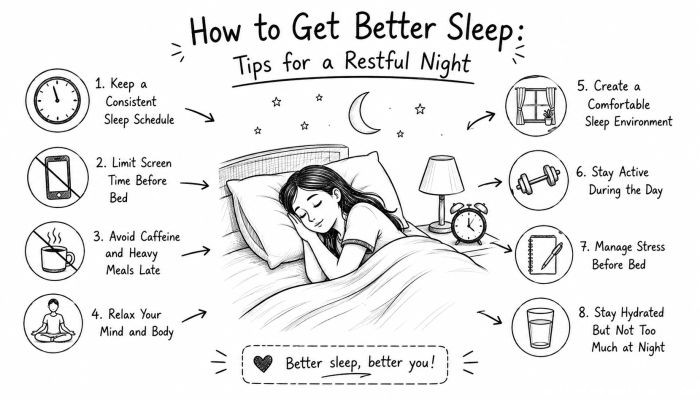
When you prioritize sleep, you’re investing in your physical and mental health. Recognizing its importance is the first step toward making meaningful changes.
Stick to a Consistent Sleep Schedule
Your body has an internal clock, known as the circadian rhythm. Maintaining a consistent sleep schedule helps regulate this cycle.
Try to:
- Go to bed at the same time every night
- Wake up at the same time every morning
Even on weekends, consistency is key. Over time, your body adapts, making it easier to fall asleep and wake up naturally.
Create a Relaxing Bedtime Routine
A calming bedtime routine signals your body that it’s time to wind down.
Consider activities like:
- Reading a book
- Listening to soft music
- Practicing deep breathing
Avoid stimulating activities before bed. A peaceful routine helps your mind transition from activity to rest, improving sleep quality.
Limit Screen Time Before Bed
Screens emit blue light, which can interfere with your body’s production of melatonin—the hormone responsible for sleep.
To improve sleep:
- Avoid phones and laptops at least 30–60 minutes before bed
- Use night mode if necessary
Reducing screen exposure helps your brain relax and prepares your body for sleep.
Optimize Your Sleep Environment
Your bedroom should be a place of comfort and relaxation.
Focus on:
- Comfortable mattress and pillows
- Cool room temperature
- Minimal noise and light
A well-designed sleep environment can significantly improve how quickly you fall asleep and how deeply you rest.
Watch What You Eat and Drink
Your diet can impact your sleep more than you might realize.
Avoid:
- Heavy meals before bedtime
- Caffeine in the evening
- Excessive sugar
Instead, opt for light snacks if needed. What you consume plays a direct role in how well you sleep.
Stay Physically Active During the Day
Regular physical activity can improve sleep quality and help you fall asleep faster.
Activities like:
- Walking
- Exercising
- Yoga
help reduce stress and promote better sleep. However, avoid intense workouts close to bedtime, as they may have the opposite effect.
Manage Stress and Overthinking
Stress and anxiety are common causes of poor sleep. When your mind is active, it becomes difficult to relax.
Try:
- Journaling your thoughts
- Practicing mindfulness
- Deep breathing exercises
Managing stress helps calm your mind and creates a mental space for restful sleep.
Avoid Napping Too Much During the Day
While short naps can be refreshing, long or late naps can disrupt your nighttime sleep.
If you nap:
- Keep it under 20–30 minutes
- Avoid late afternoon naps
This ensures that you’re tired enough to fall asleep at night.
Use Light to Your Advantage
Exposure to natural light during the day helps regulate your sleep cycle.
Try to:
- Spend time outdoors
- Open curtains during the day
At night, keep lighting dim to signal your body that it’s time to rest. Light plays a key role in controlling your internal clock.
Listen to Your Body
Sometimes, forcing yourself to sleep can make things worse. If you can’t fall asleep, don’t stay in bed feeling frustrated.
Instead:
- Get up and do something relaxing
- Return to bed when you feel sleepy
Listening to your body helps reduce anxiety around sleep and makes it easier to drift off naturally.
 The Importance of Fostering Creativity in Education
 How to Plan a Family Movie Night Everyone Will Enjoy
 How to Navigate Parenting in the Digital Age
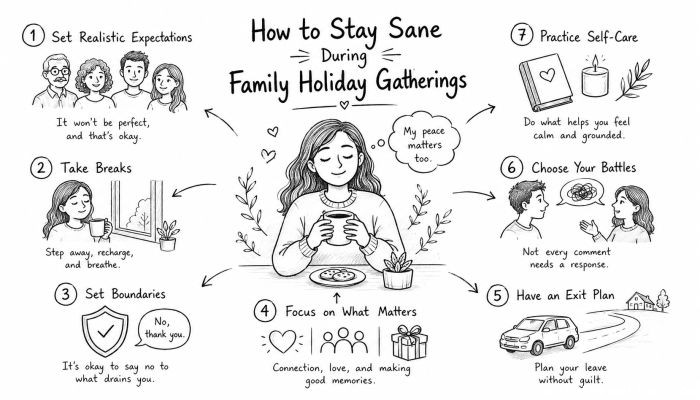 How to Stay Sane During Family Holiday Gatherings
 How to Create a Family Calendar for Better Time Management
 How to Encourage Your Child to Be Independent and Responsible