How to Reduce Stress Using Meditation and Yoga
In today’s fast-paced world, stress has become an almost inevitable part of daily life. Whether due to work pressures, family responsibilities, or social demands, chronic stress can take a heavy toll on physical health, mental well-being, and overall quality of life. As awareness around holistic health grows, many individuals are turning to ancient practices like meditation and yoga to find refuge from stress’s grasp. These mind-body techniques offer powerful tools to calm the nervous system, enhance resilience, and foster inner peace. This article explores how meditation and yoga work together to reduce stress, providing practical guidance on integrating these practices into your routine. By understanding their mechanisms and benefits, you’ll be better equipped to harness their full potential and cultivate a balanced, relaxed state of mind and body.
- Understanding Stress: The Silent Epidemic
- The Science Behind Meditation and Stress Reduction
- Yoga: A Powerful Holistic Approach
- Mindfulness Meditation: Cultivating Present-Moment Awareness
- Pranayama: Breath Control to Calm the Nervous System
- The Role of Yoga Asanas in Stress Relief
- Combining Meditation and Yoga for Maximum Benefits
- Creating a Personal Practice Routine
- Overcoming Common Challenges in Meditation and Yoga
- Integrating Breath and Movement for Stress Awareness
- The Impact of Meditation and Yoga on Sleep and Stress
- Stress Reduction in the Workplace Through Meditation and Yoga
- Cultivating Long-Term Resilience and Well-being
- Conclusion: Embracing Meditation and Yoga for a Stress-Free Life
- More Related Topics
Understanding Stress: The Silent Epidemic
Before delving into solutions, it’s essential to understand what stress truly is. Stress is a physiological and psychological response to perceived challenges or threats, often referred to as the “fight or flight” reaction. While occasional stress can motivate positive action, chronic stress can lead to serious health issues, including anxiety, depression, cardiovascular disease, and weakened immunity. Recognizing this, many health professionals advocate for proactive stress management strategies that address both mind and body—enter meditation and yoga.
The Science Behind Meditation and Stress Reduction
Meditation is a practice of focused attention and mindfulness that promotes relaxation and mental clarity. Scientific studies have shown that regular meditation reduces cortisol levels—the primary stress hormone—and changes brain activity in areas associated with emotional regulation. Moreover, meditation increases gamma-aminobutyric acid (GABA), a neurotransmitter that induces calmness. By consistently engaging in meditation, individuals can effectively rewire their stress response, leading to greater emotional balance.
Yoga: A Powerful Holistic Approach
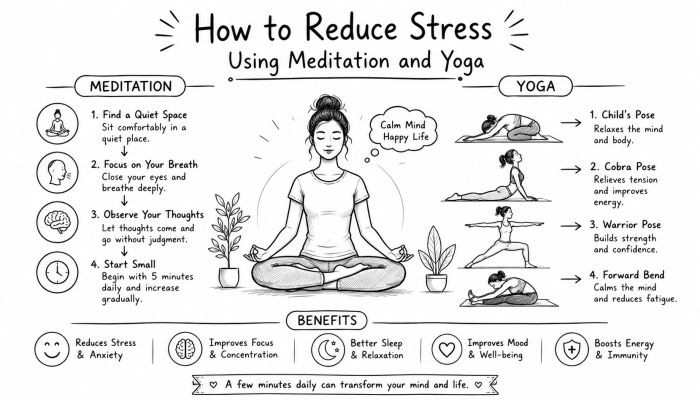
Yoga integrates physical postures (asanas), breathing exercises (pranayama), and meditation (dhyana) into a comprehensive practice that strengthens the connection between mind and body. Stress often manifests physically through muscle tension and shallow breathing; yoga’s gentle stretches and breath control counteract these symptoms by relaxing muscles and promoting oxygen flow. This combination not only reduces tension but also encourages mindfulness, creating an environment conducive to stress relief.
Mindfulness Meditation: Cultivating Present-Moment Awareness
One of the most accessible forms of meditation for stress reduction is mindfulness meditation. This technique involves paying open, non-judgmental attention to the present moment—observing thoughts, emotions, and bodily sensations without attachment. Mindfulness helps interrupt the cycle of rumination and worry that fuels stress. With ongoing practice, individuals develop greater awareness of stress triggers and enhanced coping mechanisms, leading to a calmer state of mind.
Pranayama: Breath Control to Calm the Nervous System
Breath is a powerful tool for managing stress because it directly influences the autonomic nervous system. Pranayama exercises, such as alternate nostril breathing or deep abdominal breathing, activate the parasympathetic nervous system—the “rest and digest” response—which counters the stress-induced “fight or flight.” Deliberate breath control slows heart rate, lowers blood pressure, and promotes mental tranquility, making pranayama an essential yoga technique for stress management.
The Role of Yoga Asanas in Stress Relief
Physical postures in yoga serve not only to increase strength and flexibility but also to release built-up tension in muscles and fascia. Poses such as Child’s Pose, Forward Fold, and Legs-Up-The-Wall are particularly effective for relaxation. Regularly practicing these asanas promotes circulation, reduces cortisol production, and encourages the secretion of endorphins, the body’s natural mood elevators. When combined with mindful breathing, asanas create a potent antidote to stress.
Combining Meditation and Yoga for Maximum Benefits
While meditation and yoga each offer unique stress-relieving advantages, combining both yields a synergistic effect. Yoga prepares the body and mind for meditation by loosening physical rigidity and calming the mind. Following a yoga session with meditation can deepen relaxation, enhance focus, and consolidate the stress reduction benefits. Many practitioners find that their capacity to manage stress improves markedly when these practices are integrated.
Creating a Personal Practice Routine
Consistency is key when using meditation and yoga to manage stress. Establishing a daily or regular routine, even if brief, cultivates lasting change. Beginners might start with five to ten minutes of meditation and simple yoga postures, gradually increasing the duration as comfort grows. Using guided sessions, apps, or attending classes can also provide structure and motivation. Ultimately, a personalized practice tuned to individual needs and lifestyle enhances commitment and results.
Overcoming Common Challenges in Meditation and Yoga
Many people encounter obstacles when starting meditation and yoga, including difficulty focusing, restlessness, or physical discomfort. It’s important to approach these challenges with patience and self-compassion. Modifying postures, choosing a quiet environment, or experimenting with different meditation techniques can help ease these difficulties. Remember, perfection is not the goal—regular practice and gentle persistence lead to progress over time.
Integrating Breath and Movement for Stress Awareness
Developing mindfulness through breath and movement awareness during yoga encourages greater sensitivity to stress signals in the body. Paying attention to sensations such as tightness, racing heartbeat, or shallow breathing helps identify early stress responses. This awareness acts as an internal alarm system, prompting timely self-care actions such as pausing, breathing deeply, or meditating, thus preventing stress from escalating.
The Impact of Meditation and Yoga on Sleep and Stress
Poor sleep often exacerbates stress, creating a vicious cycle. Meditation and yoga have been proven to improve sleep quality by reducing hyperarousal and calming the mind before bedtime. Practices like yoga nidra (yogic sleep) and guided meditation encourage deep relaxation and reset the nervous system. Incorporating these practices into an evening routine can help break the stress-sleep loop and foster restorative rest.
Stress Reduction in the Workplace Through Meditation and Yoga
Work-related stress is a common issue affecting productivity and well-being. Implementing meditation and yoga programs in the workplace can empower employees to manage their stress levels more effectively. Simple practices such as brief mindful breathing breaks or stretching sessions can be easily integrated into the workday. Organizations that support these initiatives often see improved morale, reduced absenteeism, and enhanced overall mental health.
Cultivating Long-Term Resilience and Well-being
Beyond immediate relief, regular meditation and yoga practice build resilience against future stress. They nurture qualities such as emotional regulation, self-awareness, and acceptance. Over time, practitioners develop a profound sense of inner peace and balance that withstands external pressures. This lasting transformation is the true gift of embracing meditation and yoga as integral components of a healthy lifestyle.
Conclusion: Embracing Meditation and Yoga for a Stress-Free Life
Stress, while inevitable, need not control our lives. Meditation and yoga present accessible, effective, and holistic approaches to managing stress by harmonizing mind and body. Through calming breath, mindful movement, and focused attention, these ancient practices empower us to break free from the grip of chronic tension and anxiety. By cultivating a regular routine tailored to personal needs, anyone can experience profound relaxation, improved mental clarity, and enhanced well-being. In embracing meditation and yoga, we not only reduce stress but also unlock the door to a more peaceful, resilient, and fulfilling life.
 How to Make the Most of Your Holiday Break
 The Best Winter Destinations for a Cozy Getaway
 How to Organize Your Holiday Travel Plans with Ease
 The Ultimate Guide to Cooking for a Crowd
 How to Make Healthy Comfort Food Without the Guilt
 5 Delicious Vegan Breakfast Ideas You Can Make in Minutes