5 Easy Yoga Poses You Can Do Anywhere for Relaxation
Modern life rarely gives your mind or body a chance to truly rest. Long hours at work, constant screen time, travel, family responsibilities, and endless notifications keep your nervous system in a near-constant state of alert. Over time, this tension builds up as mental fatigue, tight muscles, poor sleep, and emotional overwhelm. Yoga offers a simple, accessible way to interrupt that cycle. You don’t need a studio, expensive equipment, or perfect flexibility to experience its benefits. A few gentle poses, practiced with awareness and steady breathing, can calm your mind and relax your body almost anywhere. This guide introduces five easy yoga poses you can do anywhere for relaxation—at home, in the office, while traveling, or even outdoors. These poses are beginner-friendly, practical, and designed to help you slow down, release tension, and reconnect with your breath.
- Why Yoga Is So Effective for Relaxation
- What Makes a Yoga Pose Relaxing
- How to Practice Yoga Anywhere Without a Mat
- Child’s Pose (Balasana) – Deep Rest for Mind and Body
- Seated Forward Fold (Paschimottanasana) – Calming the Nervous System
- Standing Forward Fold (Uttanasana) – Instant Stress Release
- Cat–Cow Stretch (Marjaryasana–Bitilasana) – Gentle Movement for Relaxation
- Legs Up the Wall (Viparita Karani) – Ultimate Relaxation Anywhere
- When and Where to Practice These Poses
- Common Mistakes to Avoid When Practicing Relaxing Yoga
- Making Relaxation Yoga a Sustainable Habit
- Why Gentle Yoga Is Especially Helpful During Stressful Times
- Combining Yoga With Other Relaxation Practices
- Conclusion
- More Related Topics
Why Yoga Is So Effective for Relaxation
Yoga works because it addresses stress at its root—the nervous system. Gentle movement combined with slow, intentional breathing signals safety to your body. This activates the parasympathetic nervous system, often called the “rest and digest” mode. As a result, heart rate slows, muscles soften, and mental chatter begins to quiet. Unlike high-intensity exercise, relaxing yoga doesn’t demand performance. It invites awareness. Even a few minutes of yoga can shift your internal state from tension to ease.
What Makes a Yoga Pose Relaxing
Relaxing yoga poses are typically slow, grounded, and supported. They don’t strain muscles or require strength. Instead, they focus on lengthening, releasing, and breathing. These poses encourage stillness and introspection rather than effort. The goal isn’t to stretch deeply—it’s to feel safe and present in your body. When practiced with gentle attention, even the simplest pose can feel profoundly calming.
How to Practice Yoga Anywhere Without a Mat
One of yoga’s greatest strengths is its flexibility. Many relaxing poses can be done on a carpet, bed, chair, or even standing. Comfortable clothing helps, but perfection isn’t required. Focus on slow breathing, minimal movement, and comfort. If the floor isn’t accessible, modify poses using chairs, walls, or cushions. Yoga is about adapting the practice to your life—not rearranging your life for the practice.
Child’s Pose (Balasana) – Deep Rest for Mind and Body
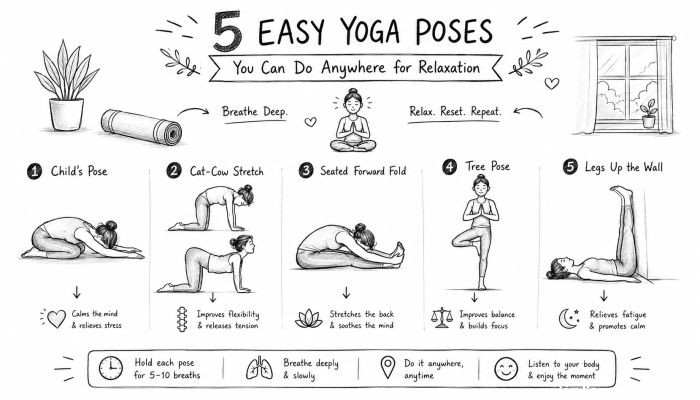
Child’s Pose is one of the most grounding and soothing yoga poses. Kneel on the floor, bring your big toes together, and gently sit back on your heels. Fold forward, resting your chest over your thighs and your forehead down. Let your arms relax forward or alongside your body. This pose encourages deep breathing into the back body, gently stretches the spine, and creates a sense of emotional safety. It’s ideal for moments of overwhelm or fatigue.
Seated Forward Fold (Paschimottanasana) – Calming the Nervous System
This pose is simple yet powerful for relaxation. Sit on the floor or a chair with legs extended or feet planted. Inhale to lengthen your spine, then exhale and gently fold forward, letting your head and shoulders relax. There’s no need to touch your toes—focus on releasing tension in your neck and back. Seated forward folds naturally calm the mind, ease anxiety, and encourage introspection, making them ideal for winding down.
Standing Forward Fold (Uttanasana) – Instant Stress Release
Standing Forward Fold is excellent when you need quick relief from mental or physical tension. Stand with feet hip-width apart, bend your knees slightly, and fold forward from the hips. Let your head hang heavy and your arms dangle or hold opposite elbows. This pose improves circulation to the brain, releases tight hamstrings and lower back muscles, and provides a sense of emotional release. It’s perfect for office breaks or travel stops.
Cat–Cow Stretch (Marjaryasana–Bitilasana) – Gentle Movement for Relaxation
Cat–Cow is a flowing, breath-led movement that melts tension along the spine. Start on hands and knees. Inhale as you drop your belly and lift your chest (Cow), then exhale as you round your spine and tuck your chin (Cat). Move slowly, syncing breath with movement. This pose releases stiffness in the back and neck while calming the nervous system. It’s especially helpful after long periods of sitting.
Legs Up the Wall (Viparita Karani) – Ultimate Relaxation Anywhere
Legs Up the Wall is one of the most restorative yoga poses you can do. Lie on your back and rest your legs vertically against a wall, chair, or bed. Let your arms relax by your sides and close your eyes. This pose reduces swelling in the legs, slows the heart rate, and deeply relaxes the mind. It’s excellent before sleep, after travel, or anytime you feel drained.
When and Where to Practice These Poses
These yoga poses fit easily into everyday life. Practice them in the morning to set a calm tone, during work breaks to reset your focus, or in the evening to unwind. Even five to ten minutes can make a noticeable difference. Consistency matters more than duration. Small, regular moments of relaxation build resilience over time.
Common Mistakes to Avoid When Practicing Relaxing Yoga
One common mistake is pushing too hard or treating relaxation poses like workouts. Another is holding tension in the jaw, shoulders, or breath. Relaxing yoga should feel supportive, not effortful. Use cushions or folded towels if needed. If discomfort arises, ease out of the pose. Listening to your body is essential for genuine relaxation.
Making Relaxation Yoga a Sustainable Habit
To make yoga part of your routine, keep it simple and accessible. Choose one or two poses you enjoy and return to them often. Attach your practice to existing habits—after waking up, before bed, or during lunch breaks. When yoga feels like a gift rather than a task, it naturally becomes sustainable.
Why Gentle Yoga Is Especially Helpful During Stressful Times
During periods of high stress, your body needs reassurance, not intensity. Gentle yoga provides that reassurance by creating a sense of safety and predictability. It helps regulate emotions, improve sleep quality, and reduce mental overload. Over time, this practice builds emotional resilience, making it easier to respond calmly to life’s challenges.
Combining Yoga With Other Relaxation Practices
Yoga pairs beautifully with other calming practices such as meditation, journaling, or listening to soft music. Even a few moments of stillness after a pose can deepen its effects. The goal isn’t to do everything—it’s to create space for rest. Yoga simply opens the door.
Conclusion
Relaxation doesn’t require a retreat, special equipment, or hours of free time. Sometimes, it begins with a single breath and a simple movement. These five easy yoga poses you can do anywhere for relaxation offer practical tools to calm your mind and soften your body, no matter where you are. By practicing gently and consistently, you teach your nervous system how to rest again. Over time, these small moments of ease add up, helping you move through life with greater balance, clarity, and emotional steadiness. Yoga isn’t about flexibility or performance—it’s about coming home to yourself, one quiet moment at a time.a
 How to Make the Most of Your Holiday Break
 The Best Winter Destinations for a Cozy Getaway
 How to Organize Your Holiday Travel Plans with Ease
 The Ultimate Guide to Cooking for a Crowd
 How to Make Healthy Comfort Food Without the Guilt
 5 Delicious Vegan Breakfast Ideas You Can Make in Minutes