The Benefits of Intermittent Fasting for Health and Weight Loss
In a world overflowing with diet trends, calorie calculators, and conflicting nutrition advice, it’s easy to feel confused about what actually works. Many people want better health and sustainable weight loss but are tired of restrictive plans that demand constant tracking and willpower. This is where intermittent fasting stands out—not as a diet, but as a pattern of eating that aligns more closely with how the human body is designed to function.
The growing interest in intermittent fasting isn’t driven by hype alone. People are drawn to it because it feels simple, flexible, and surprisingly effective. Beyond weight loss, many report improved energy, mental clarity, and better overall well-being. In this article, we’ll explore the benefits of intermittent fasting for health and weight loss, breaking down how it works, why it’s effective, and how it can fit into real life. This isn’t about extremes—it’s about understanding your body and working with it, not against it.
- What Is Intermittent Fasting, Really?
- Why the Body Responds Well to Fasting
- Intermittent Fasting and Weight Loss: How It Works
- Appetite Control and Reduced Cravings
- Improved Metabolic Health and Insulin Sensitivity
- Fat Loss Without Muscle Loss (When Done Right)
- Mental Clarity and Focus Benefits
- Reduced Inflammation and Cellular Repair
- Simplicity and Sustainability Compared to Dieting
- Flexibility for Different Lifestyles
- Common Mistakes That Reduce Its Benefits
- Conclusion: A Tool, Not a Shortcut
- More Related Topics
What Is Intermittent Fasting, Really?
Intermittent fasting (IF) is not about what you eat—it’s about when you eat. Instead of spreading food intake across the entire day, intermittent fasting creates defined eating and fasting windows.
Common approaches include eating within an 8-hour window each day or fasting for 24 hours once or twice a week. Unlike traditional diets, IF doesn’t dictate food choices, which makes it easier to sustain long-term. It’s a structure, not a rulebook.
Why the Body Responds Well to Fasting
For most of human history, food wasn’t available around the clock. Our bodies evolved to handle periods of eating followed by periods of fasting. Intermittent fasting reintroduces this natural rhythm.
When you fast, your body shifts from using incoming calories for energy to tapping into stored energy. This metabolic flexibility is one reason fasting feels surprisingly natural once the body adapts. Instead of constant digestion, the body gets time to repair and reset.
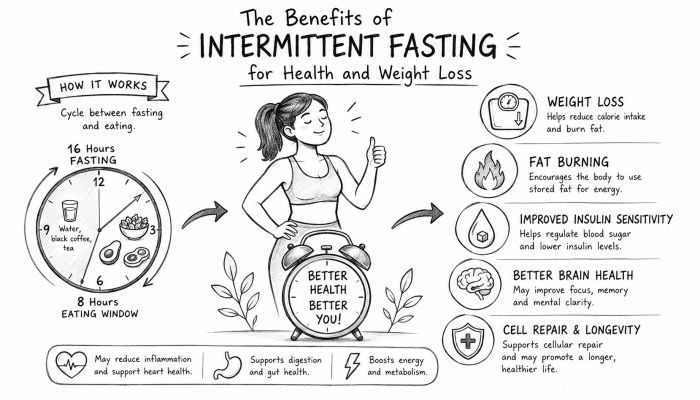
Intermittent Fasting and Weight Loss: How It Works
One of the most well-known benefits of intermittent fasting is weight loss. This happens for several reasons, not just calorie reduction.
Fasting lowers insulin levels, making it easier for the body to access stored fat. It also reduces mindless snacking and late-night eating—two major contributors to weight gain. Over time, this creates a calorie deficit naturally, without the feeling of constant restriction.
Appetite Control and Reduced Cravings
Contrary to what many expect, intermittent fasting often leads to less hunger, not more. Once the body adapts, hunger hormones become more regulated.
Instead of frequent spikes in hunger driven by sugar crashes, many people experience more stable appetite cues. This makes it easier to stop eating when satisfied and reduces emotional or boredom-based eating.
Improved Metabolic Health and Insulin Sensitivity
Intermittent fasting has been shown to improve insulin sensitivity, which plays a crucial role in metabolic health. Better insulin sensitivity means the body can manage blood sugar more efficiently.
This is especially important for people at risk of metabolic conditions. By giving the body regular breaks from digestion, fasting reduces constant insulin spikes and supports long-term metabolic balance.
Fat Loss Without Muscle Loss (When Done Right)
A common concern with fasting is muscle loss. However, when intermittent fasting is paired with adequate protein intake and resistance training, the body prioritizes fat loss while preserving lean muscle.
Fasting increases growth hormone levels, which supports muscle maintenance. This makes intermittent fasting a powerful tool for body recomposition—not just weight loss on the scale.
Mental Clarity and Focus Benefits
Many people notice improved mental clarity during fasting periods. Without constant digestion, blood flow and energy are redirected toward the brain.
Stable blood sugar and reduced inflammation may contribute to better focus and concentration. For some, fasting hours become the most productive part of the day, both mentally and creatively.
Reduced Inflammation and Cellular Repair
One of the lesser-known but powerful benefits of intermittent fasting is its impact on cellular repair. During fasting, the body activates processes that remove damaged cells and recycle cellular components.
This process supports reduced inflammation and overall cellular health. While weight loss is often the initial goal, these internal benefits contribute to long-term wellness.
Simplicity and Sustainability Compared to Dieting
One reason intermittent fasting is easier to maintain than traditional diets is its simplicity. There’s no need to count calories constantly or eliminate entire food groups.
Fewer meals mean fewer decisions, less planning, and often less stress around food. When eating feels simpler, consistency improves—and consistency is what drives lasting results.
Flexibility for Different Lifestyles
Intermittent fasting is adaptable. Whether you’re a busy professional, a parent, or someone who enjoys social meals, fasting schedules can be adjusted.
Some people fast in the morning, others skip dinner. The ability to personalize the approach makes it more realistic than rigid diet plans that don’t account for real life.
Common Mistakes That Reduce Its Benefits
Intermittent fasting is effective—but only when done thoughtfully. Common mistakes include overeating during eating windows, neglecting nutrition quality, or fasting too aggressively.
Fasting isn’t a license to eat poorly. Whole foods, adequate protein, hydration, and sleep all play a role in maximizing benefits. Balance matters more than intensity.
 How to Make the Most of Your Holiday Break
 The Best Winter Destinations for a Cozy Getaway
 How to Organize Your Holiday Travel Plans with Ease
 The Ultimate Guide to Cooking for a Crowd
 How to Make Healthy Comfort Food Without the Guilt
 5 Delicious Vegan Breakfast Ideas You Can Make in Minutes