How to Stay Fit While Working a Desk Job
Modern work has changed the way we live—and not always for the better. For millions of people, a typical workday involves sitting for hours, staring at screens, attending back-to-back meetings, and feeling mentally drained by evening. Over time, this sedentary routine can quietly impact physical health, posture, energy levels, and even emotional well-being. Many desk workers don’t struggle because they lack motivation—they struggle because their jobs are designed around stillness.
Learning how to stay fit while working a desk job isn’t about squeezing intense workouts into already packed schedules or chasing unrealistic fitness ideals. It’s about building small, intentional habits that counterbalance long periods of sitting. In this article, we’ll explore practical, sustainable strategies to help you move more, feel better, and protect your long-term health—without quitting your job or overhauling your life. Fitness at a desk job is possible, and it starts with awareness and consistency.
- Understand the Hidden Impact of Prolonged Sitting
- Redefine Fitness for a Desk-Based Lifestyle
- Build Movement Breaks Into Your Workday
- Improve Your Desk Ergonomics for Better Posture
- Use Stretching to Counteract Desk Tension
- Incorporate Strength Without Leaving Your Office
- Walk Whenever You Can—It Adds Up Quickly
- Make Fitness Part of Your Work Routine, Not Separate From It
- Protect Your Energy With Smart Nutrition and Hydration
- Use Mornings or Evenings Strategically (Not Perfectly)
- Pay Attention to Mental Fitness Too
- Conclusion: You Don’t Need a New Job—You Need New Habits
- More Related Topics
Understand the Hidden Impact of Prolonged Sitting
Sitting for extended periods slows metabolism, weakens muscles, stiffens joints, and reduces circulation. Over time, this can contribute to back pain, neck tension, weight gain, and fatigue—even if you exercise occasionally.
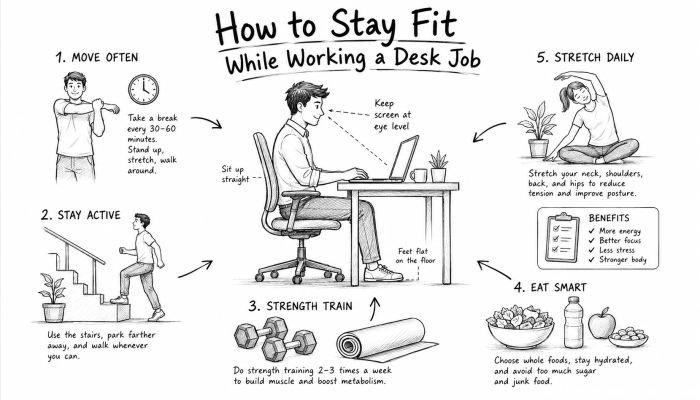
The issue isn’t just lack of workouts; it’s lack of movement throughout the day. Understanding this helps shift focus from “working out more” to “moving more often,” which is far more effective for desk workers.
Redefine Fitness for a Desk-Based Lifestyle
Fitness doesn’t only happen at the gym. For desk workers, fitness is the accumulation of movement across the entire day—standing, stretching, walking, and changing posture regularly.
When you redefine fitness as daily movement, it becomes more accessible. Small actions, repeated consistently, can protect your health just as powerfully as scheduled workouts.
Build Movement Breaks Into Your Workday
One of the simplest ways to stay fit at a desk job is to interrupt long sitting periods. Aim to move for at least 2–5 minutes every 30–60 minutes.
Stand up, stretch, walk to get water, or do a few bodyweight movements. These breaks improve circulation, reduce stiffness, and boost mental clarity. Set reminders if needed—movement should be planned, not optional.
Improve Your Desk Ergonomics for Better Posture
Poor posture drains energy and causes chronic pain. A well-set workstation supports your body instead of working against it.
Adjust your chair so feet rest flat on the floor, screen is at eye level, and shoulders are relaxed. Good ergonomics don’t replace movement, but they reduce strain and make long workdays far more sustainable.
Use Stretching to Counteract Desk Tension
Desk work shortens hip flexors, tightens shoulders, and strains the neck. Regular stretching keeps muscles flexible and prevents discomfort from building up.
Simple stretches—neck rolls, chest openers, spinal twists, and hip stretches—can be done right at your desk. Stretching isn’t about flexibility alone; it’s about restoring balance to your body.
Incorporate Strength Without Leaving Your Office
You don’t need gym equipment to build strength. Bodyweight exercises like squats, wall push-ups, calf raises, and desk planks can be done in small spaces.
A few sets spread throughout the day activate muscles and improve posture. Strength training at work may feel unconventional—but your body will thank you.
Walk Whenever You Can—It Adds Up Quickly
Walking is one of the most underrated fitness tools for desk workers. Take phone calls while walking, use stairs instead of elevators, or walk during lunch breaks.
Even short walks increase daily step count, improve cardiovascular health, and refresh your mind. Walking isn’t “less than” other workouts—it’s foundational movement.
Make Fitness Part of Your Work Routine, Not Separate From It
Fitness becomes sustainable when it’s integrated into daily routines instead of treated as an extra task. Pair movement with existing habits—stretch after meetings, walk after lunch, stand while reviewing emails.
When fitness is embedded into your workday, consistency improves without requiring extra willpower.
Protect Your Energy With Smart Nutrition and Hydration
Staying fit isn’t only about movement—energy matters too. Desk jobs often lead to mindless snacking, dehydration, and energy crashes.
Eat balanced meals, keep healthy snacks nearby, and drink water regularly. Proper nutrition supports movement, focus, and recovery—especially when physical activity is spread throughout the day.
Use Mornings or Evenings Strategically (Not Perfectly)
While daily movement matters most, structured workouts still help. Short workouts before or after work—even 20 minutes—build strength and resilience.
Avoid all-or-nothing thinking. A short walk or light workout is enough on busy days. Consistency beats intensity when your job already demands mental energy.
Pay Attention to Mental Fitness Too
Desk jobs don’t just strain the body—they strain the mind. Chronic stress and mental fatigue can reduce motivation to move.
Movement itself improves mental health by reducing stress hormones and boosting mood. Breathing exercises, outdoor walks, and screen breaks support emotional well-being alongside physical fitness.
 How to Make the Most of Your Holiday Break
 The Best Winter Destinations for a Cozy Getaway
 How to Organize Your Holiday Travel Plans with Ease
 The Ultimate Guide to Cooking for a Crowd
 How to Make Healthy Comfort Food Without the Guilt
 5 Delicious Vegan Breakfast Ideas You Can Make in Minutes