How to Incorporate More Plant-Based Meals into Your Diet
Eating more plant-based meals isn’t about labels, strict rules, or giving up foods you love. For many people, it begins with a simple intention: to feel better, eat more mindfully, and support long-term health without turning daily meals into a struggle. Plant-based eating has grown in popularity not because it’s trendy, but because it’s practical, flexible, and deeply nourishing when done right.
Incorporating more plant-based meals into your diet doesn’t require becoming fully vegetarian or vegan overnight. It’s about adding—more vegetables, legumes, whole grains, fruits, and plant proteins—rather than subtracting everything familiar. This guide will walk you through how to incorporate more plant-based meals into your diet in a realistic, sustainable way. Whether you’re curious, health-focused, or simply bored with routine meals, these strategies help you build habits that last—without pressure or perfection.
- Start With Addition, Not Restriction
- Redefine What a “Meal” Looks Like
- Learn a Few Reliable Plant-Based Proteins
- Make Familiar Dishes Plant-Based First
- Build Flavor With Herbs, Spices, and Sauces
- Try One or Two Plant-Based Days Each Week
- Make Plant-Based Breakfasts Effortless
- Learn to Balance Plant-Based Meals for Fullness
- Explore Global Cuisines That Are Naturally Plant-Based
- Keep Plant-Based Convenience Foods Realistic
- Shift Mindset From “Diet” to “Lifestyle”
- Let Flexibility Be Part of the Process
- Conclusion: Small Shifts Create Lasting Change
- More Related Topics
Start With Addition, Not Restriction
One of the biggest mistakes people make when trying plant-based eating is focusing on what they can’t eat. This mindset creates resistance and makes the change feel temporary.
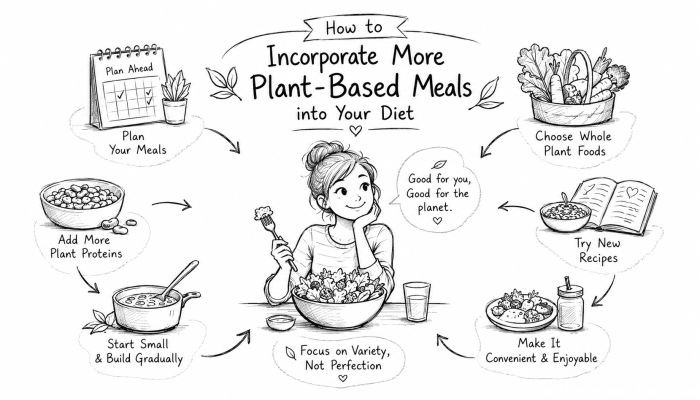
Instead, focus on addition. Add more vegetables to your meals. Add beans to soups. Add fruit to breakfast. When your plate naturally fills with plant foods, there’s less room—and less desire—for heavily processed or animal-based options. Sustainable change always feels expansive, not limiting.
Redefine What a “Meal” Looks Like
Many people are conditioned to think a meal must revolve around meat, with vegetables on the side. Plant-based eating flips that script.
Start building meals where vegetables, grains, or legumes are the center—and everything else supports them. Grain bowls, stir-fries, hearty salads, soups, and stews naturally lend themselves to plant-based eating while still feeling satisfying and complete.
Learn a Few Reliable Plant-Based Proteins
Protein is often the biggest concern when shifting toward plant-based meals—but it’s rarely a real problem when meals are balanced.
Get comfortable with a few staples: lentils, chickpeas, beans, tofu, tempeh, edamame, seeds, and whole grains. You don’t need to use all of them at once. Mastering just two or three protein sources makes plant-based cooking feel approachable rather than overwhelming.
Make Familiar Dishes Plant-Based First
You don’t need an entirely new recipe collection. Start by adapting meals you already enjoy.
Swap meat for lentils in tacos, beans in chili, or vegetables in pasta sauces. Replace cream with blended cashews or coconut milk. When flavors and formats are familiar, your brain accepts the change more easily—and satisfaction stays high.
Build Flavor With Herbs, Spices, and Sauces
One reason plant-based meals sometimes get labeled as “boring” is under-seasoning—not lack of ingredients.
Herbs, spices, citrus, garlic, ginger, fermented foods, and sauces bring plant-based dishes to life. Flavor is what keeps meals exciting. Once you focus on seasoning generously and intentionally, plant-based meals feel indulgent rather than restrictive.
Try One or Two Plant-Based Days Each Week
You don’t need to change everything at once. Designating one or two plant-based days per week—like “Meatless Monday”—creates consistency without pressure.
This approach builds confidence and skill gradually. Over time, you may find yourself choosing plant-based meals more often simply because you enjoy them—not because you planned to.
Make Plant-Based Breakfasts Effortless
Breakfast is one of the easiest meals to make plant-based. Oatmeal with fruit, smoothies, whole-grain toast with spreads, or savory vegetable scrambles are simple and satisfying.
When the first meal of the day is plant-based, momentum builds naturally. You start the day energized and nourished, making healthier choices easier as the day goes on.
Learn to Balance Plant-Based Meals for Fullness
Plant-based meals should leave you satisfied—not hungry an hour later. The key is balance.
Include complex carbohydrates (whole grains or starchy vegetables), protein (legumes or tofu), healthy fats (avocado, seeds, olive oil), and fiber-rich vegetables. When all four are present, meals feel grounding and complete.
Explore Global Cuisines That Are Naturally Plant-Based
Many global cuisines have rich traditions of plant-based cooking—often without trying to be “healthy.”
Indian dals, Mediterranean mezze, Middle Eastern bean dishes, Asian stir-fries, and Latin American rice-and-bean combinations offer flavor, variety, and cultural depth. Exploring these cuisines adds excitement and inspiration to your plant-based journey.
Keep Plant-Based Convenience Foods Realistic
Not every meal needs to be cooked from scratch. Plant-based convenience foods—like frozen vegetables, canned beans, and ready-made sauces—can be incredibly helpful.
The goal is progress, not perfection. Having quick plant-based options available prevents decision fatigue and keeps habits sustainable even on busy days.
Shift Mindset From “Diet” to “Lifestyle”
Plant-based eating works best when it’s not treated as a temporary fix. Instead of chasing results, focus on how you feel—energy levels, digestion, mood, and enjoyment.
When food choices align with how you want to live and feel, consistency follows naturally. Plant-based meals become part of your identity, not a rule you’re forcing yourself to follow.
Let Flexibility Be Part of the Process
Flexibility is not failure—it’s realism. Eating plant-based most of the time still delivers benefits, even if not every meal fits the label.
Remove guilt from food decisions. When plant-based eating feels supportive rather than strict, it becomes something you return to willingly. Sustainability always beats intensity.
Conclusion: Small Shifts Create Lasting Change
Incorporating more plant-based meals into your diet doesn’t require dramatic changes or rigid commitments. It’s built through small, intentional shifts—choosing plants more often, experimenting with flavors, and listening to how your body responds.
When plant-based eating is approached with curiosity rather than pressure, it becomes empowering. Meals feel lighter yet satisfying, choices feel intentional rather than forced, and health becomes something you build daily—not something you chase.
You don’t need to be perfect. You just need to begin. One plant-based meal at a time, you create a way of eating that supports both your well-being and your enjoyment of food—and that’s where real change lasts. 🌱🥗
 How to Make the Most of Your Holiday Break
 The Best Winter Destinations for a Cozy Getaway
 How to Organize Your Holiday Travel Plans with Ease
 The Ultimate Guide to Cooking for a Crowd
 How to Make Healthy Comfort Food Without the Guilt
 5 Delicious Vegan Breakfast Ideas You Can Make in Minutes