How to Plan a Stress-Free Holiday Shopping Experience
Holiday shopping is supposed to be joyful—a time to show love, generosity, and thoughtfulness. Yet for many people, it turns into a season of pressure, crowded stores, endless decisions, and financial anxiety. Between finding the “perfect” gifts, staying within budget, and managing time, it’s easy for the experience to feel more exhausting than festive. The result? Burnout before the holidays even arrive.
Learning how to plan a stress-free holiday shopping experience isn’t about spending more money or being perfectly organized—it’s about approaching the season with intention, clarity, and realistic expectations. When you plan ahead and focus on what truly matters, shopping becomes calmer, more meaningful, and even enjoyable. This guide walks you through practical, human-centered strategies to reduce overwhelm, stay on budget, and reclaim the joy of giving—so holiday shopping supports your well-being instead of draining it.
- Redefine What “Successful” Holiday Shopping Means
- Start With a Clear Gift List Early
- Set a Realistic Budget—and Respect It
- Prioritize Thoughtfulness Over Quantity
- Take Advantage of Online Shopping Strategically
- Spread Shopping Over Time Instead of One Big Push
- Use Organization Tools to Reduce Mental Load
- Set Boundaries Around Time and Energy
- Embrace Gift Alternatives When Appropriate
- Manage Expectations—Yours and Others’
- Build in Recovery Time After Shopping
- Remember Why You’re Giving in the First Place
- Conclusion: Calm Planning Creates Joyful Giving
- More Related Topics
Redefine What “Successful” Holiday Shopping Means
Stress often comes from unrealistic expectations. Many people feel pressure to buy impressive, expensive, or Instagram-worthy gifts.
A successful holiday shopping experience isn’t about perfection—it’s about thoughtfulness. Meaningful gifts don’t have to be flashy or costly. When you redefine success as intentional giving, the pressure instantly softens.
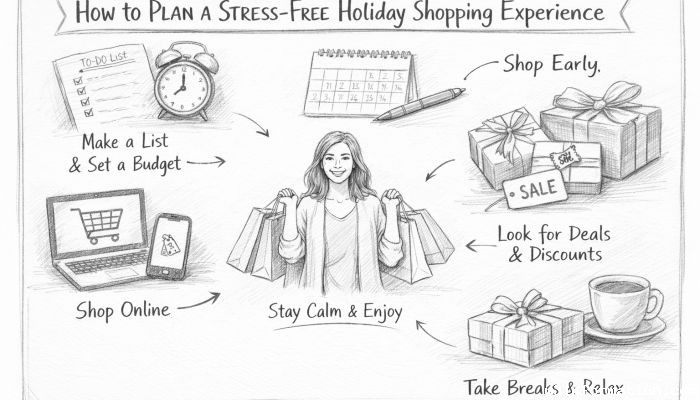
Start With a Clear Gift List Early
Procrastination fuels stress. Creating a gift list early gives your brain space to think calmly rather than react urgently.
Write down everyone you plan to shop for, including small or shared gifts. Note ideas as they come to you instead of forcing inspiration later. Early planning turns chaos into structure and reduces last-minute panic.
Set a Realistic Budget—and Respect It
Money anxiety is one of the biggest sources of holiday stress. A clear budget creates boundaries that protect both your finances and your peace of mind.
Decide how much you can comfortably spend overall and per person. Be honest, not aspirational. A budget isn’t restrictive—it’s freeing. When spending aligns with your reality, guilt disappears.
Prioritize Thoughtfulness Over Quantity
More gifts don’t equal more love. In fact, too many gifts often add stress for both the giver and the receiver.
Focus on fewer, more intentional purchases. A single thoughtful gift often carries more emotional value than multiple generic ones. Quality beats quantity every time—especially during the holidays.
Take Advantage of Online Shopping Strategically
Online shopping can be a stress-saver when used intentionally. It eliminates crowds, saves time, and allows easy price comparison.
However, endless scrolling can become overwhelming. Set time limits, use wish lists, and shop with a plan. Treat online shopping like an errand—not a marathon—to avoid burnout.
Spread Shopping Over Time Instead of One Big Push
Trying to do all your shopping in one weekend is a recipe for exhaustion. Spreading purchases over weeks keeps stress manageable.
Small, consistent shopping sessions allow you to stay focused and flexible. You’ll make better decisions and avoid the frantic rush that leads to overspending and regret.
Use Organization Tools to Reduce Mental Load
Holiday shopping requires remembering ideas, prices, shipping dates, and receipts. Holding all of this in your head creates unnecessary stress.
Use notes apps, spreadsheets, or simple planners to track purchases and ideas. Externalizing information frees your mind and makes shopping feel lighter and more controlled.
Set Boundaries Around Time and Energy
The holidays often blur boundaries. Saying yes to everything—sales, events, errands—leads to burnout.
Decide in advance how much time and energy you’re willing to spend shopping. It’s okay to skip sales, avoid crowded stores, or shop at off-peak hours. Protecting your energy is part of stress-free planning.
Embrace Gift Alternatives When Appropriate
Not every gift has to be a physical item. Experiences, homemade gifts, or shared activities can be deeply meaningful.
Gift cards for favorite activities, handwritten notes, or time spent together reduce shopping pressure and create lasting memories. These options often feel more personal than store-bought items.
Manage Expectations—Yours and Others’
Holiday stress often comes from trying to meet imagined expectations. Remember: most people don’t expect perfection—they expect connection.
Release the belief that gifts must impress. Honest communication about budgets or simplified traditions can relieve pressure on everyone. When expectations are realistic, enjoyment increases.
Build in Recovery Time After Shopping
Shopping—online or in-store—still takes energy. Treat it like any other task that requires recovery.
Take breaks, hydrate, move your body, and rest your eyes. Small acts of self-care prevent stress from accumulating and keep you grounded throughout the season.
Remember Why You’re Giving in the First Place
At its core, holiday shopping is about expressing care—not proving worth or meeting standards.
When stress rises, pause and reconnect with your intention. Giving is an act of kindness, not a performance. The moment you return to that truth, pressure loosens.
 How to Make the Most of Your Holiday Break
 The Best Winter Destinations for a Cozy Getaway
 How to Organize Your Holiday Travel Plans with Ease
 The Ultimate Guide to Cooking for a Crowd
 How to Make Healthy Comfort Food Without the Guilt
 5 Delicious Vegan Breakfast Ideas You Can Make in Minutes