How to Stay Sane During Family Holiday Gatherings
Family holiday gatherings are often painted as joyful, heartwarming occasions filled with laughter, delicious food, and meaningful connections. But let’s be honest—behind the festive lights and cheerful conversations, they can also bring stress, awkward moments, emotional triggers, and overwhelming expectations. From managing different personalities to handling unsolicited advice and navigating old family dynamics, it’s easy to feel drained instead of joyful. The good news is that staying sane during family gatherings isn’t about avoiding them—it’s about approaching them with the right mindset, boundaries, and strategies. With a little preparation and emotional awareness, you can turn these occasions into experiences that feel balanced, meaningful, and even enjoyable. In this guide, we’ll explore practical ways to protect your peace while still being present and connected during family holidays.
- Set Realistic Expectations
- Establish Healthy Boundaries
- Plan Your Time Wisely
- Prepare for Difficult Conversations
- Focus on What You Can Control
- Create Personal Space When Needed
- Practice Mindfulness and Deep Breathing
- Avoid Overcommitting Yourself
- Find Moments of Joy and Connection
- Let Go of Old Family Roles
- Keep Your Sense of Humor
- Conclusion
- More Related Topics
Set Realistic Expectations
One of the biggest reasons people feel overwhelmed during family gatherings is unrealistic expectations. We often imagine everything will be perfect—everyone getting along, conversations flowing smoothly, and no conflicts.
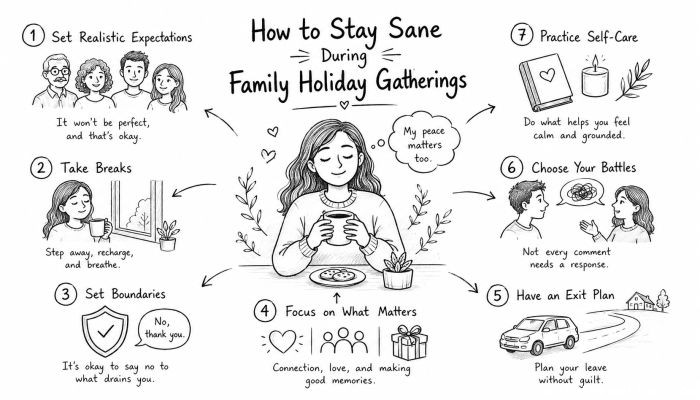
In reality, families are complex. Differences in opinions, habits, and personalities are natural. Accepting that things may not go perfectly helps reduce disappointment. When you lower expectations, you create space for genuine moments instead of chasing an ideal that doesn’t exist.
Establish Healthy Boundaries
Boundaries are essential for protecting your mental and emotional well-being. Family members may ask personal questions, offer unsolicited advice, or bring up sensitive topics.
It’s okay to:
- Politely change the subject
- Say “I’d rather not discuss that”
- Step away from uncomfortable conversations
Setting boundaries doesn’t mean being rude—it means respecting yourself. Clear boundaries help you stay in control of your emotional space.
Plan Your Time Wisely
Spending too much time in one environment can lead to exhaustion. Instead of committing to long, draining gatherings, plan your time intentionally.
You can:
- Arrive later or leave earlier
- Take short breaks
- Balance social time with personal time
Managing your schedule helps you stay energized and prevents burnout. It also allows you to enjoy the gathering without feeling trapped.
Prepare for Difficult Conversations
Family gatherings often come with challenging discussions—career choices, relationships, finances, or life decisions.
Instead of reacting emotionally, prepare yourself mentally. Think about how you’ll respond calmly and confidently.
For example:
- Keep answers short and neutral
- Avoid engaging in arguments
- Redirect conversations when needed
Preparation helps you stay composed and reduces the chances of conflict.
Focus on What You Can Control
You can’t control how others behave, but you can control your reactions. This shift in perspective is powerful.
Instead of trying to change others, focus on:
- Your mindset
- Your responses
- Your energy
When you let go of the need to control everything, you feel lighter and more at ease.
Create Personal Space When Needed
Even in a crowded gathering, it’s important to have moments of solitude.
Step outside, take a walk, or spend a few minutes alone. These small breaks help you recharge and regain balance.
Personal space is not selfish—it’s necessary. It allows you to return to the gathering feeling calmer and more present.
Practice Mindfulness and Deep Breathing
When emotions run high, mindfulness can help you stay grounded. Simple breathing techniques can calm your mind and body.
Try:
- Slow, deep breaths
- Focusing on the present moment
- Observing your thoughts without reacting
These practices help you manage stress and stay centered, even in challenging situations.
Avoid Overcommitting Yourself
During holidays, it’s easy to say yes to everything—multiple gatherings, responsibilities, and expectations.
But overcommitting can lead to exhaustion. It’s okay to say no or prioritize what truly matters.
Choose events that align with your energy and values. Quality time is more important than quantity.
Find Moments of Joy and Connection
Amid the chaos, there are always small moments worth appreciating—a shared laugh, a heartfelt conversation, or a favorite dish.
Shift your focus to these positive experiences. When you actively look for joy, you begin to notice it more.
These moments can make the entire gathering feel meaningful, even if everything isn’t perfect.
Let Go of Old Family Roles
Family dynamics often bring back old roles—being the “responsible one,” the “quiet one,” or the “peacemaker.”
But you are not the same person you were years ago. Allow yourself to grow beyond these labels.
Show up as your current self, not who others expect you to be. This creates a healthier and more authentic experience.
Keep Your Sense of Humor
Sometimes, the best way to handle awkward or stressful situations is with humor. Not everything needs to be taken seriously.
Laugh at small inconveniences, find lightness in conversations, and don’t let minor issues ruin your mood.
A sense of humor can diffuse tension and make the experience more enjoyable.
 How to Make the Most of Your Holiday Break
 The Best Winter Destinations for a Cozy Getaway
 How to Organize Your Holiday Travel Plans with Ease
 The Ultimate Guide to Cooking for a Crowd
 How to Make Healthy Comfort Food Without the Guilt
 5 Delicious Vegan Breakfast Ideas You Can Make in Minutes