Mobile Device Monitoring for Parents
In today’s hyperconnected world, mobile devices have become indispensable tools in our daily lives, especially for children and teenagers. From social media engagement to educational apps, smartphones and tablets offer immense benefits but also expose young users to risks like cyberbullying, inappropriate content, and excessive screen time. For parents, balancing the need to protect their children while respecting their privacy and fostering trust presents a complex challenge. Mobile device monitoring emerges as a crucial strategy in this landscape, empowering parents with insights and controls to guide their children safely through the digital realm. This article explores the scope, tools, benefits, ethical considerations, and practical approaches to mobile device monitoring for parents, offering a comprehensive roadmap to nurturing safe, responsible, and well-balanced digital habits.
- Understanding the Need for Mobile Device Monitoring
- Common Risks Children Face on Mobile Devices
- Types of Mobile Device Monitoring Tools
- Setting Up Parental Controls on iOS and Android
- Third-Party Apps: Features and Considerations
- Balancing Privacy and Monitoring: Ethical Considerations
- Communicating Openly About Digital Safety
- Managing Screen Time and Promoting Healthy Usage
- Monitoring Social Media: Protection in the Public Sphere
- Location Tracking for Safety and Peace of Mind
- Addressing Challenges and Staying Updated
- Collaborative Approach: Involving Children in Monitoring Decisions
- Conclusion
- More Related Topics
Understanding the Need for Mobile Device Monitoring
With 95% of teens having access to a smartphone, the scope of their digital interaction is vast and varied. This ubiquity introduces potential risks including exposure to harmful content, online predators, and cyberbullying. Monitoring allows parents to oversee digital activities to identify and intervene when necessary. Beyond safety, it also helps manage screen time and app usage, encouraging healthier habits. Recognizing these needs clarifies why mobile device monitoring is not about control but guidance and protection.
Common Risks Children Face on Mobile Devices
Children face numerous digital risks which parents must be aware of. Exposure to inappropriate content such as violent or sexual material can have lasting psychological impacts. Cyberbullying, facilitated through social platforms or messaging apps, affects mental health and social development. Additionally, online predators and scammers pose serious threats. Understanding these risks allows parents to tailor monitoring efforts effectively to protect their children.
Types of Mobile Device Monitoring Tools
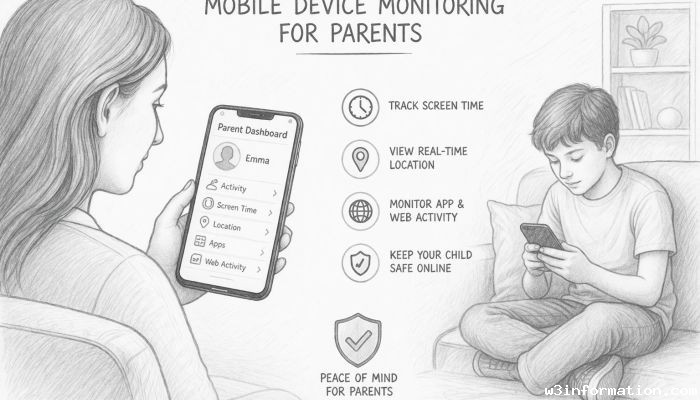
Mobile device monitoring tools range from basic parental controls embedded in operating systems to sophisticated third-party applications. Basic tools include screen time limits, content filtering, and app restrictions available in iOS and Android. Advanced solutions offer monitoring of text messages, GPS location tracking, social media activity, and real-time alerts about suspicious behavior. Knowing the variety of tools helps parents choose solutions suited to their family’s needs.
Setting Up Parental Controls on iOS and Android
Both Apple and Google provide built-in parental controls designed to help parents manage device use. iOS offers Screen Time, which enables usage limits, app restrictions, and content filtering. Android features Google Family Link, which facilitates app management, screen time tracking, and location monitoring. Setting these controls is a straightforward first step for parents new to device monitoring, ensuring immediate safeguards without additional costs.
Third-Party Apps: Features and Considerations
When basic controls fall short, third-party monitoring apps fill in critical gaps. Apps like Qustodio, Bark, and Net Nanny provide comprehensive monitoring including text and social media scanning, call and message logs, and web filtering. These apps often offer real-time alerts, helping parents promptly address emerging issues. However, careful consideration around cost, privacy policies, and compatibility is essential before installation.
Balancing Privacy and Monitoring: Ethical Considerations
While mobile monitoring offers safety benefits, it also raises privacy concerns. Children and teens value their autonomy and may feel betrayed if monitored excessively. Ethical monitoring involves transparent communication, setting clear boundaries, and emphasizing trust. Parents should strive for a balance where monitoring is a shared agreement rather than secret surveillance, preserving respect while ensuring safety.
Communicating Openly About Digital Safety
Open dialogue about online behavior and risks is as important as technical monitoring. Parents who engage in honest, non-judgmental conversations empower their children to make smart choices and report uncomfortable situations. Discussing family rules regarding device use encourages responsibility and helps children understand the reasons behind monitoring, leading to better cooperation.
Managing Screen Time and Promoting Healthy Usage
Excessive screen time is linked to decreased physical activity, sleep disturbances, and impaired social skills. Monitoring apps help track usage patterns, allowing parents to set limits and encourage breaks. Promoting hobbies, outdoor activities, and family time balances digital life with other vital experiences, fostering overall well-being.
Monitoring Social Media: Protection in the Public Sphere
Social media platforms are hotspots for peer interaction but also arenas for risks like cyberbullying and inappropriate content sharing. Some monitoring tools include social media scanning that detects harmful language, sexting, or risky contacts. Awareness of children’s social media use enables parents to guide safer engagement and intervene when necessary.
Location Tracking for Safety and Peace of Mind
Many monitoring apps incorporate GPS tracking, allowing parents to verify their child’s location in real-time. This feature is especially valuable for younger children or teens with independent mobility. Location tracking reassures parents during emergencies or when coordinating pickups, but it must be balanced with respect for the child’s privacy and independence.
Addressing Challenges and Staying Updated
Digital environments and threats evolve rapidly, requiring parents to continuously update monitoring settings and tools. Children may also find ways to bypass controls, making effective monitoring a dynamic, ongoing process. Staying informed about new apps, trends, and threats helps parents adapt strategies and maintain effectiveness.
Collaborative Approach: Involving Children in Monitoring Decisions
Engaging children in discussions about monitoring helps reduce resistance and builds mutual trust. Involving them in setting rules and choosing monitoring methods fosters ownership and responsibility over their digital habits. A collaborative approach transforms monitoring from a top-down control into a family partnership aimed at safety and empowerment.
Conclusion
Mobile device monitoring is an indispensable tool for parents striving to navigate the complexities of childhood and adolescence in the digital age. It offers a multifaceted approach to protecting children from online dangers, managing screen time, and promoting healthy digital habits, while fostering open communication and trust. Balancing safety with respect for privacy requires transparency, dialogue, and adaptability. By leveraging a combination of built-in controls, third-party apps, and honest conversations, parents can empower their children to thrive safely in an increasingly connected world. Ultimately, mobile device monitoring is not about restriction but about guidance—equipping the next generation with the knowledge and support they need to become responsible digital citizens.
 How to Make the Most of Your Holiday Break
 The Best Winter Destinations for a Cozy Getaway
 How to Organize Your Holiday Travel Plans with Ease
 The Ultimate Guide to Cooking for a Crowd
 How to Make Healthy Comfort Food Without the Guilt
 5 Delicious Vegan Breakfast Ideas You Can Make in Minutes