Mobile Devices and the Future of Remote Work
In recent years, mobile devices have revolutionized the way we communicate, access information, and manage our daily lives. Their influence has grown exponentially in the realm of work, particularly with the accelerated shift toward remote work triggered by global events such as the COVID-19 pandemic. As businesses and employees adapt to new models that prioritize flexibility and decentralization, mobile devices have emerged as indispensable tools, enabling productivity beyond the confines of traditional office settings. This article explores how mobile technology is shaping the future of remote work by enhancing connectivity, collaboration, security, and overall work-life balance. By analyzing the evolving role of smartphones, tablets, laptops, and wearable technologies, we will uncover the trends driving remote work’s transformation and consider the challenges and opportunities that lie ahead.
- The Evolution of Mobile Devices in the Workplace
- The Impact of COVID-19 on Remote Work Adoption
- Mobile Devices Enabling Seamless Collaboration
- Cloud Computing and Mobile Integration
- Security Challenges and Solutions on Mobile Platforms
- Enhancing Productivity Through Mobile Technology
- The Role of 5G and Connectivity Advancements
- Wearable Technology and Remote Work
- Mobile Devices and Work-Life Balance
- The Future of Remote Work: Trends and Predictions
- Challenges and Limitations of Mobile-Driven Remote Work
- Strategies for Organizations to Maximize Mobile Remote Work Potential
- Conclusion
- More Related Topics
The Evolution of Mobile Devices in the Workplace
Mobile devices have come a long way from being mere communication tools to becoming full-fledged workstations. Early mobile phones evolved into smartphones with powerful processors, multiple apps, and internet connectivity. Tablets and laptops have also incorporated mobile technologies to boost portability without sacrificing performance. This evolution allowed employees to detach from fixed office desks and embrace mobility. Today, these devices support an extensive range of professional activities, including video conferencing, cloud computing, file sharing, and real-time collaboration. Their ability to combine computing power with mobility has laid the foundation for the increasingly common practice of remote work.
The Impact of COVID-19 on Remote Work Adoption
The global COVID-19 pandemic acted as a catalyst for remote work, compelling organizations worldwide to rapidly adopt mobile technologies to maintain operations. Lockdowns and social distancing mandates underscored the need for employees to work safely from home or other remote locations. Mobile devices emerged as the linchpin in this transition, facilitating continuous communication and access to business applications. The pandemic not only demonstrated the viability of remote work but also accelerated acceptance at organizational and cultural levels. Post-pandemic, many companies have adopted hybrid work models or fully remote policies, underpinned by mobile device usage.
Mobile Devices Enabling Seamless Collaboration
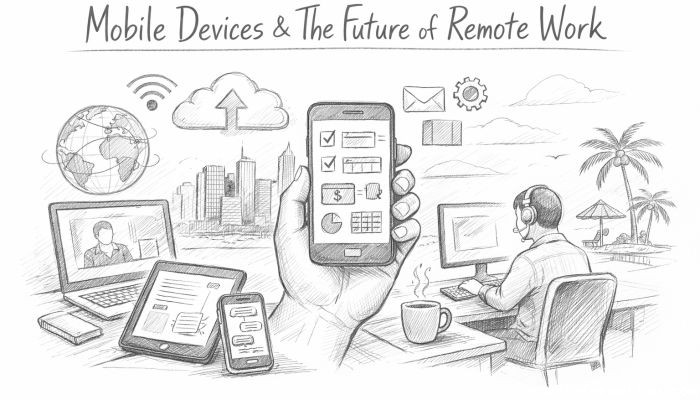
Collaboration is a cornerstone of productive work environments. Mobile devices are equipped with numerous apps and platforms designed to enhance team communication, such as Slack, Microsoft Teams, Zoom, and Google Workspace. These tools enable instant messaging, video calls, document co-editing, and project management, regardless of location. The portability of mobile devices ensures that employees remain connected and engaged, whether on the go, in a café, or at home. Consequently, teams can operate with flexibility without sacrificing cohesion, promoting efficient workflows and timely decision-making.
Cloud Computing and Mobile Integration
Cloud computing has transformed how data and applications are accessed and stored, dovetailing perfectly with mobile device capabilities. By integrating cloud services, mobile devices allow users to work on shared documents, access enterprise software, and back up files effortlessly from any location. This synergy reduces reliance on physical hardware and centralized IT infrastructure, facilitating a more fluid remote work environment. Employees no longer need to be tethered to powerful desktop machines; instead, their mobile devices serve as portals to a virtual workspace that is as robust and secure as any traditional setup.
Security Challenges and Solutions on Mobile Platforms
While mobile devices bring flexibility, they also pose unique security challenges. Remote work can expose sensitive company data to risks such as hacking, data leakage, unsecured networks, and lost or stolen devices. Organizations must therefore implement comprehensive mobile security strategies, including Virtual Private Networks (VPNs), two-factor authentication, mobile device management (MDM) systems, and regular software updates. Educating employees on cybersecurity best practices is also critical. Advances in biometric authentication, encryption, and zero-trust security models further strengthen protections, enabling mobile device users to work remotely with confidence.
Enhancing Productivity Through Mobile Technology
Mobile devices enhance productivity by allowing employees to choose when and where they work, resulting in greater autonomy and time management. Features such as push notifications keep workers informed in real time, while customizable workflows and automation apps reduce repetitive tasks. Moreover, mobile devices support multitasking and provide access to information instantaneously, which can accelerate problem-solving and innovation. However, it is crucial to strike a balance to prevent digital fatigue, which can arise from constant connectivity and unclear boundaries between work and personal life.
The Role of 5G and Connectivity Advancements
The rollout of 5G networks is set to further revolutionize remote work by significantly improving mobile internet speed, latency, and connectivity reliability. This upgrade allows for smoother video conferencing, faster data transfers, and enhanced cloud access on mobile devices. With 5G, complex tasks such as augmented reality (AR) meetings, real-time collaboration on large files, and remote access to high-powered computing resources become more feasible. As mobile connectivity becomes more robust and ubiquitous, the limitations of remote work diminish, making it a viable option for a broader range of industries and job functions.
Wearable Technology and Remote Work
Wearables, such as smartwatches, fitness trackers, and smart glasses, complement mobile devices and are gaining traction in remote work ecosystems. These devices provide users with continuous notifications, health monitoring, and even hands-free communication capabilities. In certain sectors, wearables can enhance remote work by tracking productivity metrics or facilitating quick access to information without interrupting workflow. The integration of wearables also supports employee well-being by encouraging movement breaks, stress management, and ergonomic awareness, all of which contribute to sustained work capacity.
Mobile Devices and Work-Life Balance
Remote work, enabled by mobile devices, offers unparalleled flexibility that can improve work-life balance when managed properly. Employees can attend to personal responsibilities while staying productive, reduce commuting time, and customize their work environment to suit individual preferences. However, the omnipresence of mobile devices can blur the lines between work and leisure, making it challenging to disconnect. Organizations can foster healthier habits by setting clear expectations, encouraging digital detox periods, and promoting wellbeing programs. Thus, mobile technology not only facilitates remote work but also demands new approaches to maintaining mental and physical balance.
The Future of Remote Work: Trends and Predictions
As mobile devices become more sophisticated and intertwined with emerging technologies like artificial intelligence (AI), machine learning, and Internet of Things (IoT), the future of remote work looks promising and dynamic. We can expect further personalization of work experiences, smarter virtual assistants, and more immersive communication tools. Additionally, global talent pools will become increasingly accessible, enabling companies to hire the best skills regardless of geography. Challenges surrounding digital equity and infrastructure will need addressing to ensure inclusive participation. Ultimately, mobile technology will continue to be a driving force behind a future where remote work is not just an alternative but a mainstream model.
Challenges and Limitations of Mobile-Driven Remote Work
Despite its numerous benefits, remote work powered by mobile devices comes with limitations. Technical issues such as device compatibility, battery life, and screen size restrictions can affect performance. There is also the risk of over-reliance on digital communication, which sometimes hinders relationship building and spontaneous creativity typically fostered in office environments. Furthermore, not all employees have equal access to high-quality mobile devices or stable internet, potentially exacerbating inequalities. Addressing these challenges requires thoughtful investment in technology, training, and policies that balance flexibility with support and inclusion.
Strategies for Organizations to Maximize Mobile Remote Work Potential
To fully leverage mobile technology in remote work settings, organizations need to adopt comprehensive strategies. These include investing in the latest devices and software, establishing clear communication protocols, and providing continuous training focused on digital skills and cybersecurity. Encouraging a culture of trust and autonomy is equally important for motivating remote teams. Regular feedback cycles and performance assessments can help fine-tune workflows and identify pain points. Moreover, integrating health and wellness initiatives and promoting social connection can mitigate isolation and burnout. A strategic approach to mobile remote work ensures sustainable productivity and employee satisfaction.
Conclusion
Mobile devices have undeniably transformed the landscape of remote work, making it more feasible, flexible, and productive than ever before. From enabling seamless communication and cloud integration to enhancing security and supporting work-life balance, these technologies have reshaped how and where work gets done. The rapid expansion of 5G, wearables, and AI-driven tools promises an even more connected and dynamic future. However, this evolution also brings challenges that require thoughtful solutions, including technical hurdles, security risks, and the need to preserve human connection. As organizations and individuals continue to adapt, embracing mobile solutions thoughtfully will be key to unlocking the full potential of remote work for years to come. The future is mobile, and with it comes an opportunity to redefine work in ways that prioritize flexibility, inclusivity, and innovation.
 How to Make the Most of Your Holiday Break
 The Best Winter Destinations for a Cozy Getaway
 How to Organize Your Holiday Travel Plans with Ease
 The Ultimate Guide to Cooking for a Crowd
 How to Make Healthy Comfort Food Without the Guilt
 5 Delicious Vegan Breakfast Ideas You Can Make in Minutes