Mobile App Security Best Practices
In today’s digital era, mobile applications have become an integral part of our daily lives, enabling everything from communication and entertainment to banking and healthcare. With millions of apps available across various platforms, ensuring the security of these applications is paramount. Mobile app security best practices not only protect sensitive user data but also preserve the integrity and reputation of developers and organizations behind these apps. As cyber threats evolve in complexity and frequency, adopting robust security measures throughout the app development lifecycle is no longer optional—it is essential. This article delves into the comprehensive best practices that developers, businesses, and security professionals should employ to fortify mobile applications against emerging vulnerabilities and attacks, ensuring a safer digital environment for users worldwide.
- Understanding the Importance of Mobile App Security
- Secure Coding Practices: Building a Solid Foundation
- Protecting Sensitive Data Through Encryption
- Implementing Strong Authentication and Authorization
- Minimizing Data Storage and Using Secure Storage Methods
- Regular Security Testing and Vulnerability Assessments
- Protecting Against Reverse Engineering and Code Tampering
- Securing Backend APIs and Communication Channels
- Managing Permissions and Minimizing App Privileges
- Keeping Software and Dependencies Up-to-Date
- Educating Users on Security Awareness
- Preparing for Incident Response and Recovery
- Conclusion
- More Related Topics
Understanding the Importance of Mobile App Security
Mobile app security is critical because apps often handle sensitive information such as personal data, financial details, and confidential business information. A security breach can lead to data theft, financial loss, and tarnished reputations. Moreover, with the rise of mobile malware and sophisticated hacking techniques targeting vulnerabilities in apps, it is essential to proactively safeguard applications to prevent unauthorized access, data breaches, and misuse. Security is not just a technical requirement; it is a trust factor that determines user confidence and adherence to regulatory compliance standards.
Secure Coding Practices: Building a Solid Foundation
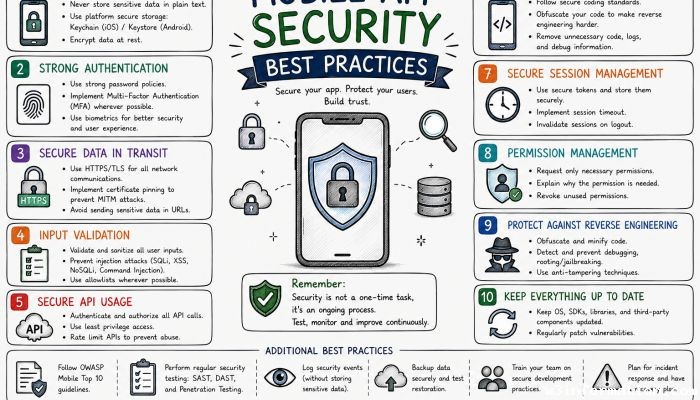
The first line of defense in mobile app security begins with secure coding practices. Developers must adhere to coding standards that minimize vulnerabilities like buffer overflows, injection flaws, and improper error handling. Using well-established frameworks that provide built-in security functions can reduce risks. Input validation, safe data handling, and output encoding are crucial to prevent common attacks like SQL injection and cross-site scripting. Additionally, regular code reviews and static code analysis tools help identify weaknesses early in the development process.
Protecting Sensitive Data Through Encryption
Data encryption is fundamental in protecting sensitive information both at rest and in transit. Employing robust encryption algorithms such as AES-256 for stored data and TLS (Transport Layer Security) for network communication ensures data confidentiality. Developers should avoid storing sensitive data like passwords, personal identifiable information (PII), or payment information in plain text. Instead, sensitive data should be encrypted before storage and decrypted only when necessary. This approach reduces the risk of data exposure in the event of device theft or interception.
Implementing Strong Authentication and Authorization
A secure app must verify user identities and restrict access appropriately. Multi-factor authentication (MFA) has emerged as a powerful method to enhance security beyond simple password protection, combining something the user knows (password), has (token), or is (biometrics). Additionally, implementing proper authorization protocols ensures that users can only access resources and features relevant to their roles, preventing privilege escalation. OAuth and OpenID Connect are popular standardized protocols that help manage authentication and authorization securely.
Minimizing Data Storage and Using Secure Storage Methods
Limiting the amount of sensitive data stored on the device reduces the potential impact of data breaches. If storage is necessary, developers should use secure storage solutions like Keychain for iOS or the Android Keystore system, which provide encrypted containers for cryptographic keys and sensitive user data. Avoiding caching sensitive information and clearing data when no longer needed further mitigates risks. Furthermore, app sandboxing should be leveraged to restrict access to app data by other apps.
Regular Security Testing and Vulnerability Assessments
Continuous assessment is necessary to maintain app security. Developers should incorporate dynamic testing methods such as penetration testing and vulnerability scanning during and after development. Automated tools can simulate attacks to uncover security weaknesses. Additionally, bug bounty programs and third-party audits can help identify vulnerabilities that internal teams might overlook. Importantly, testing should cover various components including the backend API, data storage, and network transmissions.
Protecting Against Reverse Engineering and Code Tampering
Mobile apps are vulnerable to reverse engineering, where attackers analyze the app’s code to discover security loopholes or extract sensitive data. To guard against this, developers employ techniques such as code obfuscation, which transforms the code into a less readable format without affecting functionality. Integrity checks and app signature verification can detect tampering attempts. Additionally, employing runtime application self-protection (RASP) aids apps in defending themselves while running by monitoring and blocking malicious activities.
Securing Backend APIs and Communication Channels
Mobile apps depend heavily on backend servers and APIs to function properly. Securing these communication points is crucial in preventing man-in-the-middle (MITM) attacks, data interception, and unauthorized access. Employing HTTPS with strong TLS configurations, certificate pinning to bind the app to trusted server certificates, and API authentication tokens protect this channel. Furthermore, backend services should validate all incoming data and authenticate requests to mitigate injection and replay attacks.
Managing Permissions and Minimizing App Privileges
Mobile apps often request multiple permissions to access device resources like camera, location, contacts, and storage. However, excessive permissions increase attack surfaces and affect user privacy. Best practice involves adopting the principle of least privilege: requesting only those permissions essential for the app's functionality. Transparent permission prompts and clear user explanations foster trust. Monitoring how permissions are used post-installation can help identify misuse and potential security risks.
Keeping Software and Dependencies Up-to-Date
Vulnerabilities often emerge in third-party libraries and frameworks integrated into mobile apps. Regularly updating all dependencies ensures known security flaws are patched promptly. Developers should keep track of security advisories from library maintainers and update their apps accordingly. Additionally, keeping the mobile OS and development environment updated is equally important, as these provide critical security enhancements and fixes.
Educating Users on Security Awareness
User behavior plays a significant role in mobile app security. Educating users about secure practices such as downloading apps only from trusted sources, setting strong passwords, enabling biometric authentication, and being cautious about granting permissions elevates overall security. Clear communication via onboarding screens, alerts, and support materials can reinforce these practices and empower users to take an active role in protecting their information.
Preparing for Incident Response and Recovery
Despite best efforts, security incidents might still occur. A well-prepared incident response plan helps minimize damage and recover quickly. This includes monitoring app activity to detect anomalies, logging events for forensic analysis, and having predefined steps for communication and remediation. Regular drills and post-incident reviews strengthen the process. Rapid patch deployment and transparent user notifications build credibility and maintain user trust after breaches.
Conclusion
In an increasingly mobile-centric world, securing mobile applications is not just a technical necessity but a strategic imperative. From secure coding and robust encryption to continuous testing and user education, implementing comprehensive mobile app security best practices is essential to safeguard user data and ensure app integrity. By embracing a multi-layered security approach throughout the app lifecycle, developers and organizations can effectively thwart threats and build trust with their users. The dynamic nature of cyber threats demands ongoing vigilance, adaptation, and proactive security measures, making mobile app security a continuous journey rather than a one-time effort. Ultimately, a well-secured app ecosystem benefits all stakeholders, fostering innovation, confidence, and safer digital experiences worldwide.
 How to Make the Most of Your Holiday Break
 The Best Winter Destinations for a Cozy Getaway
 How to Organize Your Holiday Travel Plans with Ease
 The Ultimate Guide to Cooking for a Crowd
 How to Make Healthy Comfort Food Without the Guilt
 5 Delicious Vegan Breakfast Ideas You Can Make in Minutes