Mobile App Marketing: Tips for Success
In today’s digital landscape, mobile apps have become a cornerstone of daily life, transforming how we communicate, shop, work, and entertain ourselves. With millions of apps competing for users’ attention across various platforms, simply developing an app is no longer enough. Effective mobile app marketing is vital for ensuring visibility, engaging the right audience, and driving downloads and retention. This comprehensive guide explores essential strategies and practical tips for mobile app marketing success, providing developers, marketers, and entrepreneurs with the tools needed to navigate the crowded app ecosystem. From understanding your target audience to leveraging advanced analytics, the following insights will help your app not only stand out but also thrive in an increasingly competitive market.
- Understanding the Mobile App Market Landscape
- Defining Your Target Audience
- Crafting an Irresistible Value Proposition
- Optimizing App Store Presence with ASO
- Leveraging Social Media Marketing
- Employing Content Marketing and Blogging
- Harnessing Paid Advertising for Rapid Growth
- Influencer and Affiliate Marketing
- Encouraging User Reviews and Ratings
- Analyzing Data and Metrics for Continuous Improvement
- Focusing on Retention and Engagement
- Monetization Strategies with Marketing Insight
- Preparing for Launch and Beyond
- Conclusion
- More Related Topics
Understanding the Mobile App Market Landscape
Before diving into marketing strategies, it’s critical to grasp the scope and dynamics of the mobile app market. With over 4 million apps available across Apple’s App Store and Google Play, the competition is fierce. Moreover, user expectations have evolved—they demand not just functionality but also seamless experiences and meaningful engagement. Understanding market trends, user behavior patterns, and the latest technology advancements can lay the groundwork for informed marketing decisions. Researching your app’s niche, size of potential audience, and competitor performance will allow you to position your app effectively and anticipate market shifts.
Defining Your Target Audience
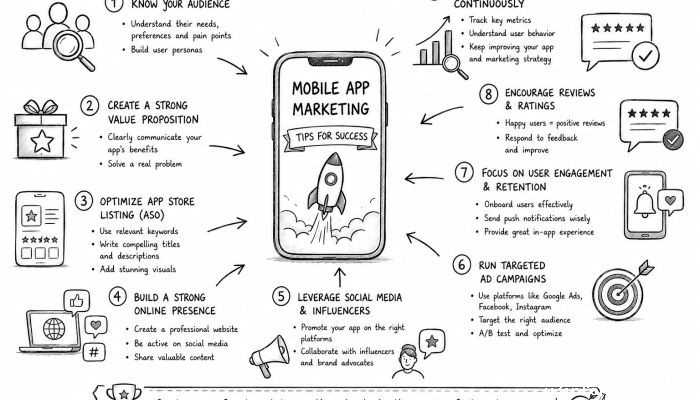
Successful mobile app marketing hinges on a deep understanding of who your users are. Defining a clear target audience based on demographics, interests, behaviors, and pain points ensures that your messaging resonates. For example, a fitness app targeting young adults will employ very different language and channels than a productivity app aimed at working professionals. Utilize data from market research, surveys, and analytics tools to identify your ideal user persona. This clarity enables more precise and cost-efficient campaigns, improves user acquisition quality, and boosts the likelihood of sustained app engagement.
Crafting an Irresistible Value Proposition
Your app’s value proposition summarizes the unique benefit users gain over competing solutions. This must be clear, compelling, and concise to capture attention quickly. A strong value proposition answers the question, “Why should I download this app?” It often highlights problem-solving capabilities, innovative features, or exclusive content. When crafting your value proposition, avoid jargon, focus on user-centric language, and incorporate social proof or endorsements if possible. Integrating this message consistently across all marketing materials builds trust and distinctiveness.
Optimizing App Store Presence with ASO
App Store Optimization (ASO) is a fundamental strategy for boosting organic discovery within app marketplaces. It involves optimizing your app’s title, description, keywords, screenshots, reviews, and ratings to improve visibility and conversion rates. Conduct thorough keyword research to identify terms your potential users are searching for and integrate them naturally into your app listing. High-quality visuals and videos demonstrating your app’s core features can significantly increase download rates. Additionally, positive user reviews build credibility and impact ranking algorithms. Regularly updating listings to reflect new features or seasonal campaigns keeps your app relevant.
Leveraging Social Media Marketing
Social media platforms offer powerful channels for building community and generating buzz around your app. Establish your app’s presence on channels where your target users are most active, whether that’s Instagram, Facebook, Twitter, TikTok, or LinkedIn. Craft engaging content such as tutorials, user stories, behind-the-scenes glimpses, and interactive polls to foster engagement. Collaborate with influencers within your app’s niche to expand reach and enhance credibility. Paid social media campaigns offer advanced targeting options, allowing you to reach precise demographics and interest groups with tailored messages.
Employing Content Marketing and Blogging
Content marketing drives organic traffic and educates potential users about your app’s features and benefits. Creating a blog or resource hub around topics related to your app’s function establishes your brand as an authority and builds long-term relationships with users. For instance, a language learning app might publish articles on language tips, cultural insights, and success stories. Optimize each piece of content for SEO, including relevant keywords and backlinks, to capture search engine traffic. Offering downloadable guides, webinars, or newsletters can convert casual visitors into app users by providing ongoing value.
Harnessing Paid Advertising for Rapid Growth
Organic growth is crucial but often insufficient for rapid market penetration. Paid advertising across Google Ads, Apple Search Ads, Facebook Ads, and other platforms can accelerate user acquisition when used strategically. Focus on campaigns optimized for app installs, video views, or engagement, tailoring creatives to platform specifications and audience preferences. A/B testing various ad formats and messages helps identify the most effective approach. Budgeting and bidding strategies require constant monitoring to maximize return on investment and minimize cost per install. Integrating paid campaigns with retargeting ads also improves retention and reduces churn.
Influencer and Affiliate Marketing
Partnering with influencers and affiliates creates authentic user advocacy and amplifies reach. Influencers who genuinely connect with your target audience can demonstrate your app’s value through reviews, tutorials, and endorsements. Micro-influencers with smaller but loyal followings often provide higher engagement rates and better ROI. Meanwhile, establishing an affiliate program incentivizes bloggers, websites, or content creators to promote your app in exchange for commissions on user acquisitions. Both strategies depend on selecting trusted partners and maintaining transparent communication to ensure brand alignment.
Encouraging User Reviews and Ratings
Positive reviews and high ratings enhance app store credibility and influence potential download decisions. Prompt users at strategic moments—such as after completing a milestone or upon positive app interactions—to leave feedback. Make the process smooth and unobtrusive to avoid user frustration. Address negative reviews promptly by responding constructively and providing solutions, demonstrating commitment to customer satisfaction. Encouraging community engagement through forums or social media groups also fosters user trust and word-of-mouth promotion.
Analyzing Data and Metrics for Continuous Improvement
Mobile app marketing success depends on data-driven decision-making. Utilize app analytics tools like Google Analytics for Firebase, Mixpanel, or App Annie to track user acquisition, behavior, engagement, retention, and revenue metrics. Understanding which marketing channels drive the highest quality users and which features keep users returning allows for iterative optimization. Regularly analyze funnel performance to reduce drop-offs and enhance in-app experiences. Integrate A/B testing for different onboarding flows, push notification timing, and promotional offers to discover best practices grounded in real user data.
Focusing on Retention and Engagement
Acquiring users is only half the battle—the key to sustainable growth lies in retention. Deliver personalized experiences that keep users engaged over time, such as customized notifications, in-app rewards, or new content updates. Employ push notifications judiciously by timing messages based on user behavior to drive re-engagement without annoyance. Consider loyalty programs, gamification strategies, and social sharing features to enhance user involvement. Consistent updates addressing bugs, feature requests, and security demonstrate dedication to quality and foster long-term trust.
Monetization Strategies with Marketing Insight
Understanding your monetization model shapes your marketing approach. Whether using freemium, subscription, ads, in-app purchases, or hybrid models, align promotions with revenue goals while maintaining user satisfaction. For subscription apps, highlight the value of premium features and offer free trials to lower entry barriers. For ad-supported apps, balance ad placements to maximize revenue without disrupting user experience. Carefully communicate any pricing or upgrade incentives upfront in your marketing materials to reduce user friction and encourage conversions.
Preparing for Launch and Beyond
A well-executed launch plan can generate essential momentum. Pre-launch activities should include creating anticipation through teaser campaigns, beta testing with influencers or loyal users, collecting early feedback, and securing press coverage. Establish a launch day checklist covering app store readiness, marketing collateral, paid advertising, and social media blitzes. Post-launch, focus on user feedback loops, performance monitoring, and iterative marketing efforts to maintain growth and adapt to changing conditions. The app lifecycle is ongoing—success requires continuous strategy refinement and responsiveness to market and user needs.
Conclusion
Mobile app marketing is a multifaceted discipline that demands careful planning, creativity, and analytical rigor. From identifying your audience and crafting a clear value proposition to leveraging ASO, social media, content marketing, and data analytics, each step contributes to a larger ecosystem driving app success. Equally important is the focus on retention and monetization, ensuring users not only download but consistently engage with and derive value from your app. By implementing the strategies outlined in this guide, app creators and marketers can navigate the crowded marketplace, create meaningful user experiences, and build thriving mobile applications that stand the test of time. Success in mobile app marketing is not a one-time event but an ongoing journey of adaptation, learning, and innovation.
 How to Make the Most of Your Holiday Break
 The Best Winter Destinations for a Cozy Getaway
 How to Organize Your Holiday Travel Plans with Ease
 The Ultimate Guide to Cooking for a Crowd
 How to Make Healthy Comfort Food Without the Guilt
 5 Delicious Vegan Breakfast Ideas You Can Make in Minutes