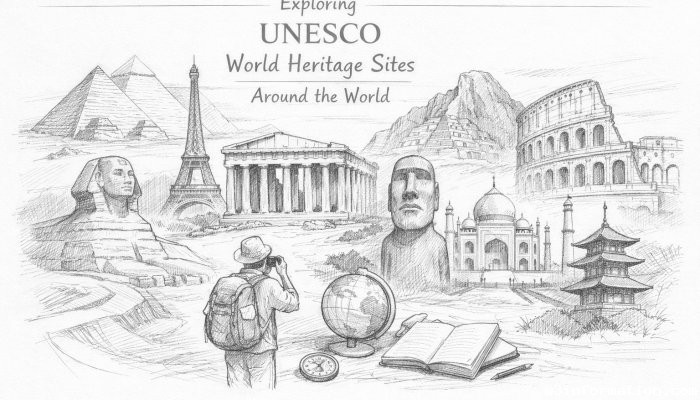
Exploring UNESCO World Heritage Sites Around the World
From ancient ruins to majestic natural wonders, UNESCO World Heritage Sites provide travelers with an unparalleled opportunity to explore the diverse tapestry of our planet’s cultural and natural heritage. Established to protect and preserve sites of outstanding universal value, these locations captivate the imagination and offer profound insights into the history, art, and landscapes that define civilizations and ecosystems around the world. In this article, we embark on a journey through some of the most iconic UNESCO World Heritage Sites, unraveling the stories behind their designation, the criteria that make them extraordinary, and the awe-inspiring experiences they offer to adventurers and knowledge seekers alike.
- The Essence of UNESCO: Mission and Mandate
- Decoding UNESCO: Membership and Mandate
- Diving into UNESCO: Key Concepts and Terminology
- The Selection Process: A Closer Look
- Iconic UNESCO World Heritage Sites: A Global Tour
- UNESCO Sites: Categories and Highlights
- UNESCO Heritage: Preservation and Challenges
- The Future of Heritage: UNESCO’s Role in Conservation
- UNESCO World Heritage: Exploring the Wonders of Our Planet
- More Related Topics
The Essence of UNESCO: Mission and Mandate
Founded in 1945, the United Nations Educational, Scientific and Cultural Organization (UNESCO) is a specialized agency of the United Nations tasked with promoting international collaboration in education, science, culture, and communication. Its mission is to foster peace, security, and sustainable development through the preservation and protection of the world’s cultural and natural heritage. The cornerstone of UNESCO’s heritage preservation efforts is the World Heritage Convention, adopted in 1972, which provides a framework for identifying and safeguarding sites of exceptional importance to humanity.
Decoding UNESCO: Membership and Mandate
The UNESCO World Heritage List is an inventory of cultural and natural sites that are considered to have “outstanding universal value” to humanity. These sites are legally protected under international treaties and are recognized for their significance in the areas of history, culture, art, science, and nature. The World Heritage List is maintained by the World Heritage Committee, which is composed of representatives from 21 member states elected by the General Assembly of UNESCO. The Committee is responsible for approving new sites, monitoring existing ones, and ensuring their conservation.
Diving into UNESCO: Key Concepts and Terminology
UNESCO World Heritage Sites are categorized into two main types: cultural, natural, and mixed. Cultural sites are places of significance due to their historical, archaeological, architectural, or artistic importance. Natural sites, on the other hand, are recognized for their ecological and geological features, biodiversity, and scientific value. Mixed sites possess both cultural and natural attributes. Each site is evaluated against ten criteria, which include aspects such as representing a masterpiece of human creative genius, bearing unique testimony to a cultural tradition, or containing superlative natural phenomena.
The Selection Process: A Closer Look
The journey of a site to becoming a World Heritage Site is meticulous and rigorous. It begins with a nomination by a country that is a signatory to the World Heritage Convention. The nomination must demonstrate that the site meets at least one of the ten selection criteria and has adequate measures for protection and conservation. The nominated site is then evaluated by two advisory bodies: the International Council on Monuments and Sites (ICOMOS) for cultural sites and the International Union for Conservation of Nature (IUCN) for natural sites. These organizations assess the site’s significance and provide recommendations to the World Heritage Committee, which makes the final decision.
Iconic UNESCO World Heritage Sites: A Global Tour
The world is home to an array of UNESCO World Heritage Sites that tell the stories of our shared heritage and the natural wonders that shape our planet. In Europe, the historic center of Rome in Italy stands as a testament to the grandeur of the Roman Empire and the evolution of a city that has been the heart of a civilization for over two millennia. Moving to Africa, the Serengeti National Park in Tanzania is renowned for its annual migration of over 1.5 million white-bearded wildebeest and 250,000 Thomson’s gazelles, making it a spectacle of life and survival. Asia is home to the Great Wall of China, an architectural feat that stretches over 13,000 miles and was built over several dynasties to protect against invasions. In the Americas, the spectacular beauty of Machu Picchu in Peru continues to puzzle archaeologists and attract tourists from around the globe, offering a glimpse into the Inca civilization. Oceania’s Great Barrier Reef in Australia is the largest coral reef system on Earth, showcasing the stunning diversity of marine life. These are just a few examples of the nearly 1,150 sites on the UNESCO World Heritage List, each with its own unique story and allure.
UNESCO Sites: Categories and Highlights
UNESCO World Heritage Sites are divided into several categories that reflect the diverse aspects of human history and the natural environment. Cultural landscapes, for instance, are areas that represent the combined works of nature and humans. The English Lake District, the first area to be recognized as a World Heritage Site, is a prime example, celebrated for its picturesque hills and dales, gardens, and literary associations with poets like Wordsworth and Coleridge. Historical cities, such as the Medina of Tunis in Tunisia, offer insights into the urban fabric of the past, with its medina preserving the traditional architecture and street patterns that have endured for centuries. Natural wonders like Komodo National Park in Indonesia showcase the extraordinary biodiversity of our planet, protecting the habitat of the largest lizard on Earth, the Komodo dragon, along with numerous bird and marine species. Monuments and ensembles, such as the Acropolis of Athens in Greece, are symbols of human achievement in architecture and design. Each category on the UNESCO list presents a unique lens through which we can appreciate the richness of our world’s heritage.
UNESCO Heritage: Preservation and Challenges
The conservation of UNESCO World Heritage Sites is a complex and ongoing challenge. Natural degradation, human-induced damage, and the impact of climate change pose significant threats to these irreplaceable treasures. Conservation efforts often require international cooperation, as well as the support of local communities and governments. UNESCO works with site management to develop and implement preservation strategies that are sensitive to the cultural and natural context of each location. This includes monitoring the condition of sites, providing technical assistance and guidance, and in some cases, offering financial support for conservation projects. The preservation of these sites is not just about maintaining physical structures or landscapes; it is about safeguarding the intangible values and memories they embody for future generations.
The Future of Heritage: UNESCO’s Role in Conservation
As we look to the future, the role of UNESCO in heritage conservation becomes ever more critical. The organization is at the forefront of addressing the challenges posed by globalization, urbanization, and environmental change. UNESCO encourages the use of modern technology and innovative methods in the conservation of World Heritage Sites, promoting sustainable practices that balance the needs of preservation with the dynamics of contemporary life. Education and awareness-raising are also key components of UNESCO’s strategy, as engaging the public is essential for fostering a sense of global stewardship for our shared heritage.
UNESCO World Heritage: Exploring the Wonders of Our Planet
In conclusion, UNESCO World Heritage Sites are not just destinations; they are journeys through time and nature that offer profound experiences and understanding. From the cultural landscapes that have been shaped by human hands to the natural wonders that have formed over eons, these sites invite us to explore, learn, and be inspired. As we travel through the majestic beauty and historical depth of these locations, we not only discover the wonders of our planet but also connect with the legacy of humanity and the natural world. It is through the exploration of these sites that we can truly appreciate the richness of our heritage and the importance of preserving it for the awe and education of generations to come.
 Big O Notation Explained for Beginners
 AI in Gaming: Smarter NPCs and Environments
 Understanding Bias in AI Algorithms
 Introduction to Chatbots and Conversational AI
 How Voice Assistants Like Alexa Work
 Federated Learning: AI Without Sharing Data