The Best International Destinations for Eco-Conscious Travelers
Travel has the power to transform not only the traveler but also the world around them. In recent years, more people have begun to rethink how they explore the planet, choosing experiences that respect nature, preserve culture, and minimize environmental impact. This shift has given rise to eco-conscious travel—a mindful approach that prioritizes sustainability without compromising on adventure or comfort. From lush rainforests and pristine beaches to eco-friendly cities and conservation-driven communities, there are destinations across the globe leading the way in responsible tourism. In this guide, we’ll explore the best international destinations for eco-conscious travelers, helping you discover places where your journey leaves a positive footprint while creating unforgettable memories.
- What Is Eco-Conscious Travel?
- Costa Rica: A Pioneer in Sustainable Tourism
- Iceland: Harnessing Nature Responsibly
- Bhutan: High Value, Low Impact Tourism
- New Zealand: Conservation and Adventure Combined
- Norway: Sustainable Travel in the Fjords
- Slovenia: Europe’s Green Gem
- Kenya: Wildlife Conservation and Community Tourism
- Japan: Tradition Meets Sustainability
- Canada: Vast Landscapes and Responsible Tourism
- The Role of Eco-Friendly Accommodations
- Conclusion
- More Related Topics
What Is Eco-Conscious Travel?
Eco-conscious travel is about making responsible choices that reduce environmental impact and support local communities. It involves selecting sustainable accommodations, minimizing waste, conserving resources, and respecting cultural heritage. Unlike traditional tourism, which can sometimes harm ecosystems, eco-conscious travel focuses on preserving the natural beauty and authenticity of destinations. It encourages travelers to be mindful of their actions, ensuring that future generations can enjoy these places as much as we do today.
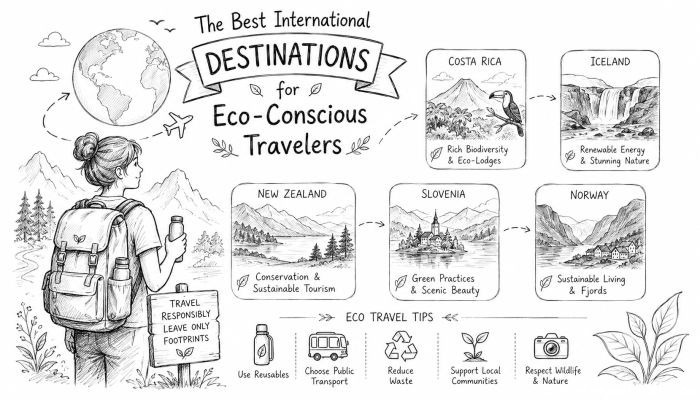
Costa Rica: A Pioneer in Sustainable Tourism
Costa Rica stands out as a global leader in eco-tourism. With its commitment to renewable energy and biodiversity conservation, the country offers a perfect blend of adventure and sustainability. Travelers can explore rainforests, observe wildlife, and stay in eco-lodges that operate with minimal environmental impact. National parks like Corcovado and Monteverde showcase the country’s dedication to protecting its natural resources while providing immersive experiences.
Iceland: Harnessing Nature Responsibly
Iceland’s dramatic landscapes—volcanoes, glaciers, and waterfalls—are matched by its strong environmental policies. The country relies heavily on renewable energy sources, making it one of the most sustainable destinations in the world. Visitors can enjoy geothermal spas, explore national parks, and witness natural wonders while supporting a country that prioritizes ecological balance. Responsible tourism practices ensure that these fragile environments are preserved.
Bhutan: High Value, Low Impact Tourism
Bhutan takes a unique approach to tourism with its “high value, low impact” policy. By limiting the number of visitors and emphasizing cultural preservation, Bhutan ensures that tourism benefits the country without harming its environment. Travelers can experience breathtaking landscapes, ancient monasteries, and a culture deeply rooted in sustainability. The country’s focus on Gross National Happiness reflects its commitment to well-being and environmental harmony.
New Zealand: Conservation and Adventure Combined
New Zealand offers a perfect balance of adventure and conservation. With strict environmental regulations and a strong focus on preserving natural habitats, the country provides eco-conscious travelers with opportunities to explore responsibly. From hiking in national parks to participating in conservation projects, visitors can engage with nature while contributing to its protection.
Norway: Sustainable Travel in the Fjords
Norway’s stunning fjords and commitment to sustainability make it an ideal destination for eco-conscious travelers. The country promotes electric transportation, eco-friendly accommodations, and responsible tourism practices. Exploring the fjords by electric ferries or hiking through pristine landscapes allows travelers to experience nature without leaving a significant environmental footprint.
Slovenia: Europe’s Green Gem
Slovenia has gained recognition as one of Europe’s greenest destinations. Its capital, Ljubljana, has been awarded for its sustainability efforts, including car-free zones and green spaces. The country’s focus on eco-friendly tourism extends to its accommodations, transportation, and outdoor activities. From lakes to mountains, Slovenia offers diverse experiences rooted in environmental responsibility.
Kenya: Wildlife Conservation and Community Tourism
Kenya is a prime destination for travelers interested in wildlife conservation. Many safari experiences are designed to support local communities and protect endangered species. Eco-lodges and conservation programs ensure that tourism contributes to the preservation of wildlife and habitats. Visiting Kenya allows travelers to witness incredible biodiversity while supporting sustainable practices.
Japan: Tradition Meets Sustainability
Japan combines modern innovation with traditional respect for nature. From efficient public transportation to eco-friendly practices in hospitality, the country offers a sustainable travel experience. Exploring rural areas, participating in cultural activities, and staying in traditional accommodations provide a deeper connection to both the environment and local culture.
Canada: Vast Landscapes and Responsible Tourism
Canada’s expansive wilderness and commitment to conservation make it a top choice for eco-conscious travelers. National parks, protected areas, and sustainable tourism initiatives ensure that visitors can enjoy nature responsibly. Activities like hiking, wildlife watching, and eco-friendly tours allow travelers to immerse themselves in the country’s natural beauty.
The Role of Eco-Friendly Accommodations
Choosing the right accommodation plays a significant role in sustainable travel. Eco-lodges, green hotels, and sustainable resorts implement practices such as energy conservation, waste reduction, and community engagement. These accommodations not only reduce environmental impact but also enhance the travel experience by offering unique and meaningful stays.
Conclusion
Eco-conscious travel is more than a trend—it’s a responsibility. By choosing destinations that prioritize sustainability and making mindful decisions, travelers can explore the world while protecting it. From the rainforests of Costa Rica to the fjords of Norway, these destinations offer unforgettable experiences rooted in environmental respect. As travelers, we have the power to shape the future of tourism, ensuring that our journeys leave a positive impact. Ultimately, the best travel experiences are those that not only enrich our lives but also preserve the beauty and integrity of the world we share.
 How to Make the Most of Your Holiday Break
 The Best Winter Destinations for a Cozy Getaway
 How to Organize Your Holiday Travel Plans with Ease
 The Ultimate Guide to Cooking for a Crowd
 How to Make Healthy Comfort Food Without the Guilt
 5 Delicious Vegan Breakfast Ideas You Can Make in Minutes