The Top Car Trends to Look Out for in 2025
The year 2025 marks a pivotal moment for the automotive industry and the driving public. As we navigate a new era of innovation, sustainability, intelligent technology, and connectivity, we are experiencing some of the most exciting and game-changing car trends in recent years. From budget-friendly electric vehicles (EVs) to smart safety systems and advanced driver assistance technologies, the way we drive, own, and interact with vehicles is undergoing a transformation. Whether you are a car enthusiast, a family driver, a tech-savvy commuter, or simply a curious reader interested in the future of mobility, these 12 car trends are sure to capture your attention. In this comprehensive guide, we will explore the most influential, top car trends in 2025, shaping the automotive landscape in unprecedented ways.
- The Rise of Budget-Friendly Electric Vehicles (EVs)
- Revolutionary Battery Advancements and Rapid Charging
- Smarter and More Precise Advanced Driver Assistance Systems
- Vehicles That Go Online: Connected Cars and Elevated In-Car Experience
- Environmentally Friendly Materials and Processes in Car Production
- Hybrids to Meet Diverse Driving Needs
- Subscription Car Features and On-Demand Services
- Autonomous Delivery and Ride-Share Fleets Gain Traction
- Redefined Luxury in Automotive: Technology and Personalization
- Compact EVs and Urban Mobility Solutions
- Performance and Sustainability Go Hand-in-Hand in High-Powered Cars
- Predictive Safety Features to Prevent Accidents Before They Occur
- Conclusion
- More Related Topics
The Rise of Budget-Friendly Electric Vehicles (EVs)
Electric vehicles have come a long way from their early luxury connotations. In 2025, we are witnessing a significant surge in budget-friendly EVs, with more options under $30,000. Automakers are finally heeding consumer demand, meeting both fuel economy standards and customer expectations for more affordable electric vehicles. As battery prices continue to drop, governments offer attractive tax credits, and a wave of new entrants flood the market, the age of inexpensive EVs has arrived. For buyers seeking an eco-friendly vehicle with zero tailpipe emissions, an affordable electric car or SUV has become a compelling and attainable option.

Revolutionary Battery Advancements and Rapid Charging
One of the most important 2025 car trends is the evolution of battery technology, unlocking improved efficiency and charging speed for electric vehicles. Solid-state batteries are set to revolutionize the electric car industry, once expected in 2025, are now just around the corner. Solid-state batteries promise better energy density, faster charging, and improved longevity. These batteries are set to make electric cars more practical, and as some automakers push back electrification, solid-state battery developments have become more crucial. Ultra-fast charging networks are expanding rapidly as well, allowing EV drivers to charge their vehicles in minutes instead of hours. The days of being tethered to an outlet for hours while your EV slowly charges are coming to an end.
Smarter and More Precise Advanced Driver Assistance Systems
Advanced driver assistance systems have a massive evolution in 2025, becoming smarter, more accurate, and available at a wider range of price points. These technologies, which include adaptive cruise control, lane-keeping assistance, blind-spot detection, and automated emergency braking are making the driving experience more intuitive and even paving the way for greater automation in the future. AI and enhanced perception systems are now helping vehicles better understand road conditions, predict potential hazards, and even make faster reactions than a human driver. Features like 360-degree cameras, lane departure warning, parking assistance, and active safety technologies are also becoming standard across all vehicle types and trims, further blurring the lines between manual driving and semi-autonomous driving aids.
Vehicles That Go Online: Connected Cars and Elevated In-Car Experience
Cars are no longer just vehicles for transportation, they’re becoming connected hubs packed with software, sensors, and real-time communication tools. Cloud connectivity is now available, providing vehicles with instant updates, diagnostics, and over-the-air improvements similar to smartphone software upgrades. Apps are also connecting to vehicles via APIs to unlock functionality, as infotainment systems integrate with digital assistants, mapping software, and streaming services, the driving experience becomes more intuitive. Vehicle-to-vehicle (V2V) and vehicle-to-infrastructure (V2I) communication is also moving closer to mainstream adoption. Cars share information about hazards, traffic, and even weather updates. This connectivity explosion has a major impact on safety, convenience, and personalization.
Environmentally Friendly Materials and Processes in Car Production
Consumer awareness about climate change is growing rapidly, and automakers are rethinking their entire approach to vehicles. Sustainability is more than a buzzword in 2025, it’s a new design and manufacturing philosophy. Cars are being made with recycled plastics, plant-based materials, and eco-friendly upholstery and fabrics. Manufacturers are also working hard to reduce emissions within their own production facilities, shifting to renewable energy sources to power their factories. Luxury vehicles are also leaning into sustainability, with responsibly-sourced leather alternatives and interior components made with biodegradable materials. This car trend is a reflection of a broader consumer shift towards ethical consumption and environmental consciousness. Consumers with an eco-friendly conscience can finally feel good about the car or truck they drive.
Hybrids to Meet Diverse Driving Needs
While many drivers are preparing to go fully electric, there’s a large portion of drivers who are not quite there yet, and automakers know it. That’s why hybrids, particularly plug-in hybrids, are some of the most popular new car types in 2025. Plug-in hybrids in particular offer the benefits of electric-only driving for short trips and gasoline engine support for longer trips, offering the best of both worlds. Hybrid cars and trucks are more fuel-efficient than gasoline models and produce fewer emissions. For drivers who are looking to lower their carbon footprint, hybrids are the perfect bridge to fully electric vehicles. With charging infrastructure rapidly improving, hybrid models offer both flexibility and an attractive entry point for new EV buyers.
Subscription Car Features and On-Demand Services
Another major car trend of 2025 is the rise of subscription-based services and features within cars. Instead of purchasing all features and capabilities of a car at once, many drivers can now “unlock” additional features on a monthly or annual subscription basis. This can include heated seats, upgraded navigation systems, premium connectivity and apps, and even performance packages. The model is highly controversial, as some features that were once standard are now available only as subscription services. On the one hand, drivers only pay for what they use; on the other hand, it could raise the overall lifetime cost of a vehicle. The industry is adapting to and evolving with this on-demand model, although customers will likely continue to push back at what they see as “unbundling” of features.
Autonomous Delivery and Ride-Share Fleets Gain Traction
The most publicized autonomous driving developments in 2025 aren’t coming in consumer vehicles but rather are popping up in delivery, ride-share, and fleets. Self-driving delivery vans and last-mile robots, automated ride-share, and robo-taxi services are all becoming more common in urban centers. This business model is attractive for both startups and larger corporations since the lower cost of autonomy in these vehicles. Regulations for autonomous fleets are developing faster than personal cars due to the relative success of these lower-risk businesses. The mainstream adoption of personal fully self-driving cars is not expected for several more years, but these fleets will pave the way for infrastructure and public trust in automation.
Redefined Luxury in Automotive: Technology and Personalization
Luxury in the modern automotive world no longer just means leather seats and a glossy finish, 2025 is seeing luxury car manufacturers lean heavily into technology, personalization, and digital amenities. Premium cars now feature AI-powered cabin assistants, gesture recognition, 3D soundscapes, and personalized digital dashboards. Ride comfort is also improved through digital upgrades, with adaptive suspension, noise-canceling cabins, and wellness technologies like seat massage programs and climate control zones. High-end models are evolving to become more like “digital sanctuaries,” where drivers can reduce stress and enhance comfort using a variety of high-tech features.
Compact EVs and Urban Mobility Solutions
Urban areas are getting denser, and automakers have responded by designing smaller, more compact EVs that are ideal for city driving and commuting. In 2025, compact electric cars and other micro vehicles like microcars and electric scooters are rapidly gaining market share, particularly among younger drivers and city residents. These smaller EVs are more practical for urban residents since they’re easier to park, cheaper to operate, and better suited for short trips. Compact EVs and scooters also work well with charging networks improving in cities and urban centers.
Performance and Sustainability Go Hand-in-Hand in High-Powered Cars
As much as we all wanted electric and sustainable cars to also be high-performance machines, it took time. In 2025, it has finally happened: modern performance cars are electric and packed with eco-friendly features. In some ways, electric powertrains enable the most exciting performance advancements in recent memory, including shocking acceleration, high torque output, and precise handling you can get in a track-level car. Automakers are also designing high-performance cars with sustainability in mind, using lightweight materials, aero designs, and other features to reduce drag and improve energy efficiency. Electric sports cars are one of the most visible 2025 car trends.
Predictive Safety Features to Prevent Accidents Before They Occur
Safety technologies used to be largely reactive, but in 2025, vehicles are finally getting safety innovations that are proactive. Modern cars use sensors, high-resolution cameras, radar, and AI prediction models to “see” and make sense of the driving environment around them in real time. Safety features now identify threats seconds before human drivers would even be aware of them. Then, systems like collision avoidance, driver alerts, and even automated emergency maneuvers can be triggered before a driver reacts or even realizes the danger. From pedestrian detection to fatigue monitoring, emergency steering assistance, and more, safety technology is now more advanced and even more adaptive than ever. The goal? To dramatically reduce accident rates and create a future where vehicles actively work to protect their drivers and those around them.
Conclusion
As 2025 unfolds before our eyes, one thing is certain: the automotive industry and the future of driving is experiencing a period of unprecedented transformation. Electric vehicles, smart safety systems, bi-directional charging, innovative battery technology, improved infrastructure and connectivity, and a more human-centric design philosophy are just some of the key forces reshaping what it means to own, drive, and interact with a car. Whether you are an automotive enthusiast, a family driver, a tech-savvy commuter, or someone who is exploring the market for their next vehicle, the 12 car trends in 2025 highlighted in this guide are sure to pique your interest. Understanding these trends allows you to make informed decisions about which cars to purchase, lease, and drive. At Hitachi AST America, Inc. we understand that the future of transportation is here. As experts in EV charging and renewable energy solutions, we are excited to support you in this journey and help power a cleaner, safer, more connected, and more sustainable future for all. So buckle up, and get ready to embrace a more sustainable, exciting, and tech-driven way of driving.
 Big O Notation Explained for Beginners
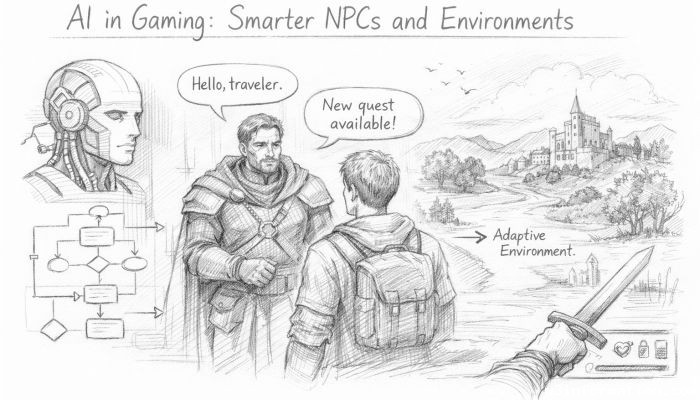 AI in Gaming: Smarter NPCs and Environments
 Understanding Bias in AI Algorithms
 Introduction to Chatbots and Conversational AI
 How Voice Assistants Like Alexa Work
 Federated Learning: AI Without Sharing Data