Best Practices for Maintaining Car Insurance in 2025
Maintaining the right car insurance policy hasn’t just become more complex — it’s also a financial decision. Thanks to more expensive repairs, more intelligent vehicles, evolving telematics programs, and shifting regulations, 2025 drivers are presented with an array of new tools and new risks. With a little knowledge and the right mindset, drivers in 2025 have more opportunities to cut their costs and more pitfalls to avoid — but even infrequent drivers need to understand how to use a policy to their advantage. Whether you’ve been driving for decades or you just bought your first electric vehicle, it’s important to know how to keep insurance affordable, accurate, and effective for modern transportation. This guide will take you through the top tips for doing so.
- Review Your Policy Annually — Even If Nothing Changed
- Compare Quotes Before Renewing
- Take Advantage of Telematics and Usage-Based Insurance
- Keep Your Personal Information and Vehicle Details Updated
- Maintain Good Credit — It Matters More Than You Think
- Consider Higher Deductibles for Lower Premiums
- Bundle Policies for Maximum Discounts
- Keep a Clean Driving Record with Defensive Driving Habits
- Use Technology to Manage Your Policy More Efficiently
- Understand What Coverage You Actually Need
- Document Everything to Protect Yourself During Claims
- Stay Informed About Changing Insurance Regulations
- Conclusion: Smart Insurance Management Is a Modern Life Skill
- More Related Topics
Review Your Policy Annually — Even If Nothing Changed
As your car insurance renews each year, drivers are often tempted to let their policy renew on autopilot. After all, if their commute, their driving habits, and their vehicles have remained constant, the renewal price should be reasonable and accurate, right? Wrong. While your driving history, annual mileage, and even your credit score still influence your premiums, policy prices in 2025 are also impacted by inflation, regional repair rates, recalculated risks, and even periodic industry-wide rate changes. Make it a habit to review your car insurance policy every year and ensure that you aren’t paying more than you should and that you’re covered sufficiently. Spend 15 minutes verifying your coverage limits, deductibles, and optional protections to see if you could lower your premium or beef up your protection. It’s a smart habit to get into, and it will take you less time than it will to read this sentence.

Compare Quotes Before Renewing
Perhaps the most obvious (and easiest) way to keep insurance prices under control is to compare new quotes before your policy renews. Insurers’ internal algorithms and factors are updated regularly, and last year’s budget-friendly insurer may not have the best rates now. Head to comparison sites you trust or request quotes directly to check how your options compare. Evaluate not just the price but the value: customer service reviews, claims response time, roadside assistance benefits, and available digital tools. 2025’s insurance market is a competitive one, and switching providers could save you several hundred dollars annually.
Take Advantage of Telematics and Usage-Based Insurance
Telematics programs that reward safe driving and good habits have become far more mainstream in 2025. Smartphone apps and in-vehicle or plug-in devices track everything from acceleration and hard braking to average mileage and nighttime driving and may offer discounts if you qualify. For cautious drivers, usage-based insurance (UBI) can be a real boon for bringing your premium down. Modern telematics programs are more privacy-conscious, too, so you can more closely monitor what data is being collected. It’s a powerful approach to reducing insurance costs, particularly for telecommuters, retirees, and anyone who drives significantly less than the national average. When insurers are offering extra incentives for responsible behavior like never before, it pays to be part of a program.
Keep Your Personal Information and Vehicle Details Updated
Life is unpredictable, and your situation could change overnight. You may move to a more expensive (or less expensive) zip code, begin working from home, replace tires, purchase a vehicle with more safety equipment, and more. All of these changes could affect your insurance quote, sometimes in significant ways. A shorter commute, for instance, will almost certainly bring down your insurance premium, while newer vehicles with collision avoidance sensors and/or dashcams could be eligible for better rates. It’s in your best interest to keep your insurer informed so that you’re not only paying a fair rate but also to avoid any claims issues when the information on file doesn’t match reality. Accuracy is the best defense for both your wallet and your coverage.
Maintain Good Credit — It Matters More Than You Think
In some states, insurance companies are still permitted to factor credit history into the cost of your insurance. And with most insurance regulators in the United States not taking any action to ban the use of credit-based insurance scoring (CBIS), credit remains a major determinant of your insurance rates in 2025. Why? Because a negative credit score has been statistically linked to more frequent insurance claims. In other words, by making a few small changes to your financial behavior, such as paying all of your bills on time, lowering your balances, and reducing your debt, you can also reap the rewards of paying less for insurance. It’s a financial strategy that benefits more than just your credit.
Consider Higher Deductibles for Lower Premiums
If you have a sizable emergency fund and you’re a low-risk driver, consider increasing your deductible as a way to lower your premium. This strategy can be especially effective for low-risk drivers with a healthy savings cushion. Before you increase your deductible, ask your insurer to show you the exact rate difference it will make and whether the money saved on the premium will justify the additional cost of coverage. Sometimes, bumping your deductible from $500 to $1,000 will significantly lower your monthly premium, making it an easy way to save if you’re in a position to do so.
Bundle Policies for Maximum Discounts
Insurers love loyal customers and will frequently offer discounts to those who bundle multiple policies with the same company. In 2025, many of these bundles have expanded to include not only home, renters, life, and motorcycle insurance but also a variety of digital products, including identity protection and cybersecurity insurance, making these packages even more attractive. Bundling policies is also smart in 2025 because insurers are more likely than ever to frequently update their individual policies, and a bundled rate creates an additional cushion. On top of financial perks, bundling often comes with better customer service and enhanced benefits, including priority claims handling for some insurers.
Keep a Clean Driving Record with Defensive Driving Habits
It may sound like a no-brainer, but it’s worth reiterating: drive safely and keep your record clean. In 2025, most vehicles are equipped with a variety of safety systems and active-assist features that can reduce the likelihood of a serious accident, but distracted driving is still among the top causes of insurance claims. In addition to enrolling in a defensive driving course and keeping your hands on the wheel and your eyes on the road, consider having your insurer track the times when you’re most likely to be at risk for an accident based on your phone activity and location, and see if you could remove temptation in these hot zones. Defensive drivers are also more likely to benefit from safe-driver bonuses, accident-forgiveness programs, and other policies that recognize good habits.
Use Technology to Manage Your Policy More Efficiently
Insurance apps have gotten even better in 2025. From real-time policy updates, mobile claim submission, digital ID cards, roadside assistance GPS, and AI-driven support, there are more tools than ever for you to efficiently manage your policy. And the better you use those tools, the more likely you are to stay on top of your renewal dates, discount opportunities, or even changes to your billing cycle or optional protections that could impact your premium. Check in with your insurer’s app at least once a month to track coverage, make changes as you need, and familiarize yourself with your monthly bill.
Understand What Coverage You Actually Need
Liability, collision, comprehensive, uninsured motorist, personal injury protection, rental reimbursement, glass coverage, and many more types of coverage can be part of a car insurance policy. But no two drivers are the same, and not every coverage type is right for you. When deciding what you should keep and what you might want to drop, consider things like the age of your vehicles, your budget, and even your driving locations. For older vehicles, consider dropping collision or comprehensive, while parents who are adding young drivers may want to consider adding accident-forgiveness coverage or roadside assistance. Electric vehicle owners should also investigate specific protection for batteries and charging equipment. Understanding your coverage needs is critical to finding a policy that works for your needs without bloating your rate with unnecessary add-ons.
Document Everything to Protect Yourself During Claims
Claims processes in 2025 are faster, more convenient, and fully digitized than ever. But despite the automation, one of the most valuable best practices for policyholders to use to protect themselves is to document everything. Take photos and note details of the accident and the other driver, track down witnesses, and contact your insurer right away after a collision. After a fender bender or total loss, upload all pertinent materials, including a copy of your police report, to your insurer’s app to make sure your adjuster has everything they need. Having a paper trail can often make a difference between claim disputes and smooth settlement. Service records and maintenance receipts can be especially useful in supporting your claim if your vehicle’s condition is at issue. Policyholders who are good record-keepers are often better protected in the long run.
Stay Informed About Changing Insurance Regulations
Insurance regulations and policies change quickly these days, and with autonomous features continuing to evolve, electric vehicle adoption surging, and many states challenging long-standing insurance risk assessment policies, 2025 drivers need to stay on top of the shifting legal landscape. Whether states implement new telematics privacy policies, ban credit-based insurance pricing, or even increase minimum coverage requirements, staying informed will help you navigate changes and, at the very least, avoid surprise bills or requirements. Your state insurance department’s website is a good place to start, as are insurance industry newsletters that will give you an edge in a changing industry.
Conclusion: Smart Insurance Management Is a Modern Life Skill
Staying on top of your car insurance in 2025 isn’t just a matter of paying your bill and crossing your fingers. Drivers in 2025 are presented with a variety of opportunities to both lower their costs and reduce their risks, and those who take an active interest in their policies are the ones who see the biggest rewards. From shopping around to managing policy with apps, to keeping personal and vehicle information up to date, modern drivers have more agency than ever when it comes to how much they pay and how well they are covered. The best practices mentioned in this guide will help you avoid unexpected risks and ensure that your insurance remains an important, but manageable, part of your financial life. As cars become more advanced and the world around them changes, one thing is certain: smart insurance management is one of the best habits you can form as a driver.
 Big O Notation Explained for Beginners
 AI in Gaming: Smarter NPCs and Environments
 Understanding Bias in AI Algorithms
 Introduction to Chatbots and Conversational AI
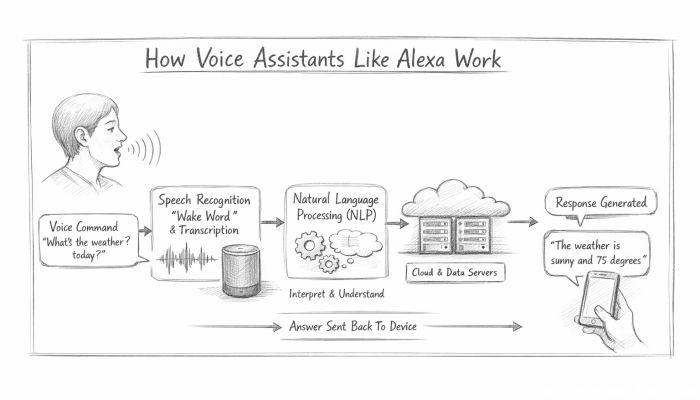 How Voice Assistants Like Alexa Work
 Federated Learning: AI Without Sharing Data