The Evolution of Autonomous Cars and Their Impact on Society
For over a century, driving has remained one of the most human-centric activities of modern life. The control of the steering wheel, the human interpretation of road signs, and the navigation through traffic based on instinct and experience made driving a uniquely human act. However, the contemporary reality presents a different picture as autonomous cars are becoming a living reality. The vehicles that were once confined to the realm of science fiction and speculative fiction are now a part of our everyday lives. Their evolution has been nothing short of revolutionary as they have transitioned from experimental projects to transforming the landscape of transportation, urban design, safety protocols, and our very conception of freedom and responsibility. The emergence of autonomous vehicles is not only a technological but also a social evolution, prompting fundamental questions about trust, ethics, employment, and mobility’s future. This article delves into the journey of autonomous cars so far, where they currently stand, and how they are poised to reconfigure society in profound and irreversible ways.
The History: Dreams of Autonomous Cars
The concept of self-driving cars is much older than the general public might believe. In the 1920s and 1930s, inventors and visionaries first toyed with the idea of vehicles that could navigate themselves using a combination of radio signals and automatic road systems. These early musings encapsulated the age-old human aspiration to ease the strain of driving and the persistent pursuit of safer roadways.

Although the technology of the time made these ideas unfeasible, they laid the philosophical foundation for autonomous mobility. They sketched the contours of a future where machines could either assist or replace the driver in making decisions on the road. The gap between ambition and technology was vast, but the vision for driverless cars never truly dissipated—it simply bided its time.
Driver Assistance Systems: Stepping Stones to Full Autonomy
The true evolution of autonomous cars, however, did not spring forth from fully autonomous systems but rather from driver-assistance technologies. From the early iterations of cruise control to advanced systems like anti-lock braking, electronic stability control, and automatic lane-keeping, the seeds of autonomy were sown gradually.
These technologies didn’t render the driver obsolete but instead altered the very experience of driving. They mitigated fatigue, enhanced reaction times, and proved that machines could safely manage specific driving tasks. This incremental journey was instrumental in building trust and laying the groundwork with a treasure trove of data that eventually paved the way for fully autonomous driving.
Levels of Autonomous Driving: The Long Road Ahead
Autonomous vehicles are not a monolithic technology but exist on a spectrum defined by varying levels of autonomy. These levels range from 0, which signifies no automation, to 5, which represents full automation. The vast majority of vehicles that are on the roads today are at Level 2, where the system can assist the driver with steering and speed but cannot yet drive the vehicle independently.
The distance between these initial levels of automation and full autonomy is enormous. It is not merely about superior sensors or advanced software; it’s about the capacity to understand, anticipate, and react to highly complex and unpredictable environments. The recognition of these levels has helped to ground expectations and make clear why fully autonomous cars are still works in progress rather than an overnight revolution.
The Technology behind Autonomous Cars
The technological heart of autonomous vehicles is a remarkable symphony of advanced systems. Cameras, radar, lidar, GPS, ultrasonic sensors, and more—all come together to paint a comprehensive picture of the car’s surroundings. Artificial intelligence and machine learning algorithms process this data in real-time, enabling the vehicle to identify objects, anticipate behaviors, and make decisions.
What sets this technology apart is its capacity to learn. Autonomous systems evolve through the processing of millions of miles of data, simulations, and rigorous real-world testing. Complexity, however, breeds challenges. Weather conditions, roadworks, and the inherent unpredictability of human behavior continue to test these systems, reminding us that while autonomous cars are incredibly advanced, they are not infallible.
The Promise of Safety and Real-World Complexities
One of the most compelling arguments for the adoption of autonomous cars is the promise of safety. Human error accounts for the vast majority of traffic incidents, and autonomous vehicles aim to eliminate the risks associated with distractions, fatigue, and impaired driving. In the ideal scenario, self-driving cars could significantly curtail injuries and fatalities.
In reality, however, the situation is more nuanced. Autonomous systems perform exceedingly well in controlled and predictable settings but often struggle with so-called edge cases—those rare, unusual, or ambiguous situations. There is a delicate balance between optimism and realism. Autonomous cars might not make roads entirely accident-proof, but even a marginal increase in safety could translate into countless lives saved over time.
The Impact of Autonomous Cars on Urban Design
The proliferation of autonomous vehicles has the potential to revolutionize urban design in ways we are only beginning to imagine. If the advent of self-driving cars makes individual car ownership less necessary, parking spaces could become redundant. This could lead to a seismic shift in land use, with parking lots and garages giving way to housing, green spaces, or community infrastructure.
Traffic flow, too, could see drastic improvements. Autonomous vehicles can communicate with each other, theoretically reducing congestion and smoothing out traffic patterns. Of course, these changes won’t manifest overnight, but city planners and architects are already contemplating how transportation infrastructures might evolve in a more automated future.
Jobs and Employment: Disruption in the Driver’s Seat
Few aspects of the conversation around autonomous vehicles are as concerning to some as their potential impact on jobs and the workforce. Driving is a profession and a source of livelihood for millions of people around the world. Truck drivers, taxi drivers, delivery personnel, and others face the genuine threat of displacement as automation becomes more prevalent.
Yet, it is essential to recognize that new opportunities are also being created in the process. The design, manufacturing, maintenance, and operation of autonomous vehicles generate new demand for engineers, data scientists, safety operators, and more. The challenge lies in managing the transition, ensuring that those affected by the disruption are supported, retrained, and not left behind.
Ethics and Decision-Making Machines
Autonomous cars force society to grapple with ethical dilemmas that were once purely theoretical. In the event of an unavoidable accident, how should an autonomous car react? Whose safety should take precedence? These are not easy questions to answer, but they must be, and they will be, through a combination of programming and policy.
Unlike human drivers, autonomous systems don’t improvise; they act according to predefined rules and algorithms. Deciding what those rules should be is an undertaking that must involve not just engineers but lawmakers, ethicists, and society at large. The ethical dimension of autonomous driving underscores the fact that technology doesn’t exist in a vacuum—it mirrors and enforces human values and choices.
Legal, Regulatory, and Insurance Implications
The legal framework surrounding autonomous cars is a moving target. Questions of liability in the event of an accident are far from settled. The web of responsibility that could ensnare manufacturers, software developers, vehicle owners, and even the system itself, is a testament to the complexity of the matter.
Regulations vary from country to country, sometimes even within regions of the same country, complicating the path toward global deployment. Insurance models, too, will need to adapt, shifting the focus from driver behavior to system reliability and dependability. A clear, consistent, and robust framework will be imperative for engendering public trust and enabling the wide-scale adoption of autonomous vehicles.
Accessibility and Mobility for All
One of the most profound and socially beneficial promises of autonomous cars lies in their potential to democratize mobility. For the elderly, individuals with disabilities, and those unable to drive, self-driving cars could offer an unprecedented level of independence. Mobility is intimately tied to quality of life, and in this regard, autonomous vehicles have the power to dismantle long-standing barriers.
This potential extends to entire communities. In places where public transportation is limited or non-existent, autonomous vehicles could provide new options for mobility, opening up access to employment, healthcare, education, and more. When developed with inclusivity in mind, autonomous vehicles have the potential to level the playing field and contribute to a more equitable transportation system.
Trust, Acceptance, and the Human Element
In the end, technology alone won’t drive adoption. Public trust will be a critical factor in the equation. Many people are understandably uncomfortable with the idea of handing over control to a machine, especially one that is responsible for their safety. Sensationalized media coverage and high-profile incidents have only added to the skepticism, even in cases where the actual safety records tell a different story.
The building of trust is a process that requires transparency, education, and, most importantly, consistency in performance. People need to understand how these systems work, what their limitations are, and how they have been tested and validated. Ultimately, acceptance will come not through perfection but through reliability and honesty over an extended period.
The Road Ahead: The Journey of Autonomous Vehicles
The future of autonomous vehicles is neither immediate nor straightforward. Progress will continue, and it will do so in stages. This evolution will be dictated by technological advancements, yes, but also by regulatory decisions and, crucially, by society’s readiness to embrace this change. Full autonomy might first become widespread in more controlled environments—highways, campuses, dedicated urban corridors—before making further inroads.
Autonomous cars are not going to replace human drivers anytime soon, and it’s likely that for the foreseeable future, they will continue to coexist with traditional vehicles. This gradual integration will give society the time and space to adapt thoughtfully, addressing challenges, and leveraging benefits. The journey toward autonomous vehicles is not just about reaching the destination; it’s also about the patience we exercise along the way.
Conclusion
In conclusion, the evolution of autonomous cars is not just a technological revolution but a profound social one. The journey from nascent ideas to the brink of mass adoption has been revolutionary, transforming how we perceive technology, cities, employment, and the very act of transportation itself. Challenges abound, from technical to ethical to social, but the potential benefits are vast and compelling. Safer roads, increased accessibility, smarter urban design are no longer figments of the imagination but tangible, achievable realities. Autonomous vehicles, therefore, are not merely about the removal of the human driver from the equation. They are about a broader reimagining of how we move, how we interact with our cities, and how we connect with each other. As we navigate this evolution, the choices we make today will determine if autonomy serves as a tool for progress, inclusion, and shared responsibility in the years to come.
W3information helps you to get knowledge about the new information. This site under copyright content belongs to w3information. By using this site, you agree to have read and accepted our
terms of use,
cookie and privacy policy.  Big O Notation Explained for Beginners
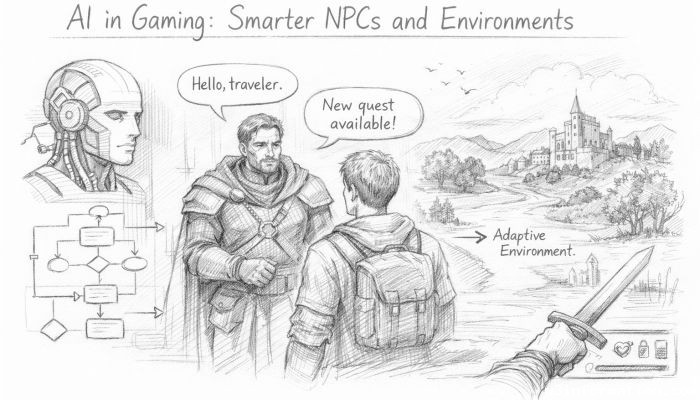 AI in Gaming: Smarter NPCs and Environments
 Understanding Bias in AI Algorithms
 Introduction to Chatbots and Conversational AI
 How Voice Assistants Like Alexa Work
 Federated Learning: AI Without Sharing Data