The Benefits of Leasing vs. Buying a Car
Buying a car used to be simple—you saved money, paid for it, and drove it for years. But today, there’s another popular option: leasing. For many people, the decision between leasing vs. buying a car can feel confusing, especially with changing lifestyles, evolving technology, and rising costs. Should you invest in ownership, or enjoy the flexibility of driving a new car every few years? The answer isn’t one-size-fits-all. It depends on your financial goals, driving habits, and personal preferences. In this guide, we’ll break down the benefits of leasing and buying a car in a practical, easy-to-understand way—so you can make a confident decision that fits your lifestyle and long-term plans.
- Understanding the Basics: Leasing vs Buying
- Lower Monthly Payments with Leasing
- Ownership Benefits When Buying
- Always Drive New with Leasing
- No Mileage Restrictions When Buying
- Maintenance and Warranty Advantages in Leasing
- Long-Term Cost Efficiency of Buying
- Flexibility and Lifestyle Fit
- Customization Freedom with Ownership
- Depreciation: Who Bears the Loss?
- Financial Planning and Investment Perspective
- Conclusion
- More Related Topics
Understanding the Basics: Leasing vs Buying
Before comparing benefits, it’s important to understand what leasing and buying actually mean.
When you buy a car, you own it outright (or after completing loan payments). It becomes your asset, and you can use it as long as you want.
Leasing, on the other hand, is like renting a car for a fixed period—usually 2 to 5 years. You pay monthly for usage, not ownership. At the end of the lease, you either return the car or upgrade to a new one.
This fundamental difference shapes all the advantages and disadvantages of both options.
Lower Monthly Payments with Leasing
One of the biggest advantages of leasing is affordability in the short term. Lease payments are usually lower than loan EMIs for buying a car.
This is because you’re only paying for the depreciation during the lease period, not the full value of the vehicle. For people who want a higher-end car without a high monthly burden, leasing can be very attractive.
It allows you to enjoy better features and newer models at a more manageable cost.
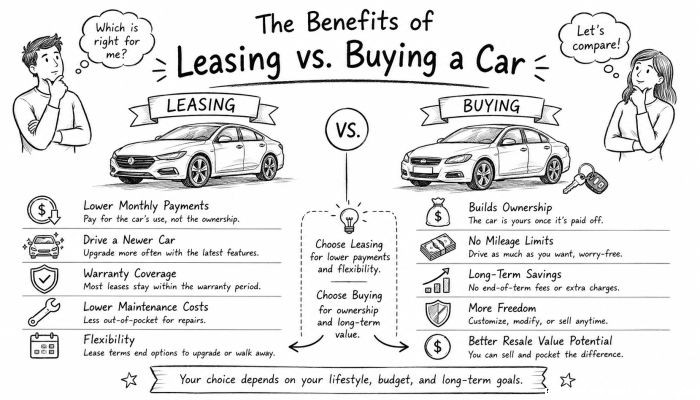
Ownership Benefits When Buying
Buying a car gives you full ownership, which is a major long-term advantage.
Once your loan is paid off, you no longer have monthly payments. The car becomes an asset that you can sell, modify, or use freely without restrictions.
Ownership also gives a sense of stability and long-term value. You’re not bound by contracts or mileage limits, making it ideal for people who plan to keep their car for many years.
Always Drive New with Leasing
Leasing allows you to drive a new car every few years. This means you always have access to the latest technology, safety features, and design upgrades.
For people who enjoy modern cars and don’t want to deal with aging vehicles, leasing offers a refreshing experience. It removes the hassle of long-term maintenance and keeps your driving experience updated.
This is especially appealing in a fast-evolving automotive world.
No Mileage Restrictions When Buying
One major limitation of leasing is mileage restrictions. Most lease agreements set a limit on how much you can drive annually.
If you exceed this limit, you may face additional charges. For frequent travelers or daily long-distance commuters, this can become expensive.
Buying a car eliminates this concern completely. You can drive as much as you want without worrying about penalties, making it more suitable for heavy usage.
Maintenance and Warranty Advantages in Leasing
Leased cars are typically new and under warranty, which means maintenance costs are often lower.
Most repairs are covered, and you’re less likely to face major issues during the lease period. This reduces unexpected expenses and provides peace of mind.
In contrast, owning a car means you’ll eventually bear maintenance costs as the vehicle ages. While ownership offers freedom, it also comes with responsibility.
Long-Term Cost Efficiency of Buying
While leasing is cheaper in the short term, buying is often more cost-effective in the long run.
Once you finish paying for your car, you can continue using it without monthly expenses. Over time, this leads to significant savings compared to leasing multiple vehicles.
If your goal is financial efficiency and long-term value, buying is usually the better choice.
Flexibility and Lifestyle Fit
Leasing offers flexibility that suits modern lifestyles. If your needs change frequently—such as relocating, upgrading, or changing preferences—leasing makes it easy to switch cars.
Buying, however, is better for those who prefer stability. It suits individuals who don’t want to change vehicles often and value consistency.
Your lifestyle plays a key role in deciding which option works best for you.
Customization Freedom with Ownership
When you own a car, you have complete freedom to modify it. Whether it’s upgrading interiors, adding accessories, or changing the appearance, the choice is yours.
Leased cars, however, must be returned in their original condition. Customization is limited or not allowed.
For car enthusiasts who enjoy personalizing their vehicles, buying is clearly the better option.
Depreciation: Who Bears the Loss?
Cars lose value over time, and depreciation is a significant factor.
When you buy a car, you bear the full impact of depreciation. The resale value decreases as the car ages.
In leasing, the depreciation cost is built into your monthly payments. You don’t have to worry about resale value or market fluctuations, which can be a relief for many users.
Financial Planning and Investment Perspective
From a financial perspective, buying a car can be seen as an investment in an asset, even though it depreciates.
Leasing, on the other hand, is more like a recurring expense with no ownership return. However, it frees up cash flow that can be used for other investments.
Your financial goals—whether saving, investing, or managing monthly expenses—should influence your decision.
Conclusion
The decision between leasing vs. buying a car comes down to understanding your lifestyle, financial goals, and long-term plans. Leasing offers flexibility, lower monthly costs, and the excitement of driving new cars regularly. Buying, on the other hand, provides ownership, long-term savings, and complete freedom.
Both options have their advantages, and neither is inherently right or wrong. What matters most is choosing the one that aligns with your needs and priorities.
Take the time to evaluate your driving habits, budget, and future goals. Because in the end, the best decision is not just about the car—it’s about how well it fits into your life.
 How to Make the Most of Your Holiday Break
 The Best Winter Destinations for a Cozy Getaway
 How to Organize Your Holiday Travel Plans with Ease
 The Ultimate Guide to Cooking for a Crowd
 How to Make Healthy Comfort Food Without the Guilt
 5 Delicious Vegan Breakfast Ideas You Can Make in Minutes