How to Choose the Right Car for Your Lifestyle and Needs
Buying a car is more than just a financial decision—it’s a lifestyle choice that shapes your daily routine, comfort, and long-term satisfaction. With countless options available today, from compact city cars to powerful SUVs and eco-friendly electric vehicles, choosing the right car can feel overwhelming. The truth is, the “perfect car” isn’t the most expensive or the most popular—it’s the one that fits seamlessly into your life. Whether you’re commuting to work, traveling with family, or exploring new destinations, your car should support your needs, not complicate them. In this guide, we’ll walk you through how to choose the right car based on your lifestyle, preferences, and budget—so you can make a confident and practical decision.
- Understand Your Daily Driving Needs
- Set a Realistic Budget
- Choose the Right Type of Car
- Evaluate Fuel Efficiency and Running Costs
- Consider Space and Comfort
- Safety Features Should Be a Priority
- Technology and Smart Features
- Maintenance and Reliability
- New vs Used Car: What’s Better?
- Test Driving Before You Decide
- Resale Value and Future Planning
- Aligning Your Choice with Your Lifestyle
- Conclusion
- More Related Topics
Understand Your Daily Driving Needs
Before looking at brands or features, take a step back and evaluate how you’ll actually use your car. Are you commuting daily in heavy traffic, or do you mostly drive on highways? Do you need a car for short city rides or long road trips?
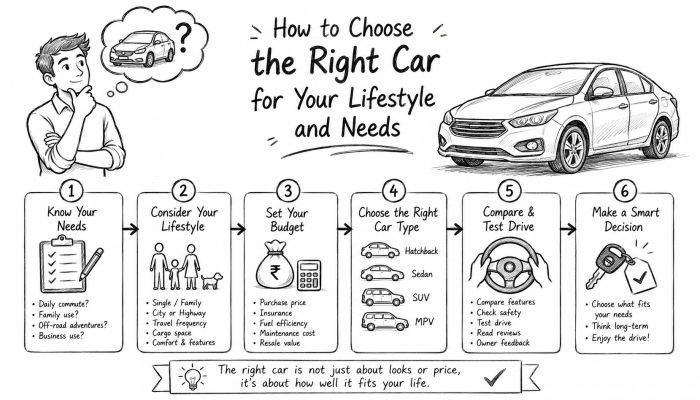
If you drive mainly in urban areas, a compact car with good mileage and easy maneuverability might be ideal. On the other hand, frequent highway travelers may prefer a more powerful and comfortable vehicle. Your daily routine should be the foundation of your decision.
Set a Realistic Budget
Your budget determines not just what car you can buy, but also how comfortably you can maintain it. Many buyers focus only on the purchase price and overlook ongoing costs.
Consider:
- Insurance
- Fuel expenses
- Maintenance and servicing
- Loan EMI (if applicable)
A smart decision is choosing a car that fits your financial situation without creating stress. Remember, affordability is not just about buying—it’s about sustaining ownership.
Choose the Right Type of Car
Different lifestyles require different types of vehicles. Understanding car categories helps narrow your options.
Common types include:
- Hatchbacks (great for city driving)
- Sedans (comfortable and stylish)
- SUVs (spacious and powerful)
- Electric vehicles (eco-friendly and cost-efficient)
For example, a small family may find a sedan perfect, while adventure lovers might prefer an SUV. Choosing the right category ensures your car aligns with your lifestyle.
Evaluate Fuel Efficiency and Running Costs
Fuel efficiency is a major factor, especially if you drive frequently. A car with better mileage can save significant money over time.
Petrol, diesel, hybrid, and electric options all have different cost implications. If your daily commute is long, prioritizing fuel efficiency becomes essential. Over time, these savings add up and make a big difference.
Consider Space and Comfort
Comfort is often underestimated until you start using the car regularly. Think about how many people will typically travel with you.
Check for:
- Legroom and headroom
- Boot space for luggage
- Seat comfort
If you have a family or often travel with others, space becomes a priority. A cramped car can turn even short trips into uncomfortable experiences.
Safety Features Should Be a Priority
Safety is non-negotiable. Modern cars come with advanced safety features that protect you and your passengers.
Look for:
- Airbags
- ABS (Anti-lock Braking System)
- Electronic Stability Control
- Rear parking sensors or cameras
Investing in a safe car is one of the most important decisions you can make. It’s not just about convenience—it’s about protecting lives.
Technology and Smart Features
Today’s cars are more than just machines—they’re smart systems designed to enhance your driving experience.
Features to consider:
- Touchscreen infotainment system
- Smartphone connectivity (Android Auto/Apple CarPlay)
- Navigation systems
- Voice control
While these features add convenience, choose only what you truly need. Avoid paying extra for features you may never use.
Maintenance and Reliability
A car that looks great but breaks down frequently can quickly become frustrating. Reliability should always be part of your decision.
Research:
- Brand reputation
- Service network availability
- Cost of spare parts
Choosing a reliable car ensures peace of mind and reduces long-term expenses. It also improves your overall ownership experience.
New vs Used Car: What’s Better?
One of the biggest decisions buyers face is whether to buy a new or used car.
New cars offer:
- Latest features
- Warranty
- No previous wear and tear
Used cars offer:
- Lower cost
- Less depreciation
Your choice depends on your budget and priorities. A well-maintained used car can be a great value, while a new car offers long-term reliability.
Test Driving Before You Decide
A car may look perfect on paper, but the real experience comes from driving it.
During a test drive, check:
- Comfort and seating position
- Steering control
- Braking response
- Noise levels
This step helps you understand how the car feels in real conditions. Never skip a test drive—it’s your chance to connect with the car.
Resale Value and Future Planning
A car is not just a purchase—it’s also an asset. Considering resale value can help you make a smarter financial decision.
Brands with strong resale value often:
- Have high demand
- Offer reliability
- Maintain quality over time
Even if you don’t plan to sell soon, thinking ahead can save you money in the future.
Aligning Your Choice with Your Lifestyle
At the end of the day, the right car is the one that fits your life perfectly.
Ask yourself:
- Does this car make my daily routine easier?
- Does it meet my family’s needs?
- Does it fit my long-term goals?
Your car should complement your lifestyle, not complicate it. When everything aligns, you’ll feel confident in your decision.
 How to Make the Most of Your Holiday Break
 The Best Winter Destinations for a Cozy Getaway
 How to Organize Your Holiday Travel Plans with Ease
 The Ultimate Guide to Cooking for a Crowd
 How to Make Healthy Comfort Food Without the Guilt
 5 Delicious Vegan Breakfast Ideas You Can Make in Minutes