The Role of Artificial Intelligence in Healthcare
Artificial Intelligence, or AI, has revolutionized diverse sectors of human activity, but perhaps its most profound impact is witnessed in healthcare. As medical science continually evolves with technological advancement, AI tools are rapidly transforming traditional healthcare approaches to disease diagnosis, treatment, and management, enhancing accuracy, efficiency, and patient outcomes. Healthcare delivery has significantly evolved due to AI integration, offering promising prospects for personalized medicine and patient-centric healthcare. From facilitating early disease detection to predictive analytics, robotic surgery, and beyond, AI’s influence permeates various aspects of healthcare. This article explores the multifaceted roles AI plays in healthcare, from innovations and challenges to future trends shaping the nexus between technology and human health.
- The Evolution of AI in Healthcare
- Improving Diagnostic Accuracy
- Personalized Treatment and Precision Medicine
- AI and Drug Discovery
- Predictive Analytics and Early Disease Detection
- Robotics and AI-Assisted Surgery
- Streamlining Administrative Tasks
- Remote Patient Monitoring and Telemedicine
- Challenges in AI Adoption in Healthcare
- Regulatory and Ethical Considerations
- Training Healthcare Professionals for AI-Integrated Healthcare
- The Future of AI in Healthcare
- Conclusion
- More Related Topics
The Evolution of AI in Healthcare
Artificial Intelligence in the healthcare sector did not emerge overnight; instead, it represents the result of several years of research and development in both the medical and computing fields. Initial steps involved using simple machine learning algorithms for analyzing clinical data, but rapid improvements in computational capabilities and data availability have accelerated AI’s potential in healthcare. Modern AI systems can interpret medical images, analyze genetic data, and even model clinical trials. This evolution of AI is part of a larger trend, as healthcare providers and technologists leverage it for operational efficiency and groundbreaking medical insights.

Improving Diagnostic Accuracy
AI plays a crucial role in improving diagnostic accuracy in healthcare by processing large datasets of medical images, such as X-rays, CT scans, and MRIs. Algorithms can identify patterns and anomalies that might be invisible to the human eye. In many cases, AI has shown comparable or even superior performance to radiologists in detecting diseases like cancer, pneumonia, and diabetic retinopathy. The use of AI in diagnostics helps to minimize human error and variability, leading to timely and precise diagnoses, which are vital for effective treatment planning.
Personalized Treatment and Precision Medicine
The traditional one-size-fits-all approach to treatment is giving way to personalized medicine, where treatments are tailored to the individual’s genetic makeup, lifestyle, and health profile. AI supports this personalized approach by analyzing large and complex datasets, which are difficult for humans to process accurately and quickly. Through the analysis of genomic sequences and predictive analytics, AI can help identify subgroups of patients who will most benefit from a particular treatment or foresee potential side effects before they occur. This personalization of treatment not only leads to better outcomes but also improves patient safety.
AI and Drug Discovery
The process of discovering new drugs has always been time-consuming and expensive, often taking many years to develop a drug to market. AI is changing this by automating the initial screening of drug compounds and simulating their interaction with biological targets. Machine learning algorithms can analyze millions of chemical compounds and predict which are most likely to be effective, significantly reducing the time and cost of research. AI is also used to analyze real-world clinical data to identify new therapeutic indications for existing drugs, thus facilitating drug repurposing and innovation.
Predictive Analytics and Early Disease Detection
AI extends its utility in healthcare beyond diagnosis by using predictive analytics for early disease detection. Predictive models use data from electronic health records (EHRs), wearable devices, and other sources to identify individuals at high risk of developing certain conditions like heart disease, diabetes, or stroke before they show symptoms. With this information, healthcare providers can intervene early and prevent the progression of the disease, improving patient prognosis and reducing healthcare costs. This shift from reactive to proactive medicine exemplifies the potential of AI in healthcare.
Robotics and AI-Assisted Surgery
Robotics and AI are converging in healthcare to enable new surgical procedures and techniques. AI-powered surgical robots can assist doctors during operations, offering high-precision movements and the ability to analyze data in real-time. These robots provide greater dexterity and stability, reduce the potential for human error, and make minimally invasive surgeries possible, which leads to shorter recovery times and fewer complications. AI can also analyze intraoperative data to refine surgical plans and adapt to changing conditions during surgery, improving patient outcomes.
Streamlining Administrative Tasks
Administrative tasks such as scheduling appointments, billing, and documentation often overwhelm healthcare providers. Automating these processes with AI can make these tasks easier, freeing up medical professionals to devote more time to patient care. AI algorithms, such as Natural Language Processing (NLP), can automatically transcribe and interpret clinical notes, generate reports, and even manage entries into electronic health records (EHRs). This automation not only reduces costs but also helps combat physician burnout, a growing problem in healthcare.
Remote Patient Monitoring and Telemedicine
Telemedicine has become increasingly popular worldwide, with AI-powered remote patient monitoring devices playing a vital role. These devices continuously collect data on a person’s health status, including heart rate, blood sugar levels, and oxygen saturation, and can alert healthcare providers to potential health issues in real time, allowing for timely interventions. This technology improves the accessibility of care, particularly for those in remote areas or those with limited mobility, and contributes to a more equitable healthcare system.
Challenges in AI Adoption in Healthcare
Despite the promising prospects of AI in healthcare, several challenges can impede its implementation. Data privacy and security are major concerns since sensitive patient information needs to be protected from breaches. Algorithmic bias is another challenge, as models trained on non-representative data can perpetuate health disparities. The “black box” problem of AI decision-making also raises concerns about trust and accountability in healthcare settings. Overcoming these challenges is crucial to harnessing the full potential of AI in medicine.
Regulatory and Ethical Considerations
As AI continues to advance, governments and regulatory agencies are working on formulating new frameworks and standards to regulate AI use in healthcare. Ethical challenges such as informed consent, patient autonomy, and the potential misuse of AI tools need to be considered. Governments will have to balance innovation with safety, ensuring that AI tools are validated for their intended use in the clinical setting before deployment. Liability in the event of AI-supported medical decisions leading to adverse outcomes will also need to be addressed.
Training Healthcare Professionals for AI-Integrated Healthcare
The integration of AI into healthcare delivery also requires training healthcare professionals to use AI tools and acquire digital literacy and healthcare-specific expertise. Additionally, data scientists and medical professionals must learn to work together to develop tools that meet real-world healthcare needs. Continuous training and an updated curriculum are needed to ensure healthcare professionals can work with AI systems confidently and ethically.
The Future of AI in Healthcare
The future of AI in healthcare promises an even more significant role in transforming how healthcare is delivered. The convergence of AI with other technologies like explainable AI, quantum computing, and natural language processing could provide the industry with even more robust and accurate systems. AI is likely to also deepen its integration with other innovations, such as genomics, nanotechnology, or bioprinting, and spur the development of holistic approaches to health problems. In the long run, AI’s increasing use in medicine will make high-quality healthcare a standard global norm.
Conclusion
Artificial Intelligence is at the vanguard of a revolution in healthcare, redefining how diseases are diagnosed, treated, and managed. Its applications are transforming hospital workflows, ushering in personalized medicine and ground-breaking surgical technologies to enhance patient outcomes and medical provider efficiency. However, realizing AI’s full potential is accompanied by several challenges, including data privacy, ethical issues, and medical training and expertise. Healthcare providers and policy makers must work with technologists to address these challenges and navigate this rapidly-evolving landscape. As AI technology matures, there is a unique opportunity to create a more proactive, precise, and patient-centric healthcare system – one that does not just prolong life, but also makes it better. The future of healthcare, powered by AI, promises a paradigm shift where technology and humanity intersect for society’s good.
 Big O Notation Explained for Beginners
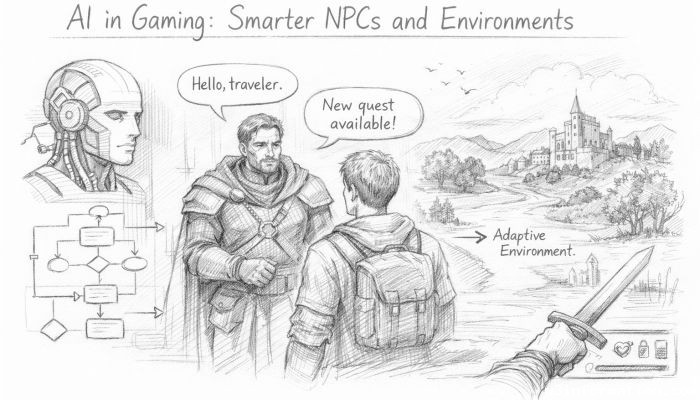 AI in Gaming: Smarter NPCs and Environments
 Understanding Bias in AI Algorithms
 Introduction to Chatbots and Conversational AI
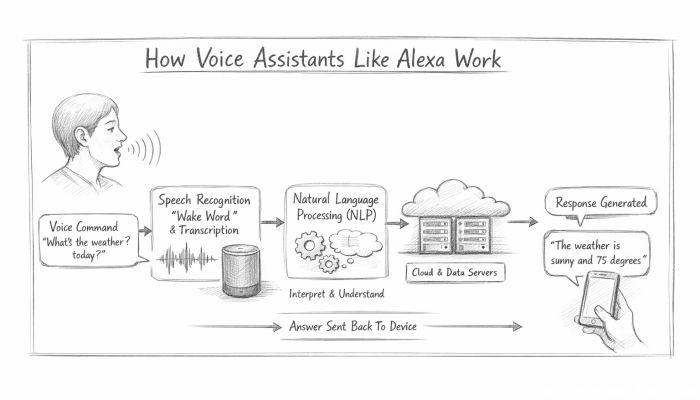 How Voice Assistants Like Alexa Work
 Federated Learning: AI Without Sharing Data