AI in Gaming: Smarter NPCs and Environments
In the dynamic world of gaming, artificial intelligence (AI) has evolved from simple scripted commands to complex systems that breathe life into virtual worlds. AI’s role transcends basic opponent behavior, shaping immersive experiences through smarter Non-Player Characters (NPCs) and adaptive environments. Today’s gamers expect dynamic interactions—NPCs that learn, strategize, and respond realistically, alongside worlds that evolve based on player choices and environmental stimuli. This transformation not only heightens player engagement but reshapes game design and storytelling itself. In this article, we explore the multifaceted impact of AI on gaming, focusing on how intelligent NPC behaviors and responsive environments create richer, more believable game universes. From procedural generation to deep learning, AI is revolutionizing the landscape and setting the stage for next-generation gaming experiences.
- The Evolution of AI in Gaming
- Role of AI in Creating Smarter NPCs
- Procedural Generation of NPC Behavior
- AI-Driven Emotional and Social Interactions
- Environmental AI: Dynamic and Responsive Worlds
- AI’s Impact on Game Design and Narrative
- Machine Learning and Reinforcement Learning in Gaming
- Challenges in Developing Smarter AI for Games
- AI and Player Personalization
- Mixed Reality and AI-Powered Gaming Experiences
- The Future of AI in Open-World and Sandbox Games
- Impact on Multiplayer and Competitive Gaming
- Conclusion
- More Related Topics
The Evolution of AI in Gaming
The journey of AI in gaming has been remarkable, moving from rudimentary patterns to sophisticated algorithms. Early games relied heavily on predetermined scripts where NPCs followed fixed routes or attack patterns. Classic titles like *Pac-Man* or *Space Invaders* had limited AI, relying largely on predictable movements. Over the decades, advances in computational power allowed for more nuanced AI, enabling NPCs to react dynamically to player actions. Pattern recognition, heuristic algorithms, and finite-state machines became common tools. Today, AI incorporates machine learning and neural networks, allowing NPCs to adapt, learn from gameplay, and offer unpredictable challenges. This evolution reflects a broader trend toward immersion and realism that modern gamers crave.
Role of AI in Creating Smarter NPCs
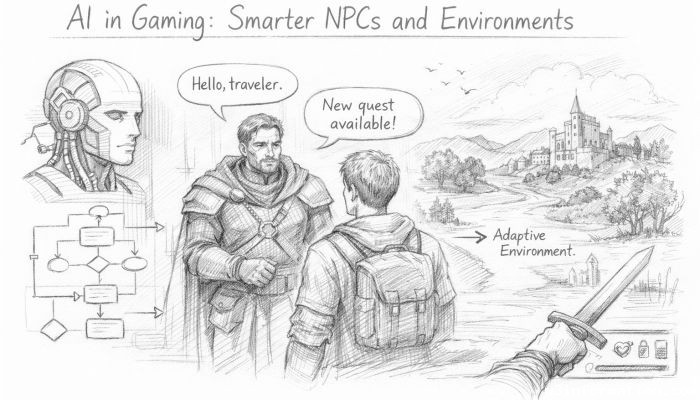
Smarter NPCs are essential for compelling gameplay because they offer meaningful interactions rather than scripted responses. AI enables NPCs to perceive their surroundings, understand player intent, and make decisions that reflect intelligence. Advanced pathfinding algorithms, coupled with decision trees and behavior trees, allow these characters to navigate complex terrains and strategize. Moreover, contemporary NPCs can exhibit emotions, social behaviors, and even personality traits thanks to AI models trained on vast datasets, bridging the gap between artificial and human-like interaction. This leads players to feel more connected to game characters, increasing emotional stakes and immersion.
Procedural Generation of NPC Behavior
Procedural generation—where content is created algorithmically rather than manually—has revolutionized NPC diversity. AI can generate vast arrays of characters with unique behaviors, equipment, and decision frameworks. For example, roguelike games use procedural generation to create unpredictable NPC opponents that challenge players differently each playthrough. This randomness, governed by underlying AI principles, prevents NPC behaviors from becoming monotonous. Procedural NPCs evolve with the game environment, adapting to player tactics and maintaining novelty, which significantly enhances replayability.
AI-Driven Emotional and Social Interactions
One of the most exciting frontiers in gaming AI is the simulation of emotional and social intelligence in NPCs. Advances in natural language processing allow NPCs to understand and respond to player dialogue contextually. Some games incorporate sentiment analysis, letting NPCs adjust their attitudes toward the player based on past interactions. These features foster deeper narrative experiences where relationships evolve, trust can build or break, and outcomes are influenced by social dynamics. Games such as *The Last of Us Part II* and *Red Dead Redemption 2* showcase emotionally complex NPCs that transcend traditional combat or utility roles.
Environmental AI: Dynamic and Responsive Worlds
AI doesn’t only power characters; it fundamentally transforms game environments too. Dynamic AI systems can control weather patterns, day-night cycles, and ecological systems that impact gameplay organically. For instance, AI-driven ecosystems might simulate predator-prey relationships or vegetation growth, affecting resource availability or hazards. Responsive environments react to player actions—burning forests, collapsing structures, or rearranging enemy patrols—creating a living world that feels authentic. This dynamic interplay between player and world deepens immersion and enhances strategic depth.
AI’s Impact on Game Design and Narrative
Integrating smarter AI into games shifts how designers approach storytelling and level creation. Traditional linear narratives give way to emergent storytelling where player choices and AI behavior shape unique story arcs. Designers focus more on systems and interactions rather than static plots. AI enables branching narratives controlled by NPC motivations and environmental factors, creating personalized experiences. Tools like AI-driven dialogue generators and behavior modeling expand creative possibilities, allowing smaller teams to develop rich, multifaceted games with complex character webs and responsive worlds.
Machine Learning and Reinforcement Learning in Gaming
Machine learning (ML), particularly reinforcement learning (RL), is pushing NPC intelligence to new heights. RL involves training AI through trial and error, allowing NPCs to optimize their behavior according to rewards and penalties. This method has produced NPCs that learn winning strategies, adapt to local player styles, and even discover new tactics unforeseen by developers. Notable examples include AI opponents in *Dota 2* and *StarCraft II*, where machine-trained agents have matched or surpassed professional human players. These advancements suggest a future where NPCs continuously evolve alongside players, making one-off scripted behaviors obsolete.
Challenges in Developing Smarter AI for Games
Despite impressive progress, creating truly intelligent NPCs and environments remains challenging. Balancing complexity with computational constraints is critical; overly smart AI might require unrealistic processing power, leading to latency issues. Designing AI that feels “fair” and fun rather than frustrating or unpredictable is another hurdle. Moreover, developing NPCs with authentic emotional or social depth requires vast data and careful tuning to avoid uncanny or repetitive behaviors. Ethical considerations also arise when AI begins to mimic human emotions or personalities, raising questions about player manipulation and psychological impact.
AI and Player Personalization
Smarter AI facilitates personalization to tailor gameplay to individual players. By analyzing play styles, preferences, and skill levels, AI systems can adjust NPC difficulty, narrative direction, or environmental challenges in real-time. This dynamic difficulty adjustment keeps players engaged without overwhelming or boring them. Additionally, AI can remember player choices and habits across sessions, creating continuity and emotional investment. Personalized NPC interactions foster deeper attachments, increasing the likelihood of sustained engagement and community building.
Mixed Reality and AI-Powered Gaming Experiences
With the rise of virtual reality (VR), augmented reality (AR), and mixed reality (MR), AI’s role in gaming extends beyond traditional screens. Smarter NPCs and environments powered by AI enhance immersion by responding naturally within player’s physical space. In VR, AI can create NPCs that recognize player gestures or expressions, responding with lifelike behaviors that bridge virtual and real. AR games like *Pokémon Go* leverage environmental AI to integrate digital creatures seamlessly with real-world locations. This fusion of AI and spatial computing opens new horizons for interactive storytelling and gameplay.
The Future of AI in Open-World and Sandbox Games
Open-world and sandbox games benefit enormously from AI advancements because these expansive environments demand rich, emergent behavior. AI guides NPCs to form societies, establish economies, or engage in conflicts autonomously, creating a believable world independent of the player. Future AI models may enable NPCs to form alliances, betray others, or evolve their cultures dynamically, making each playthrough unique. Sandbox games employing AI can generate unpredictable scenarios and emotional narratives that respond fluidly to player creativity, reshaping the boundaries of open-ended gameplay.
Impact on Multiplayer and Competitive Gaming
AI significantly influences multiplayer and competitive gaming scenes. Beyond smart NPC opponents, AI assists in matchmaking, detecting cheating, and balancing gameplay. In co-op or PvP games, AI-controlled teammates or enemies adapt to team strategies and player coordination, enhancing challenge and cooperation. Esports increasingly study AI tactics to prepare human players, while developers use AI for live balancing and event generation. These applications ensure competitive environments remain fair, engaging, and evolving to the high skill standards of modern gaming communities.
Conclusion
Artificial intelligence’s integration into gaming has transformed the nature of interactive entertainment, turning static, predictable experiences into vibrant, living worlds filled with smarter NPCs and dynamic environments. From the early days of patterned enemy behavior to today’s machine-learned opponents and procedurally generated ecosystems, AI continues to deepen immersion and player engagement. Smarter NPCs evoke empathy through realistic emotions and social interactions, while AI-driven worlds respond to player actions in meaningful ways. Although challenges remain in balancing complexity and fairness, the future promises even more personalized, adaptive, and emotionally resonant gaming experiences. As AI evolves, it not only enriches gameplay but also expands storytelling possibilities, inviting players into worlds where their choices matter and characters truly feel alive. The marriage of AI and gaming marks a thrilling frontier, redefining the artistry and technology of play for generations to come.
 Big O Notation Explained for Beginners
 Understanding Bias in AI Algorithms
 Introduction to Chatbots and Conversational AI
 How Voice Assistants Like Alexa Work
 Federated Learning: AI Without Sharing Data