Introduction to Chatbots and Conversational AI
In an age where technology continually reshapes how we interact with the world, chatbots and conversational AI have emerged as powerful tools transforming communication across industries. From customer service and healthcare to entertainment and education, these intelligent systems simulate human conversation, providing instant, personalized assistance and automating many routine interactions. As businesses strive for efficiency and enhanced user experiences, understanding chatbots and conversational AI’s capabilities and applications has become essential. This article presents a comprehensive introduction to the fundamental concepts behind these technologies, explores their various types, and delves into their underlying mechanisms. By examining their development, use cases, and future prospects, we uncover the profound implications conversational AI holds for the digital landscape and human-computer interaction.
- What Are Chatbots?
- The Evolution of Conversational AI
- Differentiating Chatbots from Conversational AI
- Types of Chatbots
- Natural Language Processing (NLP) Explained
- Machine Learning and its Role in Conversational AI
- Designing User-Friendly Conversational Interfaces
- Common Use Cases of Chatbots and Conversational AI
- Ethical Considerations and Challenges
- Future Trends in Chatbots and Conversational AI
- Building Your First Chatbot: Key Steps
- Measuring the Success of Chatbots
- Conclusion
- More Related Topics
What Are Chatbots?
Chatbots are software programs designed to simulate conversations with human users via text or voice interfaces. They serve as virtual assistants capable of responding to queries, providing information, and performing specific tasks without human intervention. Historically, chatbots started with simple, rule-based systems that followed predefined scripts. Today’s chatbots utilize advanced algorithms and machine learning, enabling them to understand natural language and engage users more fluidly. At their core, chatbots aim to mimic human conversational patterns, making interactions intuitive and efficient.
The Evolution of Conversational AI
Conversational AI significantly expands beyond the foundation of simple chatbots by incorporating artificial intelligence techniques such as natural language processing (NLP), machine learning (ML), and speech recognition. Early attempts at machine conversations, like ELIZA in the 1960s, were limited to pattern matching and scripted responses. However, with advancements in computational power and data availability, conversational AI now supports dynamic, context-aware dialogues. This evolution allows systems to better understand the intent behind user inputs, manage multi-turn conversations, and continually improve through learning from interactions.

Differentiating Chatbots from Conversational AI
While often used interchangeably, chatbots and conversational AI represent different scopes. Chatbots are primarily *task-oriented* and designed to handle specific functions such as booking appointments or answering FAQs. Conversational AI encompasses a broader spectrum, integrating several AI capabilities to facilitate more complex and natural conversations. Conversational AI includes components like speech recognition, sentiment analysis, and conversation management, enabling it to understand emotions, manage context, and engage users on a deeper level. Thus, conversational AI can be considered a superset within which chatbots operate as a specialized application.
Types of Chatbots
Chatbots can be broadly categorized into rule-based and AI-powered types. Rule-based chatbots operate on predefined instructions or decision trees, responding to exact keywords or phrases. They excel in handling simple, repetitive tasks but struggle with ambiguous queries. AI-powered chatbots, however, use NLP and ML algorithms to interpret user input, allowing for more flexible and human-like interaction. These chatbots can understand context, learn over time, and adapt responses accordingly. Recently, hybrid models combining rule-based precision and AI flexibility have emerged to enhance reliability and user experience.
Natural Language Processing (NLP) Explained
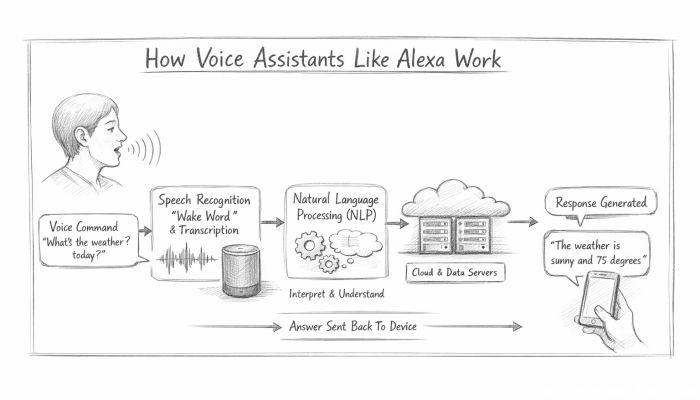
Natural Language Processing is a field of artificial intelligence that enables machines to understand, interpret, and generate human language. At the heart of conversational AI, NLP breaks down user inputs into manageable components, identifying intent, entities, and sentiment. This process allows chatbots to grasp the meaning behind messages rather than merely processing keywords. Techniques such as tokenization, part-of-speech tagging, named entity recognition, and semantic analysis work together to create meaningful responses. NLP also plays a crucial role in translating or generating speech in voice-enabled chatbots.
Machine Learning and its Role in Conversational AI
Machine learning empowers chatbots to improve their performance by learning from data and interactions without explicit programming for every scenario. Through supervised, unsupervised, and reinforcement learning, conversational AI systems analyze past conversations to better understand context and predict appropriate responses. ML models help in classifying user intents, improving entity recognition, and personalizing interactions based on user behavior. Continuous learning allows these systems to adapt to evolving language use, slang, and user preferences, making conversations richer and more effective over time.
Designing User-Friendly Conversational Interfaces
A well-designed conversational interface is critical to chatbot success, balancing functionality with natural communication. Design considerations include crafting clear, concise prompts, enabling easy navigation through conversation flows, and maintaining context awareness to handle follow-up questions seamlessly. Voice interfaces require attention to speech clarity and error handling. Empathy and personality can enhance users’ emotional connection with chatbots, making interactions more engaging. Additionally, providing users with the ability to escalate to human agents when necessary ensures comprehensive support.
Common Use Cases of Chatbots and Conversational AI
Chatbots and conversational AI have permeated multiple sectors, each leveraging these technologies to address specific challenges. In customer service, chatbots reduce wait times and handle high volumes of repetitive inquiries efficiently. In healthcare, conversational agents assist in symptom checking and appointment scheduling. E-commerce platforms use them for personalized shopping recommendations, while educational institutions deploy chatbots for student support and administrative tasks. These flexible applications demonstrate the adaptability of conversational AI in solving practical problems and enhancing user satisfaction.
Ethical Considerations and Challenges
As chatbots proliferate, ethical issues surrounding privacy, transparency, and bias become increasingly important. Collecting and processing user data necessitate strong safeguards against misuse, emphasizing the need for secure and compliant systems. Transparency about chatbot identity helps manage user expectations and builds trust. Furthermore, AI algorithms might inadvertently reflect biases present in training data, leading to unfair or inappropriate responses. Addressing these challenges requires ongoing vigilance, diverse datasets, and responsible design practices to ensure trustworthy and equitable conversational AI deployment.
Future Trends in Chatbots and Conversational AI
The future of chatbots and conversational AI promises even more sophisticated and seamless interactions driven by advances in AI research. Technologies like deep learning and transformer-based models (e.g., GPT, BERT) are enabling unprecedented naturalness in conversations. Multimodal interfaces combining text, voice, and visual inputs will enrich user engagement. Additionally, increased integration with IoT and smart devices will create more context-aware assistants. As AI becomes more intuitive and anticipatory, chatbots may evolve from reactive tools to proactive partners in daily life and work.
Building Your First Chatbot: Key Steps
Creating a chatbot involves several foundational steps, beginning with defining its purpose and target audience. Selecting the right platform and technology—whether a simple rule-based system or an AI-powered conversational framework—is vital. Developing conversation flows and intents based on common user queries lays the groundwork for interaction quality. Integrating NLP services enables better language understanding, while rigorous testing and iterative refinement ensure robustness. Finally, deployment across appropriate channels (web, social media, messaging apps) and continuous monitoring facilitate ongoing improvement and user satisfaction.
Measuring the Success of Chatbots
Effective evaluation is essential to optimize chatbot performance and user experience. Key performance indicators (KPIs) include user engagement metrics, resolution rates, conversation length, and customer satisfaction scores. Analyzing chatbot conversations can reveal patterns for improvement, such as frequently misunderstood intents or drop-off points. Sentiment analysis helps gauge user emotions and responses, while A/B testing different dialogue strategies aids in identifying what resonates best. Continuous feedback loops and data-driven adjustments ensure that chatbots remain relevant and efficient over time.
Conclusion
Chatbots and conversational AI stand at the forefront of the evolving interaction landscape between humans and machines. By emulating natural dialogue through sophisticated NLP and machine learning techniques, they have revolutionized how businesses and users communicate, enhancing efficiency, accessibility, and personalization. Understanding the distinctions, technologies, and ethical dimensions underlying these systems is critical for harnessing their full potential. As AI continues advancing, conversational agents will become increasingly integral to everyday life, offering seamless, proactive assistance across diverse domains. Embracing these innovations with thoughtful design and responsible use will unlock new possibilities in human-computer collaboration, shaping the future of communication for years to come.
 Big O Notation Explained for Beginners
 AI in Gaming: Smarter NPCs and Environments
 Understanding Bias in AI Algorithms
 How Voice Assistants Like Alexa Work
 Federated Learning: AI Without Sharing Data