Understanding Model Overfitting and Underfitting
In the rapidly evolving field of machine learning, developing models that perform accurately and reliably on unseen data is a fundamental goal. However, achieving this is often hindered by the twin challenges of overfitting and underfitting. These phenomena represent critical pitfalls that can severely compromise a model’s predictive power. Overfitting occurs when a model learns not only the underlying patterns in the training data but also the noise and random fluctuations, leading to poor generalization. Conversely, underfitting results when a model is too simplistic, incapable of capturing the underlying trends in the data. Understanding these concepts is essential for data scientists, engineers, and researchers aiming to create robust machine learning solutions. This article delves into the nature of overfitting and underfitting, explores their causes, symptoms, and consequences, and outlines practical strategies to detect, prevent, and mitigate these issues, enabling readers to build more effective predictive models.
- Defining Overfitting: When a Model Learns Too Much
- Defining Underfitting: When a Model Learns Too Little
- The Bias-Variance Tradeoff: Balancing Complexity and Accuracy
- Causes of Overfitting: Why Does It Happen?
- Causes of Underfitting: When Simplicity Becomes a Limitation
- Detecting Overfitting and Underfitting: Key Indicators
- Regularization Techniques to Combat Overfitting
- Enhancing Model Capacity to Address Underfitting
- The Role of Data Quality and Quantity
- Cross-Validation: A Robust Evaluation Technique
- Practical Strategies for Balancing Fit
- Real-World Implications of Overfitting and Underfitting
- Conclusion
- More Related Topics
Defining Overfitting: When a Model Learns Too Much
Overfitting occurs when a machine learning model captures detailed noise or random fluctuations in the training dataset rather than the intended underlying pattern. Essentially, the model becomes so finely tuned to the peculiarities of the training data that it loses its ability to generalize to new, unseen data. For example, a model trained on a specific set of house prices might memorize irrelevant details such as anomalies or outliers, which do not apply to other housing markets. While this results in high accuracy on the training set, overfitted models typically perform poorly on validation or test datasets. In supervised learning, overfitting is akin to "memorizing" answers rather than understanding concepts, rendering the model ineffective in real-world applications.
Defining Underfitting: When a Model Learns Too Little
Underfitting represents the opposite problem, where a model is too simplistic to grasp the complexity of the data. Underfitting models fail to learn the underlying trend, resulting in poor performance on both the training data and new data. This situation commonly arises when the model chosen lacks sufficient capacity, such as using a linear regression model to fit highly non-linear data. An underfitted model essentially ignores meaningful relationships or patterns in the dataset, leading to systematic errors. Underfitting often manifests as high bias, where the model assumptions overly constrain its flexibility. This inadequacy highlights the importance of selecting an appropriate model architecture and ensuring it is sufficiently complex to capture relevant patterns.

The Bias-Variance Tradeoff: Balancing Complexity and Accuracy
Understanding overfitting and underfitting requires familiarity with the bias-variance tradeoff, a core concept in machine learning. Bias refers to errors introduced by overly simplistic models that cannot capture data complexity, often resulting in underfitting. Variance, on the other hand, arises from models that are excessively sensitive to the training data, causing overfitting. High-bias models have consistent but inaccurate predictions, while high-variance models have unpredictable fluctuations and poor generalization. The challenge is to find a sweet spot where the model maintains enough complexity to reduce bias but not so much that variance explodes. Achieving this balance is crucial for building models that perform well on both training and unseen datasets.
Causes of Overfitting: Why Does It Happen?
Several factors contribute to overfitting, typically related to the interplay between the dataset and the model’s capacity. One prominent cause is having a model that is too complex relative to the amount of training data—for example, deep neural networks with millions of parameters fit on limited or noisy datasets. Noise in the data itself encourages the model to learn irrelevant details. Overfitting can also arise when features contain redundant or irrelevant information, pushing the model to generate decision boundaries that do not generalize. Additionally, insufficient regularization or improper hyperparameter tuning allows models to fit too closely to the training data. Understanding these causes guides practitioners toward mitigating strategies.
Causes of Underfitting: When Simplicity Becomes a Limitation
Underfitting stems from models that lack sufficient flexibility or complexity to represent the data adequately. Using linear methods on non-linear problems or limiting the number of features can lead to underfitting. Another contributing factor is inadequate training time or overly simplistic training algorithms that fail to capture patterns. Feature selection plays a critical role: excluding important variables or failing to engineer meaningful features results in models that cannot discern the relationships necessary for accurate predictions. Additionally, overly aggressive regularization can constrain the model so much that it becomes incapable of learning vital data characteristics.
Detecting Overfitting and Underfitting: Key Indicators
Recognizing if a model is overfitting or underfitting is crucial for timely intervention. A common diagnostic tool involves examining model performance on training versus validation or test data. Overfitting is indicated by high accuracy or low error on training data but significantly worse metrics on validation data. Conversely, underfitting is characterized by high errors on both training and validation sets. Visual techniques like plotting learning curves—graphs of model error versus training sample size—can also reveal the problem. A rising validation error coupled with a low training error signals overfitting, whereas persistently high errors on both curves suggest underfitting. These diagnostics help practitioners adjust their models appropriately.
Regularization Techniques to Combat Overfitting
Regularization is a powerful method to prevent overfitting by adding constraints or penalties to a model’s complexity. Popular techniques include L1 (Lasso) and L2 (Ridge) regularization, which add penalties based on the magnitude of model parameters, encouraging simpler models. Dropout, especially in neural networks, randomly deactivates neurons during training to reduce reliance on specific features. Early stopping halts training once the validation error starts increasing, preventing the model from fitting the noise. Regularization effectively reduces variance without significantly increasing bias, creating models that generalize better. Choosing an appropriate regularization approach depends on the specific model and dataset characteristics.
Enhancing Model Capacity to Address Underfitting
To overcome underfitting, increasing the model’s capacity or complexity is often necessary. This can be achieved by selecting more sophisticated algorithms, such as switching from linear regression to decision trees or neural networks that can model non-linear relationships. Expanding the feature set through feature engineering and including interaction terms can enrich the model’s representational power. Reducing regularization strength or increasing training time allows the model to better capture underlying patterns. However, these modifications must be carefully managed to avoid slipping into overfitting. Experimenting iteratively and validating results ensures adjustments lead to meaningful improvements.
The Role of Data Quality and Quantity
The dataset plays a pivotal role in determining whether a model overfits or underfits. Small or noisy datasets are prone to overfitting, as models attempt to fit limited or noisy samples tightly. Collecting more data can help by providing a richer representation of the underlying pattern, reducing the chance of learning noise. Cleaning data by removing outliers, correcting errors, and handling missing values also improves model robustness. On the other hand, if the data does not contain sufficient informative features or is insufficiently complex, even large datasets will yield underfitting. Thus, data quality and quantity are fundamental considerations in achieving the right balance.
Cross-Validation: A Robust Evaluation Technique
Cross-validation is a widely used method to detect and mitigate overfitting and underfitting by evaluating model performance across multiple partitions of data. In k-fold cross-validation, the dataset is split into k subsets, and the model is trained and tested k times, each time using a different subset for testing and the rest for training. This process produces a comprehensive view of how the model generalizes. Cross-validation reduces the likelihood of biased performance estimates due to lucky or unlucky splits and provides insight into potential overfitting if a model performs well on training folds but poorly on validation folds. This technique supports better hyperparameter tuning and model selection.
Practical Strategies for Balancing Fit
Achieving an optimal model requires a pragmatic combination of strategies. Start with exploratory data analysis to understand dataset complexities and possible feature relationships. Employ simple models initially to establish a baseline and progressively increase complexity as needed. Use regularization and cross-validation systematically to evaluate model behavior. Feature engineering, including selection and transformation, helps tailor the inputs for better learning. Monitor learning curves and validation errors to gauge performance trends over training iterations. Combining these approaches fosters a robust development process that balances bias and variance, leading to models that generalize well.
Real-World Implications of Overfitting and Underfitting
The consequences of overfitting and underfitting extend beyond academic exercises—they deeply impact real-world applications. Overfitting models may deliver misleadingly optimistic results during development but fail unexpectedly in production, causing losses in finance, healthcare, or autonomous systems. Underfitting models, conversely, may consistently deliver substandard predictions, eroding user trust and leading to missed opportunities. Properly understanding and addressing these issues is vital for deploying machine learning systems that are reliable, accurate, and ethically responsible. In complex environments, continuous monitoring and retraining can help adjust to evolving data distributions and prevent degradation of model performance.
Conclusion
Understanding model overfitting and underfitting is essential for anyone working in machine learning. These two phenomena define the boundaries within which predictive models operate: overfitting reflects excessive complexity that fails to generalize, while underfitting reflects insufficient complexity that misses critical patterns. The bias-variance tradeoff encapsulates this tension, guiding practitioners toward balanced solutions. Through careful data preparation, model selection, regularization, and evaluation techniques such as cross-validation, one can effectively navigate the pitfalls of under- and overfitting. Ultimately, mastering these concepts lays the foundation for building robust, accurate models that perform reliably in real-world scenarios, supporting smarter decision-making and innovation across diverse domains.
 Big O Notation Explained for Beginners
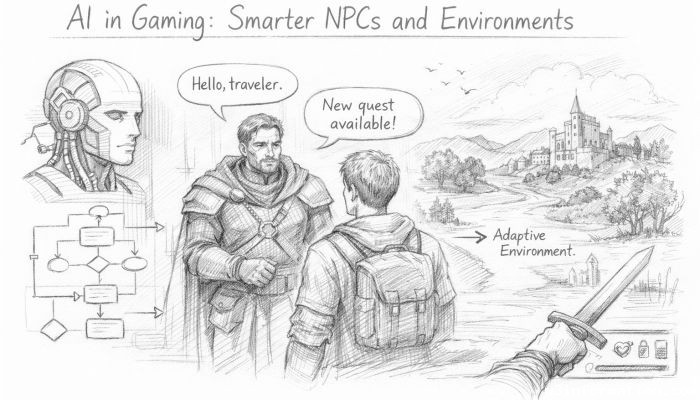 AI in Gaming: Smarter NPCs and Environments
 Understanding Bias in AI Algorithms
 Introduction to Chatbots and Conversational AI
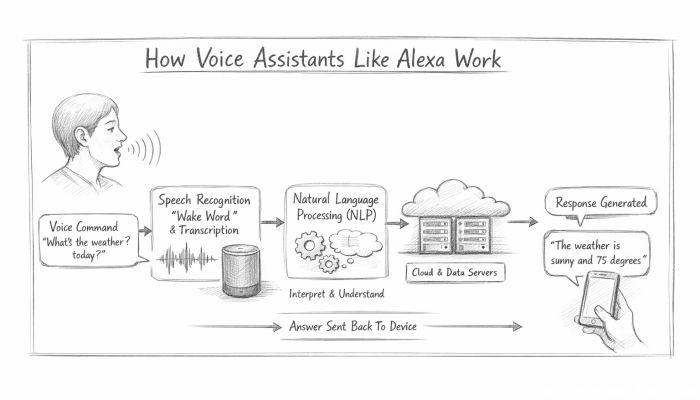 How Voice Assistants Like Alexa Work
 Federated Learning: AI Without Sharing Data