How to Optimize Financial Decisions Using AI Tools
Financial decision-making is getting harder every day with market volatility, inflation, complex regulations, and abundant data. Artificial intelligence is now available, affordable, and powerful enough to help you make more intelligent decisions with confidence. AI tools can automate routine financial tasks and provide you with predictive, prescriptive insights, optimize risk-adjusted decisions, uncover hidden patterns, and improve speed and accuracy for your financial workflows. In this article, we cover how you can optimize financial decision-making with AI: Understand the technology, select tools, integrate and use them, manage risk & bias, and set up human-AI collaboration for best results.
- Understand What AI Brings to Financial Decision‑Making
- Define the Decision‑Areas You Want to Optimize
- Choose the Right AI Tools for Your Needs
- Prepare and Cleanse Your Financial Data
- Build and Train Predictive Models or Use Pre‑Built AI Insights
- Automate Workflow and Notification Triggers
- Integrate Human Judgement and Maintain Interpretability
- Monitor, Validate and Adjust Your AI Decision Tools
- Manage Risk, Bias and Ethical Considerations
- Measure and Communicate Decision Outcomes and ROI
- Scale Gradually and Prioritize Use Cases
- Stay Informed and Prepare for Future Developments
- Conclusion
- More Related Topics
Understand What AI Brings to Financial Decision‑Making
AI is not just a buzzword. It has specific capabilities for finance: machine learning (ML) models can ingest historical and real-time data, natural language processing (NLP) extracts meaning from financial reports or news, anomaly detection flags unusual transactions or outliers, and predictive analytics forecasts cash flow, market movements, or credit risks. Research shows AI in finance improves decision‑making accuracy, reduces human errors, and drives cost efficiencies. Home+1 Understanding these specific capabilities helps you identify the problems you can solve and positions AI as an enabler rather than a replacement of human judgment.

Define the Decision‑Areas You Want to Optimize
Before blindly adopting AI tools, be clear about the decision areas you want to optimize. These could be: investment allocation, cash-flow forecasting, expense management, risk assessment, or credit/loan decisions. For each area, ask: What are the current bottlenecks? What data do we have? What outcomes matter? By clearly defining the decision‑areas you want to improve, you’ll be able to better select appropriate tools and success measures rather than jumping on the technology bandwagon.
Choose the Right AI Tools for Your Needs
There is a rapidly growing ecosystem of AI-powered tools targeting the finance function. For example, platforms like Datarails FP&A Genius and Planful Predict specialize in scenario modelling and budgeting. Drivetrain+2insidr.ai+2 Tools like Booke.AI focus on automating bookkeeping and transaction categorization. cubesoftware.com+1 When selecting a tool, evaluate the following: ease of integration to your data systems, transparency of the algorithm decisions, vendor support, and overall cost‑benefit. You do not need the most advanced or expensive tool but the one that reliably addresses your specific decision‑challenge.
Prepare and Cleanse Your Financial Data
AI’s performance is only as good as your data. To optimize decisions, you need your data to be complete, consistent, clean, and well‑structured. This includes past financial statements, cash‑flow records, transaction logs, market data, and unstructured data like news articles or management commentary. Studies show poor data quality is the top obstacle in AI adoption for financial decisions. oarjpublication.com+1 Invest time upfront in data collection, cleansing, labelling, and validation, which will make your AI outputs far more reliable.
Build and Train Predictive Models or Use Pre‑Built AI Insights
Once you have prepared your data, you can either build or adopt models that provide decision support. Predictive modelling could identify which expenses are likely to exceed budget, or forecast when a cash‑flow shortfall might occur. Decision trees, meta‑labelling and other techniques are used in finance for scenario analysis and risk management. Wikipedia+1 Alternatively, many commercial tools now offer pre‑built AI insights (automated forecasting, anomaly detection) so you can skip model development and tap into AI analytics sooner. Align model outputs with the earlier defined decision areas.
Automate Workflow and Notification Triggers
Optimizing decisions is not just analytics but timely action. AI tools can trigger alerts when variances occur (expenses exceed budget, investment risk increases) automate workflows (invoice approvals, cash transfers), and provide decision‑support dashboards. For example, predictive alerts help finance teams respond before a situation becomes a crisis. zenskar.com+1 These automated triggers free human time, reduce reaction lag, and embed decision logic into financial operations.
Integrate Human Judgement and Maintain Interpretability
AI tools are powerful but not infallible and can contain bias or opaque logic. Regulators and industry researchers are warning of vulnerabilities when many players use the same models or data sets. Reuters+1 Therefore, maintain human oversight. Use AI as support: the model provides a recommendation but a qualified decision‑maker reviews it, questions the assumptions, and interprets the context. Choose tools that give transparent outputs (explainable AI) so you can understand how the tool arrives at its suggestion.
Monitor, Validate and Adjust Your AI Decision Tools
Technology and business environments change, and so must your AI systems. Monitor performance metrics, the accuracy of predictions, error rates, and decision outcomes regularly. Validate models against new data and retrain if drift is detected or business rules change. Academic research shows that ongoing model maintenance is crucial for sustained efficacy. arXiv+1 Implement a feedback loop so that your decision tools stay aligned with real results and avoid becoming obsolete.
Manage Risk, Bias and Ethical Considerations
AI decision tools can introduce risks of their own: biased inputs, over‑reliance, lack of transparency, or unintended consequences. These risks are significant in finance. The U.S. Treasury notes that complexity, vendor concentration, and inadequate model risk frameworks create systemic vulnerabilities. Reuters To mitigate these risks, audit your data for bias, use diverse data sources, set guardrails (human override), ensure data privacy and compliance, and maintain documentation for auditability of decision logic.
Measure and Communicate Decision Outcomes and ROI
Optimizing decisions with AI tools is not just about implementation but about demonstrating value. Track key metrics like forecast accuracy, decision latency, cost savings, error reduction, customer outcomes, or revenue uplift. Communicate these results clearly to stakeholders to justify investment and engagement. Research shows that AI accuracy, speed, and error reduction drive financial benefits for SMEs. oarjpublication.com+1 Measuring and reporting ROI helps you justify ongoing investment and continuous improvement.
Scale Gradually and Prioritize Use Cases
Don’t try to automate all use cases at once. Instead, start with a high-impact one: maybe cash‑flow forecasting or expense anomaly detection. Once successful, expand into adjacent areas like strategic planning or investment decisions. This approach builds confidence, establishes best practices, and enables smoother scaling. Tool reviews in the commercial sector support this gradual expansion strategy. insidr.ai Scaling too quickly without process maturity can lead to tool abandonment or poor adoption.
Stay Informed and Prepare for Future Developments
AI for finance is rapidly evolving, with new models, regulation, data sources, and use‑cases coming all the time. For example, recent advances in large‑language‑models (LLMs) custom‑built for financial tasks show promising capabilities. arXiv To stay on top, engage in continuous learning: attend seminars, read industry research, evaluate pilot tools, and keep your decision‑framework flexible. By doing so, your financial‑decision engine remains future‑proof and ready for new tools and opportunities.
Conclusion
Optimizing financial decisions with AI tools is about augmenting human judgement, not replacing it with scale, speed and insight. By understanding what AI can do, defining your decision‑areas, selecting the right tools, preparing your data, automating workflows, maintaining oversight, monitoring performance, managing risks, and scaling thoughtfully, you build a system that drives smarter financial outcomes. In a world of increasing complexity and rapid change, using AI for your financial decisions gives you an edge‑improving accuracy, reducing cost, and enabling proactive strategy over reactive chaos. Remember, AI is a powerful ally but its true value comes from how you integrate it into decision‑frameworks and disciplined practice.
 Big O Notation Explained for Beginners
 AI in Gaming: Smarter NPCs and Environments
 Understanding Bias in AI Algorithms
 Introduction to Chatbots and Conversational AI
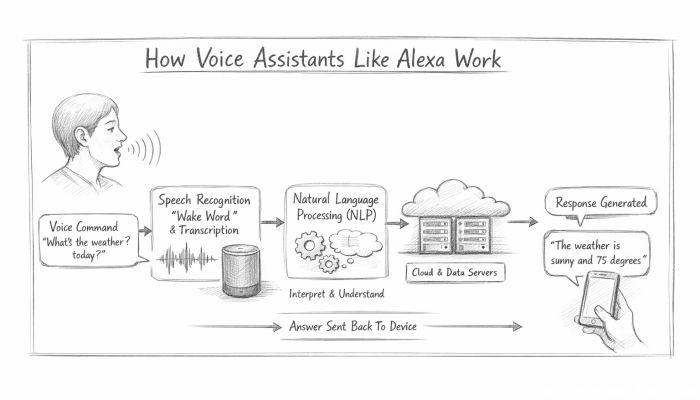 How Voice Assistants Like Alexa Work
 Federated Learning: AI Without Sharing Data