Top Trends Shaping Higher Education in 2025
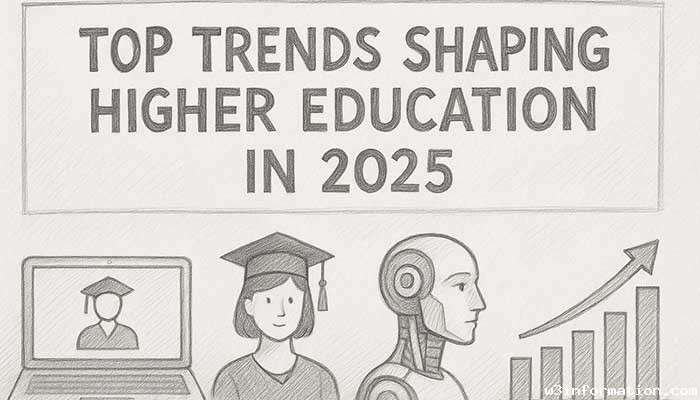
Higher education in the mid-2020s is undergoing transformation on many fronts, as advances in technology, society’s changing needs, and student preferences accelerate and build on the momentum of recent years. The traditional model of college and university education is expanding and diversifying to include new approaches to teaching and learning, institutional governance, and student success. 2025 is set to be a year of both continuity and change in higher education, with new developments reinforcing and complementing established shifts. The article examines and delves into 12 prominent and emerging trends in higher education, particularly in 2025, with focus on how academic institutions, educators, students, and other stakeholders are responding and contributing to the dynamic education landscape.
- The Hybrid and Blended Learning Approach to Instruction
- Artificial Intelligence (AI) Enables Personalized Learning
- Micro-Credentials and Modular Learning Units
- The Expansion of Lifelong Learning Ecosystems
- Greater Focus on Equity, Diversity, and Inclusion (EDI)
- Sustainability and Climate Consciousness
- Virtual and Augmented Reality in Teaching and Learning
- Data Analytics Informing Decision-Making
- Credential Verification and Academic Records on the Blockchain
- Mental Health and Well-being Become a Higher Education Priority
- Internationalization and Cross-Border Education
- The Rise of Competency-Based Education
- Conclusion
- More Related Topics
The Hybrid and Blended Learning Approach to Instruction
The hybrid and blended learning approach, or the integration of online and in-person elements in courses, is solidifying its place in the higher education landscape in 2025. The pandemic years pushed colleges and universities to expand their digital toolkits, but the mid-2020s are characterized by more considered, strategic approaches to integrating technology with in-person learning. Curricula are increasingly designed to maximize the benefits of face-to-face and online components, supporting a variety of learning styles, increasing accessibility, and improving engagement. These hybrid methods can also provide students with greater control over time management and give universities access to a wider, more international, student body.
Artificial Intelligence (AI) Enables Personalized Learning
AI in higher education has moved beyond novelty to become an integral part of the learning experience, especially with its capacity to deliver personalized learning at scale. Learning platforms powered by AI use data analytics to understand each student’s performance and tailor the delivery of course content, pace, and assessments to their needs. This approach improves retention and helps ensure mastery of material, while also facilitating deeper understanding of concepts. AI-powered tutoring systems and chatbots are also being used to provide real-time feedback and assistance, alleviating some of the burdens of student success and allowing teachers to focus on higher-level tasks.
Micro-Credentials and Modular Learning Units
Micro-credentials and modular learning are taking a more central role in higher education in 2025. Bite-sized, skill-based learning credentials, which can be stacked to complete diplomas or degrees, allow learners to gain targeted expertise quickly. Micro-credentials are increasingly recognized by employers as valuable indicators of specific skillsets and competencies. This trend is especially appealing to working professionals and lifelong learners who need more flexible, career-relevant options, and also helps to encourage and instill lifelong learning mindsets.
The Expansion of Lifelong Learning Ecosystems
Higher education in 2025 is increasingly important in the lifelong learning ecosystem, as people of all ages seek to upskill and reskill to stay competitive in a rapidly evolving labor market. The need to upskill in new or emerging fields has become central to both individual career growth and organizational competitiveness. Universities, colleges, and other training providers are collaborating with corporations and governments to provide more opportunities for ongoing education, including evening classes, online certifications, and community-based learning, both in person and at a distance.
Greater Focus on Equity, Diversity, and Inclusion (EDI)
EDI in higher education has moved from the margins to the center of conversations and initiatives across institutions. In the mid-2020s, colleges and universities are focused on dismantling structural inequities and expanding access for underrepresented populations. EDI efforts include scholarships, mentorship programs, inclusive curriculum design, hiring and promotion practices, and ongoing training for faculty and staff. The focus on EDI is designed to not only make campuses more welcoming and equitable but also to improve educational outcomes by bringing a wider range of perspectives to bear.
Sustainability and Climate Consciousness
Environmental sustainability and climate consciousness have become a hallmark of higher education institutions in 2025. This involves not just greening campus operations and infrastructure but also weaving sustainability into the core of academic programs. From achieving net-zero emissions in campus operations to integrating climate literacy in curricula, universities are increasingly seen as champions of environmental sustainability. This includes the adoption of renewable energy, energy-efficient buildings, waste reduction programs, and sustainable food sourcing on campus, as well as interdisciplinary approaches to tackling environmental challenges.
Virtual and Augmented Reality in Teaching and Learning
Virtual Reality (VR) and Augmented Reality (AR) tools and applications are becoming more common in higher education and enhancing engagement and real-world learning opportunities. These technologies have enabled immersive learning experiences, from virtual labs to simulations and experiential learning across disciplines. In the mid-2020s, they are a key part of the educational toolkit, with applications in fields as diverse as medicine, engineering, history, and art. These tools allow students to learn by doing, regardless of their physical location.
Data Analytics Informing Decision-Making
Institutions of higher education have started harnessing data and analytics at scale, across the spectrum of their operations. In 2025, big data are used to power everything from student recruitment and retention efforts to new academic program development to financial operations, with the objective of continuous improvement. Predictive analytics tools help identify students at risk of dropping out, and institutional research departments partner with ed-tech vendors to create and make use of interactive dashboards that make KPIs easily visualizable.
Credential Verification and Academic Records on the Blockchain
Blockchain technology has gained widespread adoption as the preferred platform for secure storage, sharing, and verification of academic credentials and records in higher education. Universities are moving to provide students and alumni with verifiable digital diplomas and transcripts that are stored on a blockchain in 2025. This allows graduates to present their academic credentials and share them with institutions, organizations, and agencies around the world with greater security and less risk of fraud, as well as employers to verify academic qualifications instantly and easily.
Mental Health and Well-being Become a Higher Education Priority
Colleges and universities have also begun to take mental health and well-being into consideration in 2025 by building out and prioritizing support services and resources on campus. Universities and their partners and stakeholders are investing in counseling and mental health services, wellness programs, and peer support networks. Mental health and well-being are also incorporated as a component of many academic programs, to raise awareness and remove stigma around these issues, encouraging students to seek help if and when they need it. The focus on mental health and well-being is having a positive impact on retention and engagement as well as students’ overall sense of campus life.
Internationalization and Cross-Border Education
Globalization and interconnectivity are continuing to shape higher education in significant ways, with cross-border education, international partnerships, and student mobility as common and ever-increasing features. International collaborations, joint degree programs, and research consortia are helping to expand opportunities for student mobility and creating more enriched academic environments. Partnerships allow colleges and universities to expand course offerings, attract a more diverse student body, and tap into new markets and funding streams.
The Rise of Competency-Based Education
Competency-Based Education (CBE), or programs and courses that focus on demonstrated mastery of skills and knowledge rather than seat time, is on the rise in 2025. CBE programs are growing in popularity among institutions that want to offer flexible, outcome-driven education, as they allow students to progress at their own pace, based on demonstrated mastery of competencies. The approach allows for more flexible pathways to completion and puts the student in control of their educational experience. CBE is also gaining traction with employers as a means of ensuring a highly-skilled workforce.
Conclusion
Higher education in 2025 is characterized by advances and evolution across a number of areas, many of which have been under way for years and are expected to continue and increase into the future. Hybrid learning, AI personalization, micro-credentials and modular learning, and lifelong learning are some of the top trends being implemented in colleges and universities as they adapt to and serve more diverse and dynamic student populations. Equity, diversity, and inclusion, sustainability, mental health, global collaboration, and other areas are also becoming areas of focus for institutions. Advances in VR, AI, blockchain, data analytics, and cross-border partnerships have created new opportunities to innovate and enhance higher education institutions’ impact in 2025 and beyond. Collectively, these trends point to a future in which higher education is more accessible, inclusive, and adaptive to the needs of both learners and society at large.
 How to Make the Most of Your Holiday Break
 The Best Winter Destinations for a Cozy Getaway
 How to Organize Your Holiday Travel Plans with Ease
 The Ultimate Guide to Cooking for a Crowd
 How to Make Healthy Comfort Food Without the Guilt
 5 Delicious Vegan Breakfast Ideas You Can Make in Minutes