How Teachers Can Adapt to Hybrid Learning Models
What Does It Mean for Teachers to Adapt to Hybrid Learning Models? As the education landscape transforms with the advent of hybrid learning models, teachers are finding themselves at the forefront of an exciting yet challenging shift. Hybrid learning, which combines the traditional classroom with online instruction, offers a unique opportunity for flexibility in teaching and learning. However, this approach also presents challenges that require teachers to adapt their methods, tools, and expectations. This article explores the meaning of adaptation for educators in the context of hybrid learning, discussing how they can successfully navigate this new terrain and provide their students with the best possible educational experience.
- Embracing the Hybrid Learning Model
- Incorporating Technology into Lesson Plans
- Supporting Students in a Hybrid Environment
- Overcoming Communication Barriers
- Adapting Teaching Methods and Strategies
- Ensuring Equity and Accessibility
- Collaborating with Colleagues and Students
- Continuing Professional Development
- Conclusion
- More Related Topics
Embracing the Hybrid Learning Model
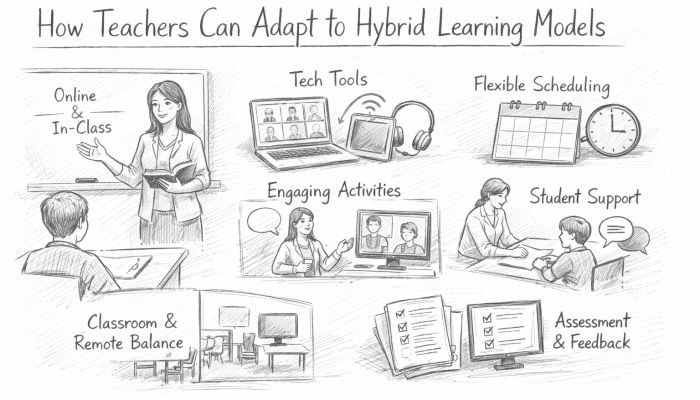
Hybrid learning models have become increasingly prevalent as schools seek to blend in-person and remote teaching methods. This model provides a flexible approach to education, allowing students to learn in the environment that suits them best, whether that’s at home or in the classroom. For teachers, adapting to this model means understanding its benefits and potential drawbacks. It involves creating lesson plans that are effective in both settings and being prepared to support students in a variety of learning contexts.
Incorporating Technology into Lesson Plans
A critical component of hybrid learning is the integration of technology. Teachers must become adept at using digital tools and platforms that facilitate online learning. This can include learning management systems (LMS), video conferencing software, and other educational technologies. Incorporating these tools into lesson plans not only helps in delivering content but also in engaging students in a hybrid environment.
Supporting Students in a Hybrid Environment
In a hybrid learning model, teachers must be prepared to support students who are learning both in-person and remotely. This dual approach can be challenging for students, particularly when it comes to engagement and staying on task. Teachers can support their students by providing clear instructions, offering regular feedback, and being available to answer questions, whether through in-person meetings or digital communication channels.
Overcoming Communication Barriers
Communication is key in a hybrid learning setting. Teachers need to establish open lines of communication with their students, ensuring that everyone has the opportunity to participate and ask questions. Overcoming barriers such as technology issues, time zone differences, and the lack of face-to-face interaction is essential for maintaining a cohesive learning environment.
Adapting Teaching Methods and Strategies
Adapting to a hybrid learning model also means being flexible with teaching methods and strategies. Teachers may need to modify their approach to cater to both in-person and online learners. This could involve using a mix of synchronous (live) and asynchronous (self-paced) learning activities, and being open to experimenting with new teaching techniques that work well in a hybrid context.
Ensuring Equity and Accessibility
Equity and accessibility are significant concerns in hybrid learning. Teachers must ensure that all students have equal access to learning materials and can participate fully, regardless of their learning environment. This might involve providing resources in various formats, using technology that is accessible to all students, and being mindful of the diverse needs of learners.
Collaborating with Colleagues and Students
Collaboration is another important aspect of adapting to hybrid learning. Teachers can benefit from working with colleagues to share best practices and develop new strategies for hybrid teaching. Similarly, encouraging collaboration among students, whether they are learning in-person or online, can help to create a more inclusive and interactive learning experience.
Continuing Professional Development
Finally, teachers need to commit to ongoing professional development to adapt effectively to hybrid learning models. This could involve attending workshops, participating in online courses, or simply staying informed about the latest research and trends in education technology and hybrid learning.
Conclusion
Adapting to hybrid learning models is a multifaceted process for teachers. It involves embracing the flexibility of hybrid learning, integrating technology into teaching, and finding ways to support and engage students in both in-person and online settings. Overcoming communication challenges, adapting teaching strategies, and ensuring equity and accessibility are also critical components of this adaptation. By collaborating with peers and committing to professional development, teachers can continue to evolve their practices to meet the demands of hybrid learning. In doing so, they can provide their students with a rich and dynamic educational experience that prepares them for the future.
 How to Make the Most of Your Holiday Break
 The Best Winter Destinations for a Cozy Getaway
 How to Organize Your Holiday Travel Plans with Ease
 The Ultimate Guide to Cooking for a Crowd
 How to Make Healthy Comfort Food Without the Guilt
 5 Delicious Vegan Breakfast Ideas You Can Make in Minutes