How to make traditional Tamil payasam
Traditional Tamil payasam is more than a dessert; it’s a culinary symbol of Tamil Nadu’s rich culture, festivities, and family gatherings. Enriched with the fragrances of cardamom and ghee, the creamy textures of milk and jaggery, and the nutty crunch of cashews and raisins, Tamil payasam is the ultimate comfort food beloved by people of all ages across generations. Tamil payasam is one of the first desserts anyone would think about when they have a sweet craving. Traditionally prepared during festivals, celebrations like Pongal, Tamil New Year, or even weddings, payasam is a warm and inviting dish that signifies prosperity, togetherness, and joy in Tamil homes. This detailed guide on how to make Tamil payasam takes you through the history, variations, key ingredients, and step-by-step preparation of this classic South Indian dessert. Whether you are a beginner cook or a seasoned foodie looking to explore Tamil cuisine, this article will provide you with all the information and confidence you need to recreate this delightful treat in your kitchen.
- Understanding the Cultural Importance of Tamil Payasam
- The Varieties of Tamil Payasam and Their Ingredients
- Ingredients That Make Tamil Payasam Authentic
- The Significance of Rice Varieties: Ponni vs. Sona Masoori
- The Importance of Slow Cooking in Making Perfect Payasam
- The Process of Preparing Jaggery Syrup for Payasam
- Cardamom and Other Spices in Tamil Payasam
- The Technique of Roasting Nuts and Raisins for Garnish
- Different Variations: Semiaya and Paruppu Payasam
- A Step-by-Step Guide to Making Classic Rice Payasam
- Tips for Preparing Payasam in Advance and Storage Suggestions
- Health Considerations and Adaptations for Modern Diets
- Conclusion
- More Related Topics
Understanding the Cultural Importance of Tamil Payasam
Payasam holds a place of honor in Tamil traditions, symbolizing hospitality, auspicious occasions, and thanksgiving. Typically offered as prasad (offering) in temples, particularly to Lord Vishnu and Lord Krishna, payasam is often associated with spirituality and divine blessings. Celebrated during festivals such as Pongal, it represents abundance and the sweetness of life. Sharing payasam among family and guests reinforces social bonds and community spirit, bringing everyone together in celebration and unity through the language of food.
The Varieties of Tamil Payasam and Their Ingredients
Tamil payasam comes in many delicious varieties, each with distinct ingredients and preparation styles. The most common types include Paruppu Payasam (lentil-based), Semiya Payasam (vermicelli), Pal Payasam (milk-based rice pudding), and Paal Kozhukattai (rice balls in milk). Each variation boasts unique textures and levels of sweetness, often influenced by regional or familial preferences. This diversity not only showcases the versatility of payasam but also its adaptability to local ingredients and tastes while retaining its comforting, indulgent essence.
Ingredients That Make Tamil Payasam Authentic
At its core, the traditional Tamil payasam recipe is characterized by a few key ingredients that set it apart from other desserts. The base is typically rice or vermicelli, cooked in milk with jaggery or sugar, and enriched with ghee and aromatic spices like cardamom. Cashew nuts and raisins are also usually added for texture and richness. The quality of these ingredients plays a significant role in the payasam’s flavor, so using fragrant rice like Ponni, fresh whole milk, pure ghee, and unrefined jaggery can elevate the dish to authentic levels.
The Significance of Rice Varieties: Ponni vs. Sona Masoori
Selecting the right type of rice is crucial when making rice-based Tamil payasam. Ponni rice, a medium-grain variety native to Tamil Nadu, is often preferred for its soft, slightly sticky texture that is perfect for payasam. It absorbs milk well and releases starch to thicken the dessert without overshadowing the delicate flavors. Sona Masoori rice, another popular choice, is known for its lightness and can also be used. Soaking the rice before cooking helps achieve a creamier texture and reduces cooking time.
The Importance of Slow Cooking in Making Perfect Payasam
Patience is key when making traditional payasam. Cooking it slowly over low heat allows the rice or vermicelli to soften and the milk to reduce gradually, resulting in a thick, creamy consistency. Stirring occasionally prevents the mixture from sticking to the pan and ensures even cooking. This slow cooking process is essential as it allows the flavors to meld and intensify, giving the jaggery or sugar a chance to caramelize slightly, which infuses the payasam with a subtle richness.
The Process of Preparing Jaggery Syrup for Payasam
Jaggery is the secret to the deep, molasses-like sweetness that characterizes traditional Tamil payasam. It is melted separately in a small amount of water to make a syrup before being added to the cooked rice and milk. Straining this syrup helps remove any impurities, ensuring a smooth texture. This step is crucial as it allows the jaggery to dissolve completely and blend uniformly with the milk, imparting its natural earthy sweetness without the grittiness associated with granulated sugar.
Cardamom and Other Spices in Tamil Payasam
Cardamom is the quintessential spice in Tamil payasam, providing a fragrant, slightly citrusy aroma that enhances the dessert’s sweetness. Ground cardamom pods are typically added towards the end of the cooking process to preserve their flavor. Some variations may include saffron or nutmeg for additional complexity and color. These spices elevate the dish from a simple rice pudding to a festive dessert, reminiscent of special occasions and family celebrations.
The Technique of Roasting Nuts and Raisins for Garnish
The garnish of fried cashews and golden raisins, sautéed in ghee, is a hallmark of traditional Tamil payasam. This step, while simple, is crucial in adding contrasting textures and bursts of sweetness and nuttiness to the soft, creamy dessert. The aroma of ghee beautifully complements the toasted nuts, enhancing the overall sensory appeal of the dish. Generously sprinkled just before serving, this garnish turns each spoonful into a decadent experience.
Different Variations: Semiaya and Paruppu Payasam
In addition to rice payasam, variations like vermicelli (semiya) and moong dal (paruppu) payasams are equally popular in Tamil cuisine. Semiya payasam is quicker to prepare as vermicelli cooks faster and readily absorbs milk and jaggery. Paruppu payasam involves cooking moong dal until soft, then mixing it with jaggery and coconut milk for a rich, slightly savory sweet dish. Both variations adhere to the core principles of payasam preparation but offer different textures and flavors, enriching the Tamil dessert repertoire.
A Step-by-Step Guide to Making Classic Rice Payasam
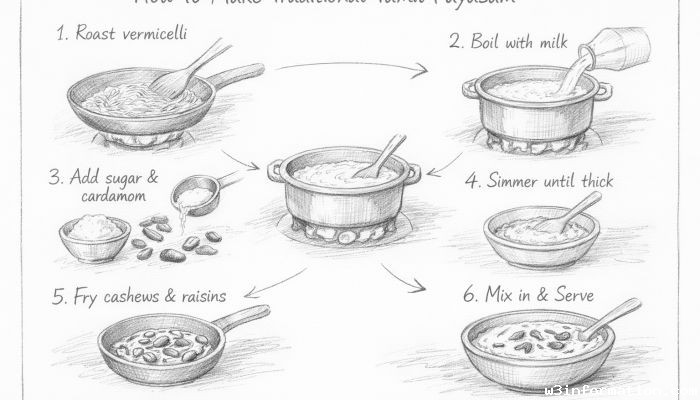
Start by washing and soaking one cup of Ponni rice for 15-20 minutes. Boil four cups of whole milk in a deep pan, then add the drained rice. Simmer on low heat, stirring occasionally, until the rice is cooked and the milk has thickened to a creamy consistency. Separately, dissolve half a cup of jaggery in half a cup of water, strain the syrup, and add it to the cooked rice and milk mixture. Add one teaspoon of ground cardamom, stir, and let it cook for another 5-10 minutes. In the meantime, fry cashews and raisins in two tablespoons of ghee until golden brown. Pour the payasam into serving bowls, top with the fried nuts, and serve warm or chilled.
Tips for Preparing Payasam in Advance and Storage Suggestions
Payasam tastes even better when the flavors have had time to meld together, making it ideal for preparing ahead. You can make it a day in advance and store it in the refrigerator in an airtight container. To serve, gently reheat the payasam over low heat, adding a splash of milk if it has thickened too much. Do not let it come to a boil after refrigeration to maintain its creamy texture. Garnish with fried nuts and raisins just before serving to preserve their crunch and the ghee’s sheen.
Health Considerations and Adaptations for Modern Diets
While traditionally rich with milk and ghee, payasam can be adapted for those who prefer a lighter version. Opt for low-fat milk, reduce the amount of jaggery, or substitute it with natural sweeteners like honey. You can also use healthier grains like millets or quinoa in place of rice for added fiber and nutrition. These adaptations allow the dish to cater to modern dietary preferences while still capturing the essence of traditional Tamil payasam, making it a guilt-free indulgence.
Conclusion
Traditional Tamil payasam is a culinary gem that beautifully represents the flavors, rituals, and warmth of Tamil Nadu’s culture. From choosing the right rice and jaggery to the slow, loving cooking process and aromatic garnishing, every step in its preparation adds to a dessert that is not just comforting but also brings a sense of celebration to the dining table. Understanding the cultural significance, variations, and detailed preparation techniques of Tamil payasam allows us to appreciate the dessert not just for its taste but for the story it tells – a story of community, heritage, and joyous occasions. Served during festive feasts or family gatherings, payasam continues to enchant taste buds and hearts, inviting everyone to partake in the sweetness of Tamil tradition. With this guide, you can now recreate this iconic dessert in your kitchen with confidence, creating moments of joy and delight while bridging generations through the universal language of food.
 Big O Notation Explained for Beginners
 AI in Gaming: Smarter NPCs and Environments
 Understanding Bias in AI Algorithms
 Introduction to Chatbots and Conversational AI
 How Voice Assistants Like Alexa Work
 Federated Learning: AI Without Sharing Data